Every year, around 165,000 holes are dug in London for utility works, repairs and upgrades. Normally, once the work is done, the ground is replaced with the same hard, impermeable surface such as tarmac or concrete.
But what happens if, instead of putting the hard surface back, we refill some of those holes with sustainable drainage systems (SuDS) - things like rain gardens, permeable paving, or bioswales?
This is what the Thames Water’s SUDS through Street Works initiative is all about. Funded through the Ofwat Innovation Fund - this is a great opportunity for integrating more green infrastructure.
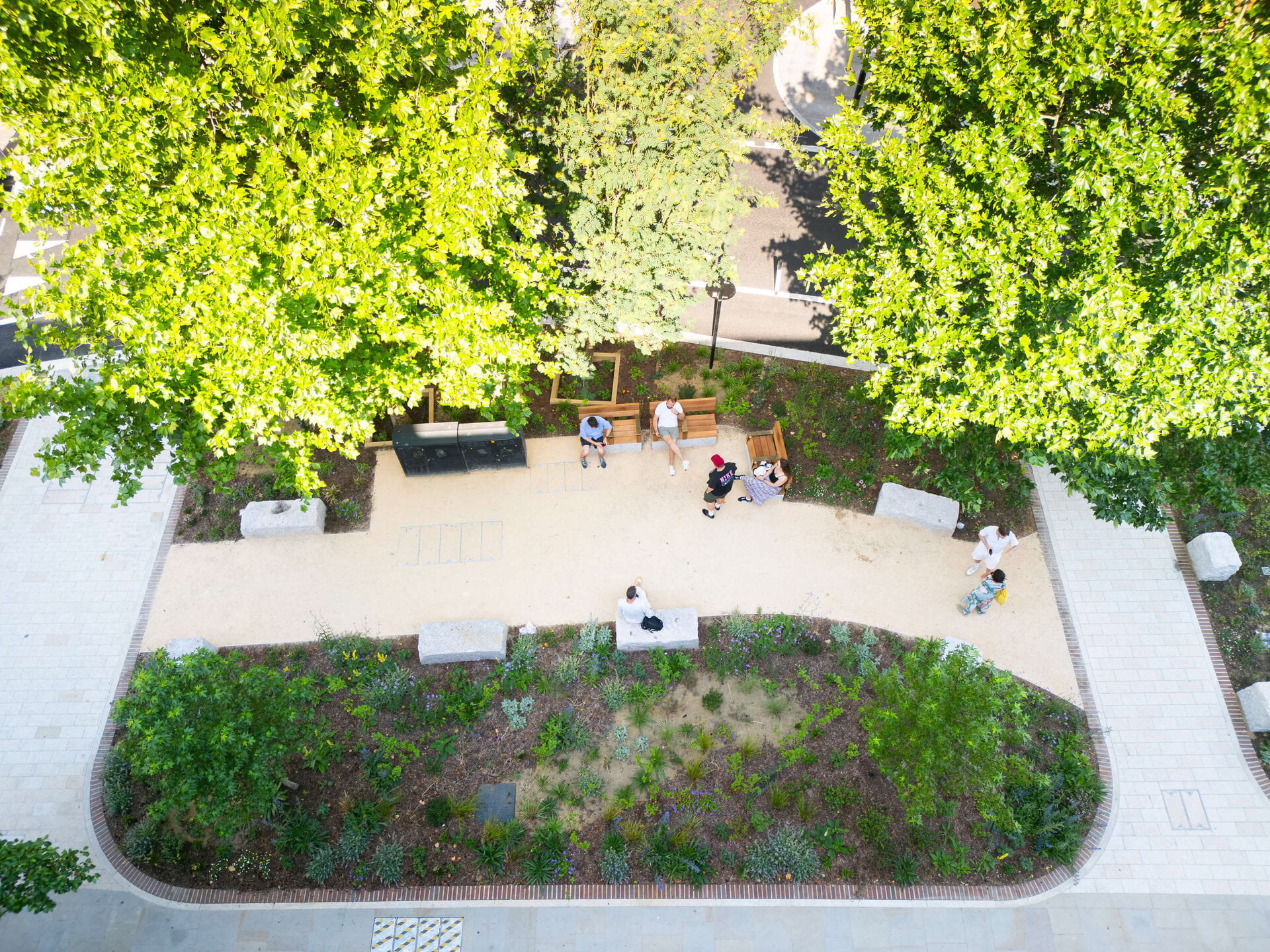
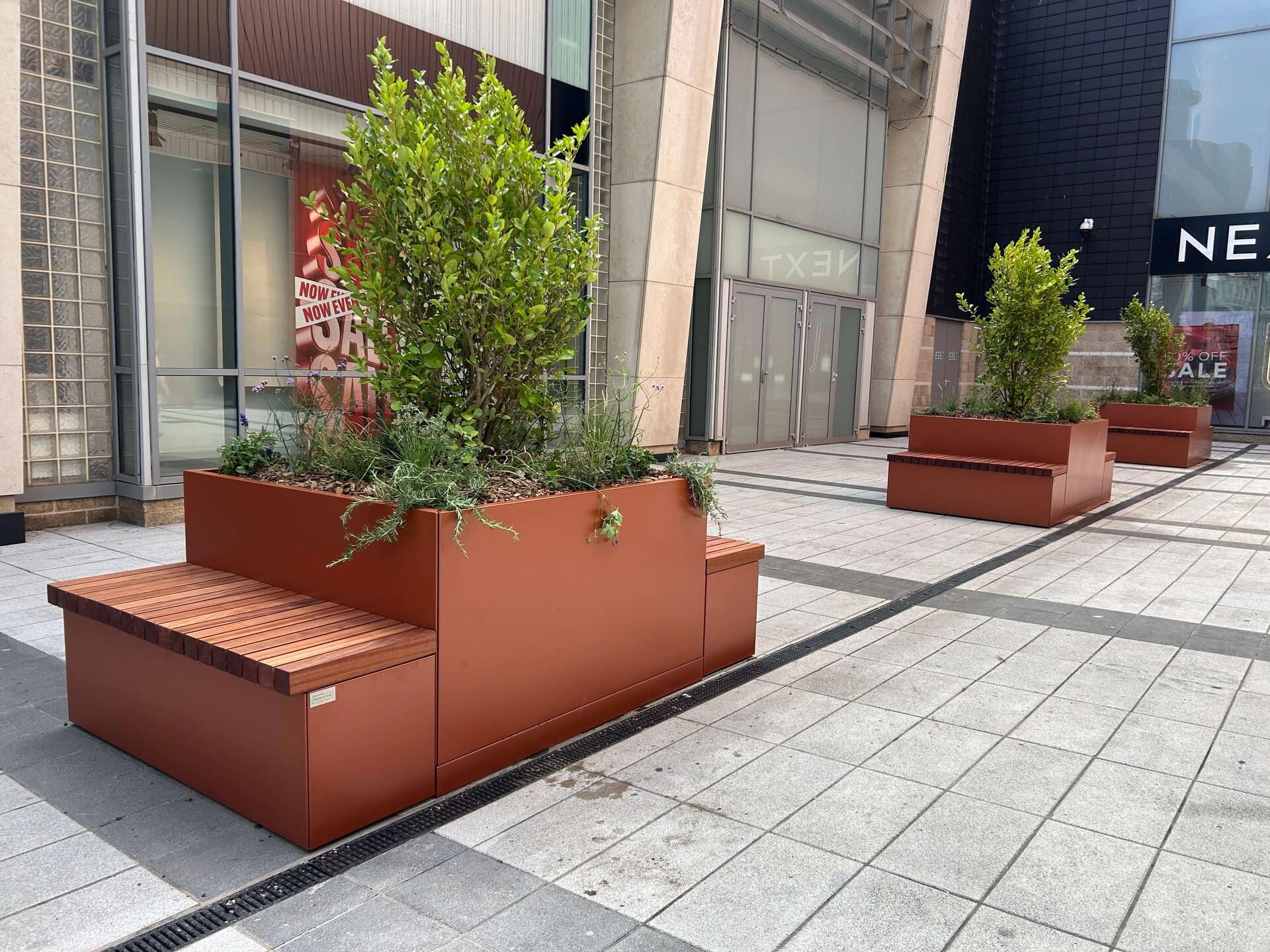
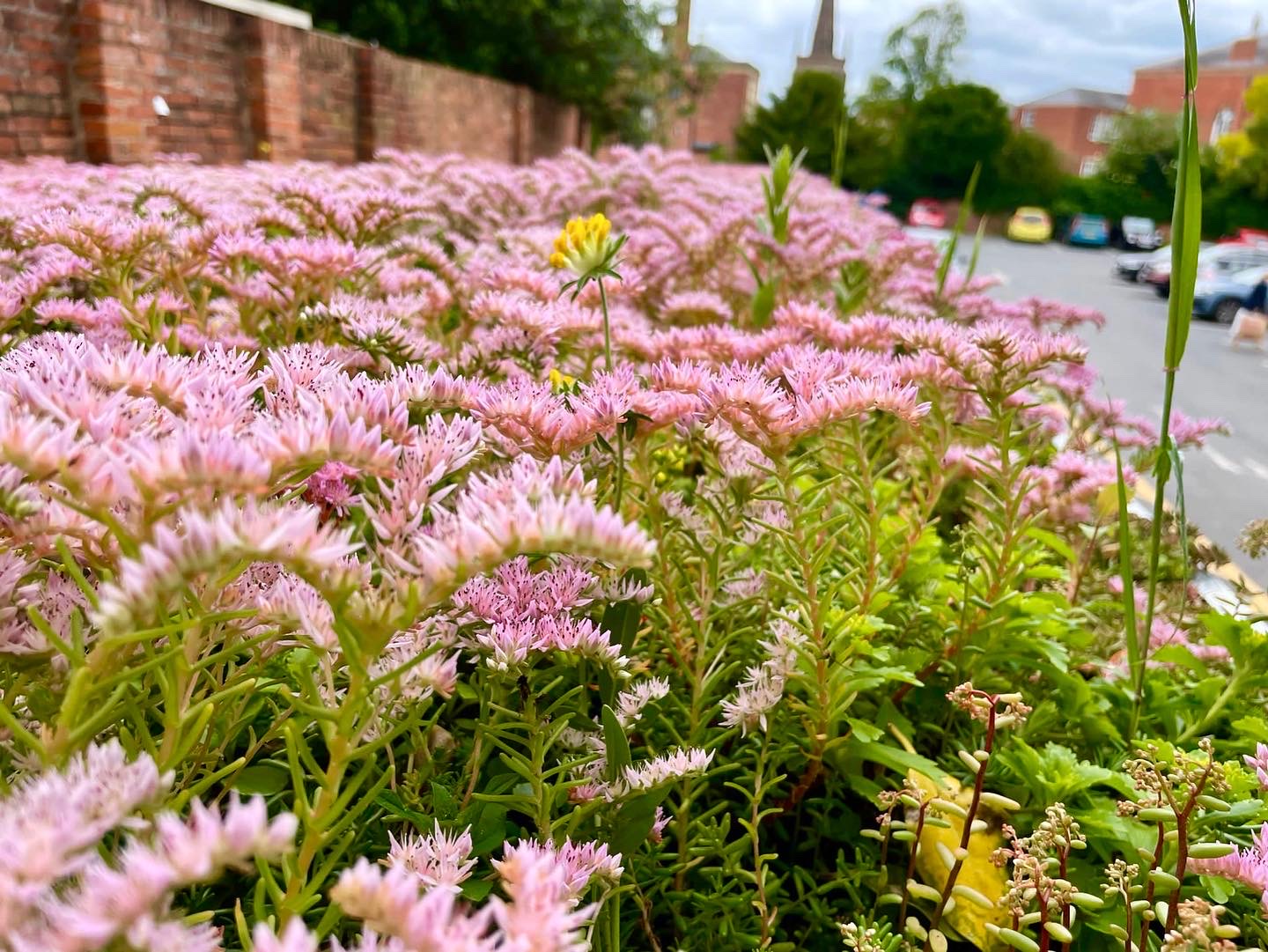
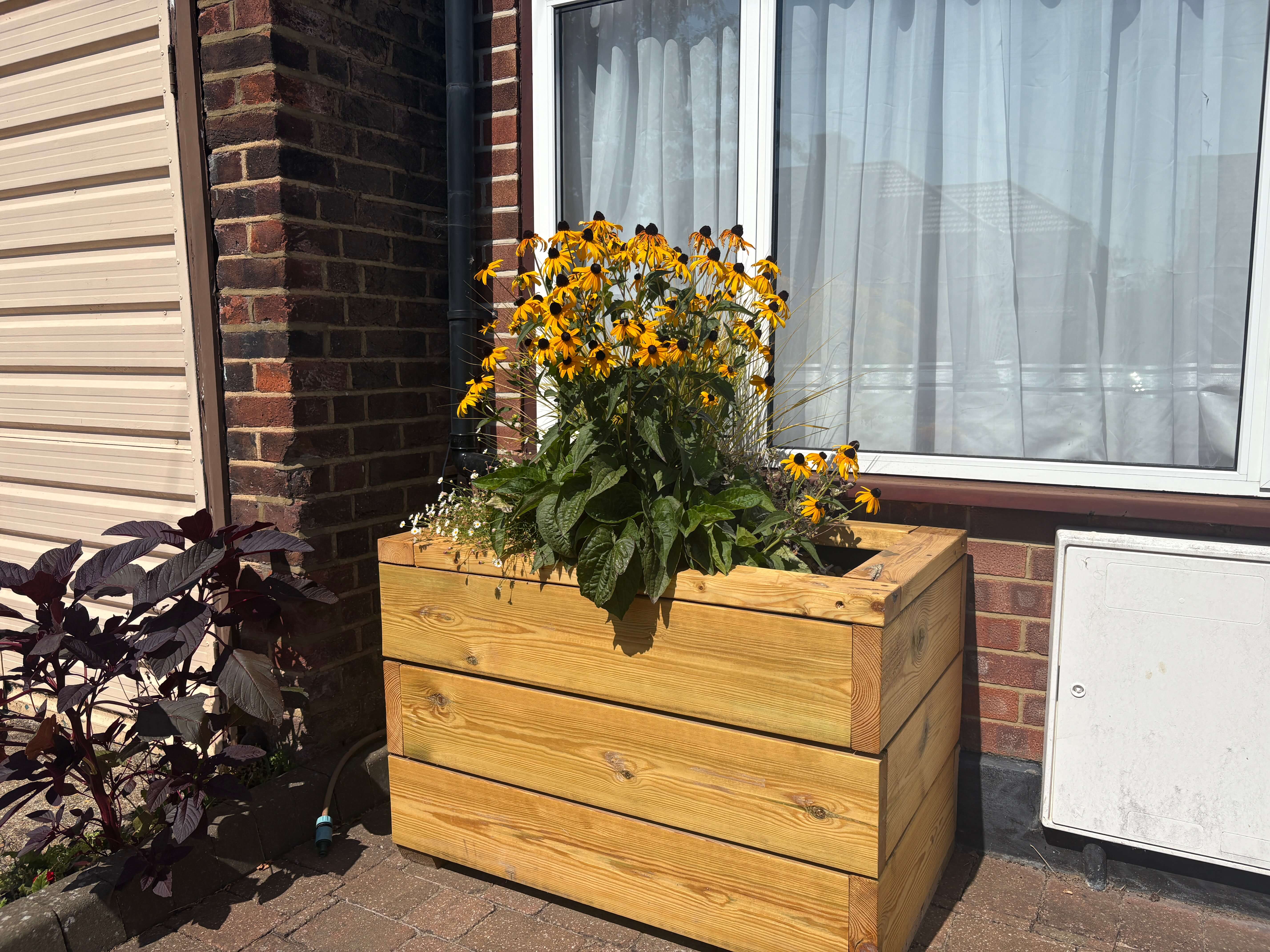
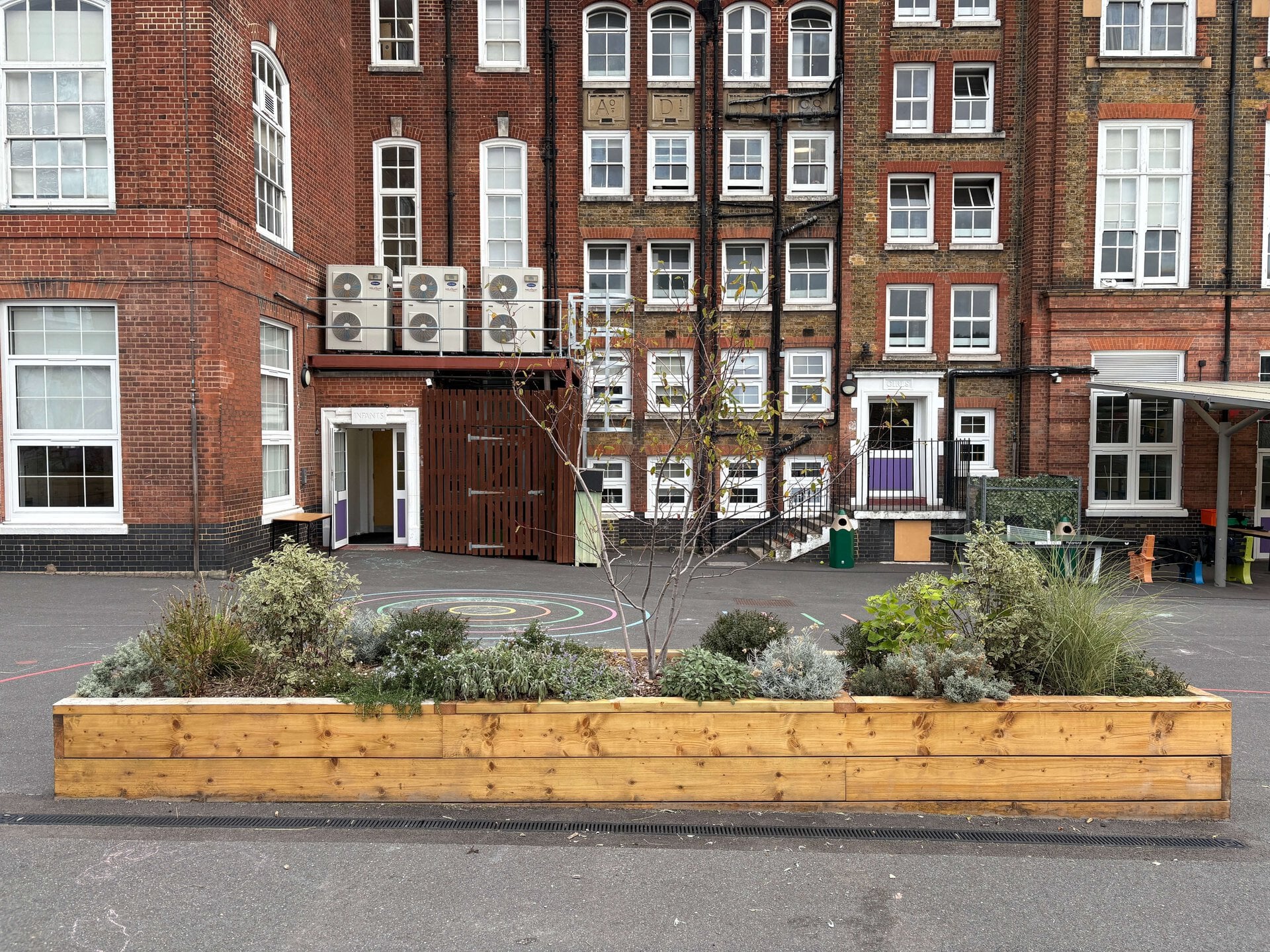
 Sutherland Road, Waltham Forest
Sustainable drainage systems solving London's flood risk
London’s flood risk from heavy rainfall is rising. Hard surfaces dominate the city, leaving little space for rain to absorb naturally. When a storms hit, water runs quickly across roads and pavements, overwhelming drains and pushing the sewer network to its limits.
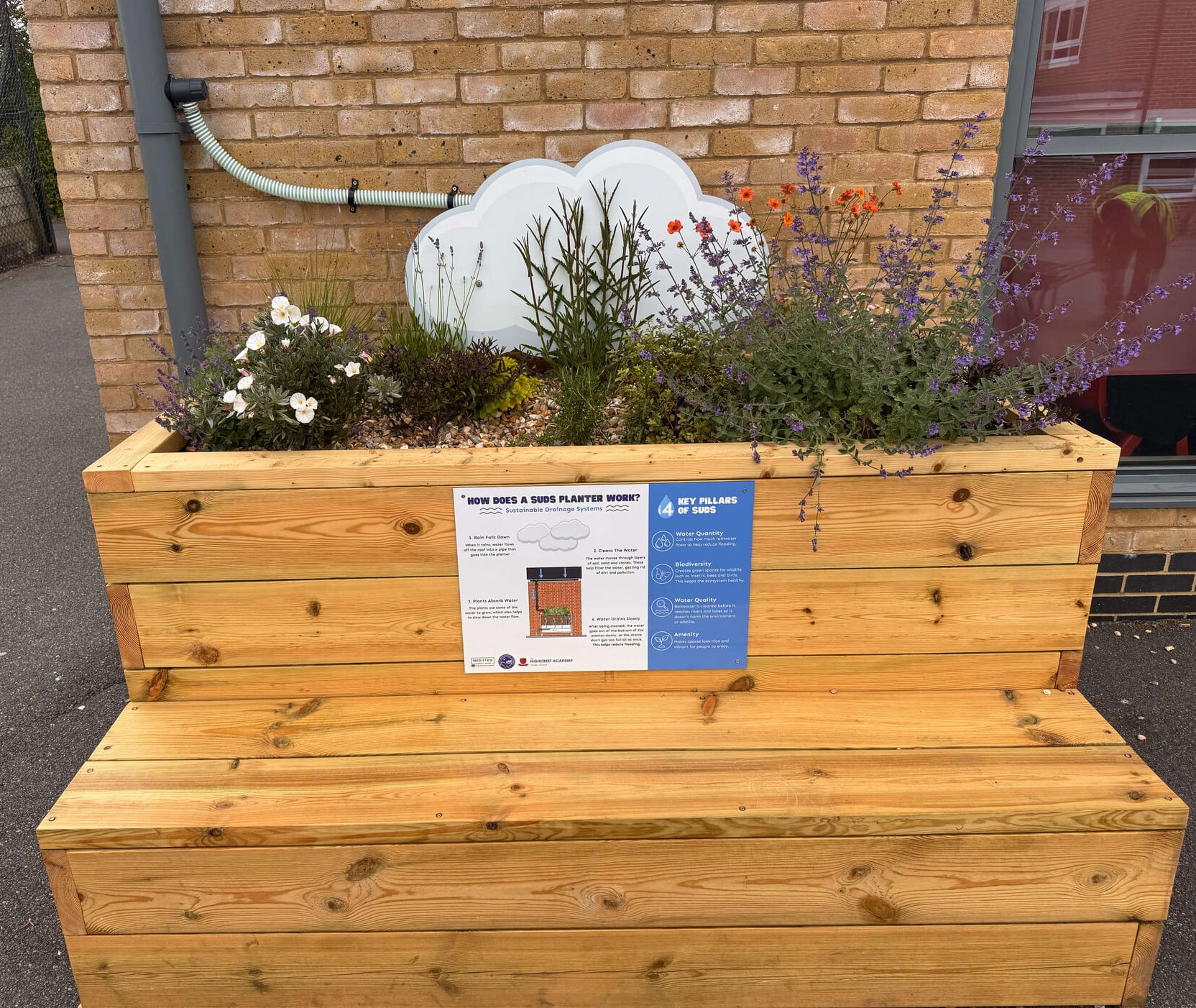
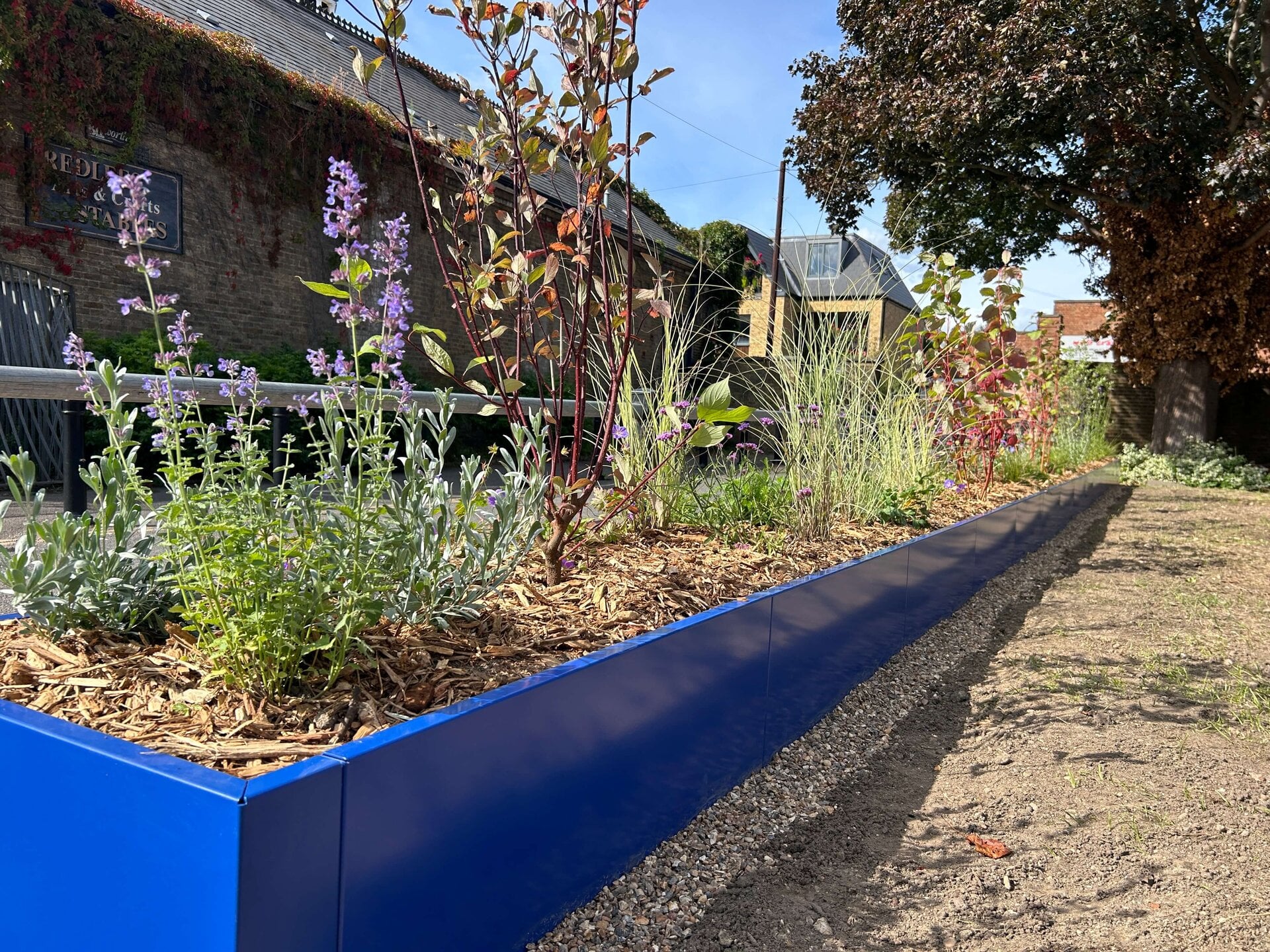
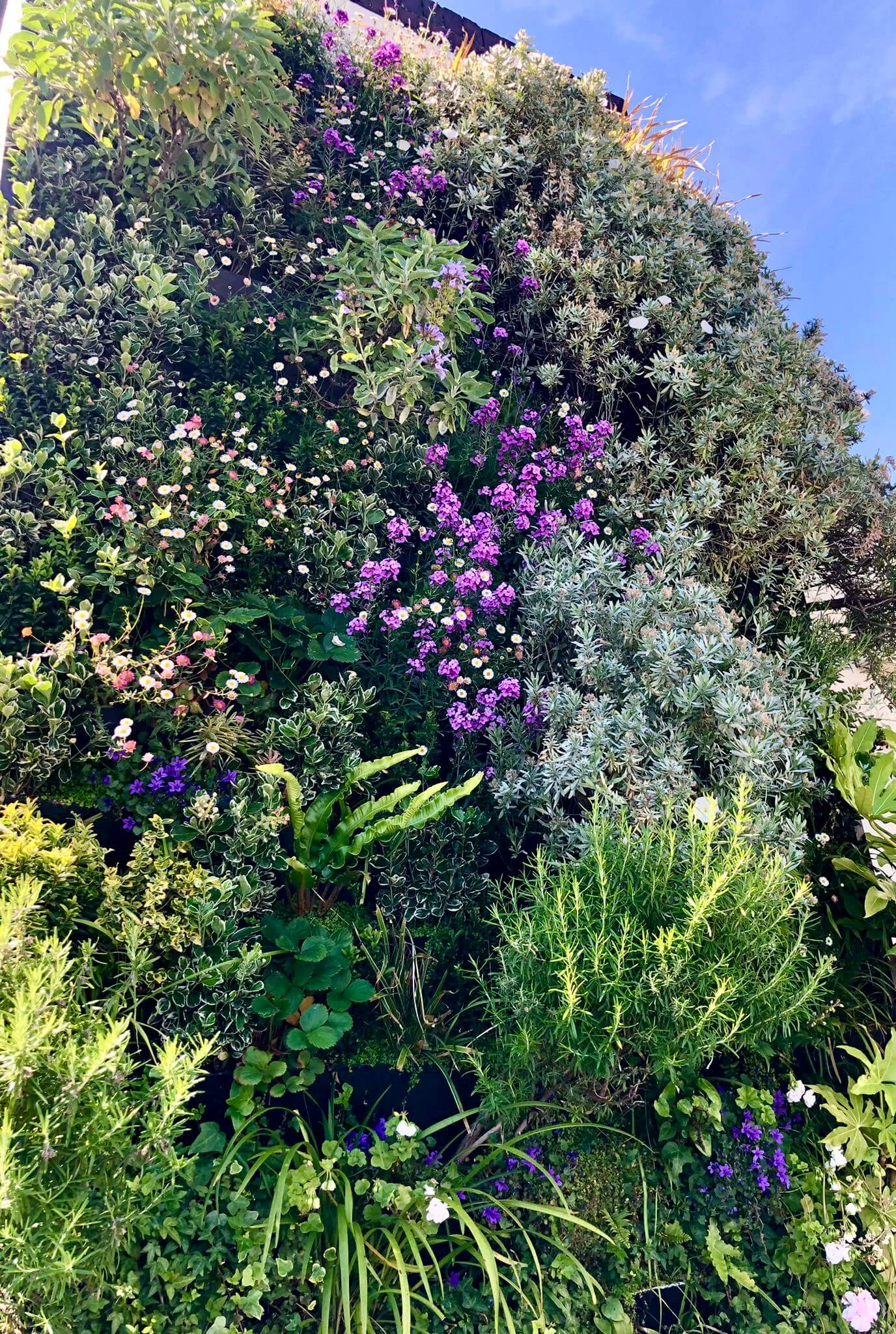
Sustainable Drainage Systems such as rain gardens offer an aesthetic, nature-based alternative that capture, slow, filter and absorb rainwater, preventing surface water flooding.
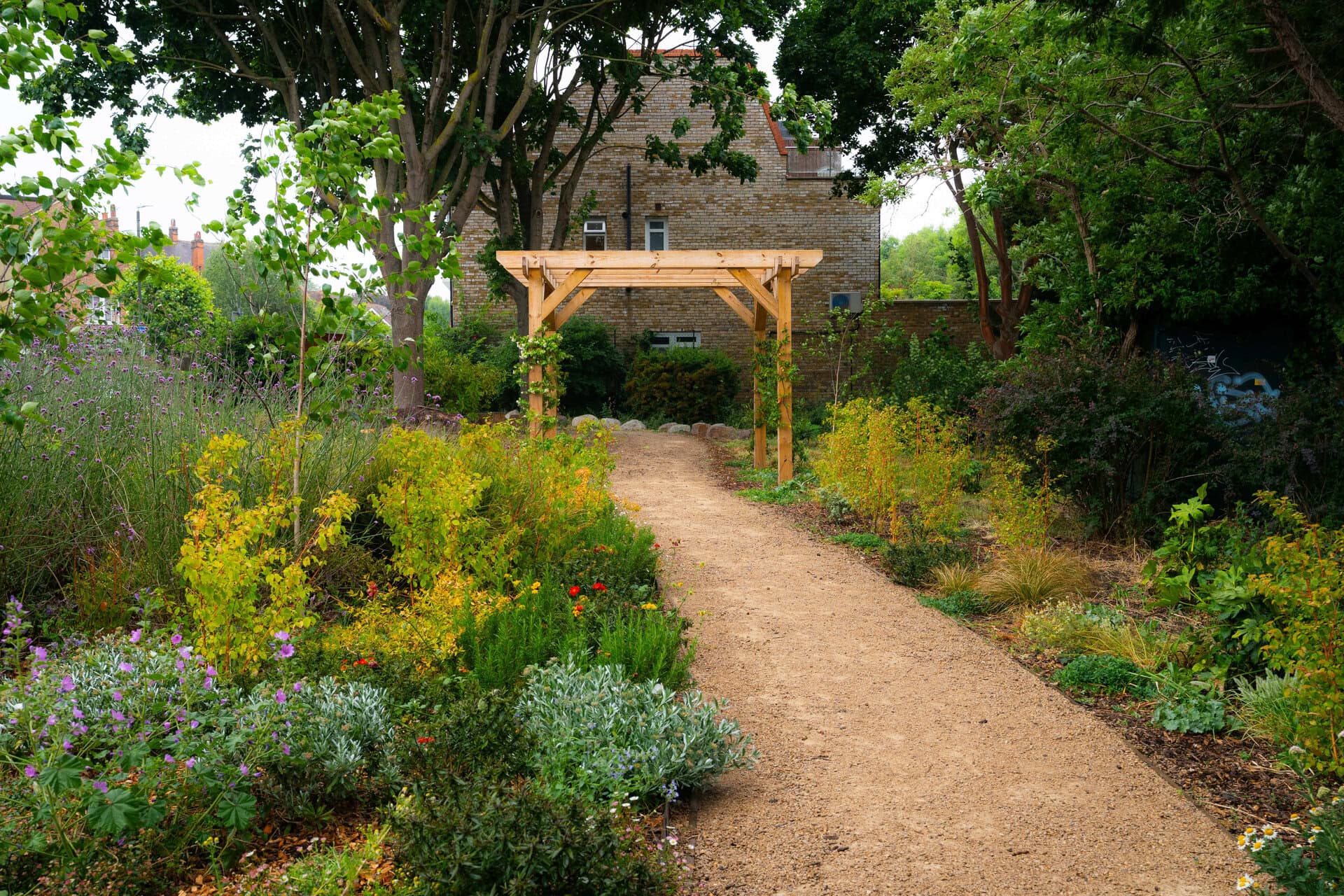
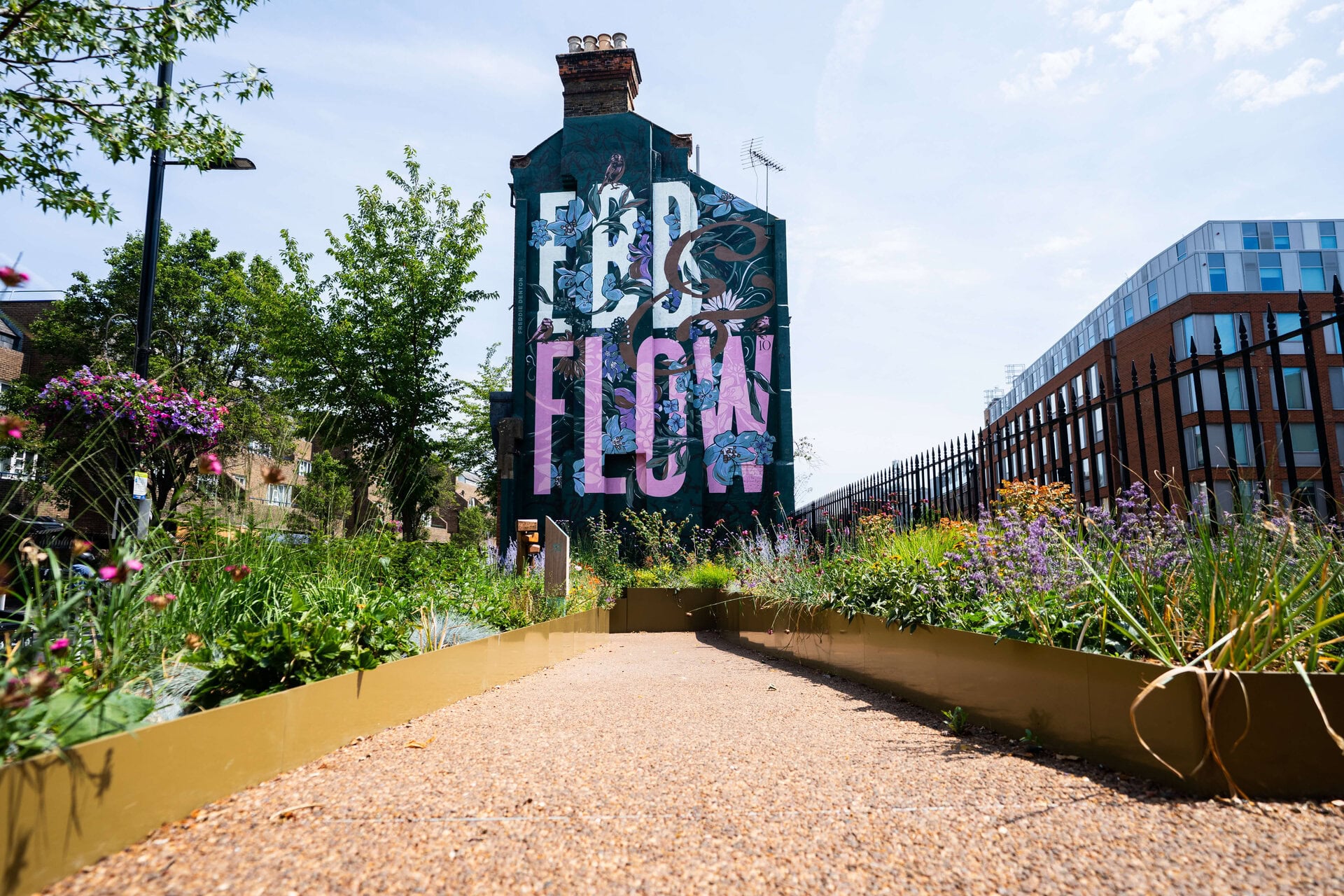
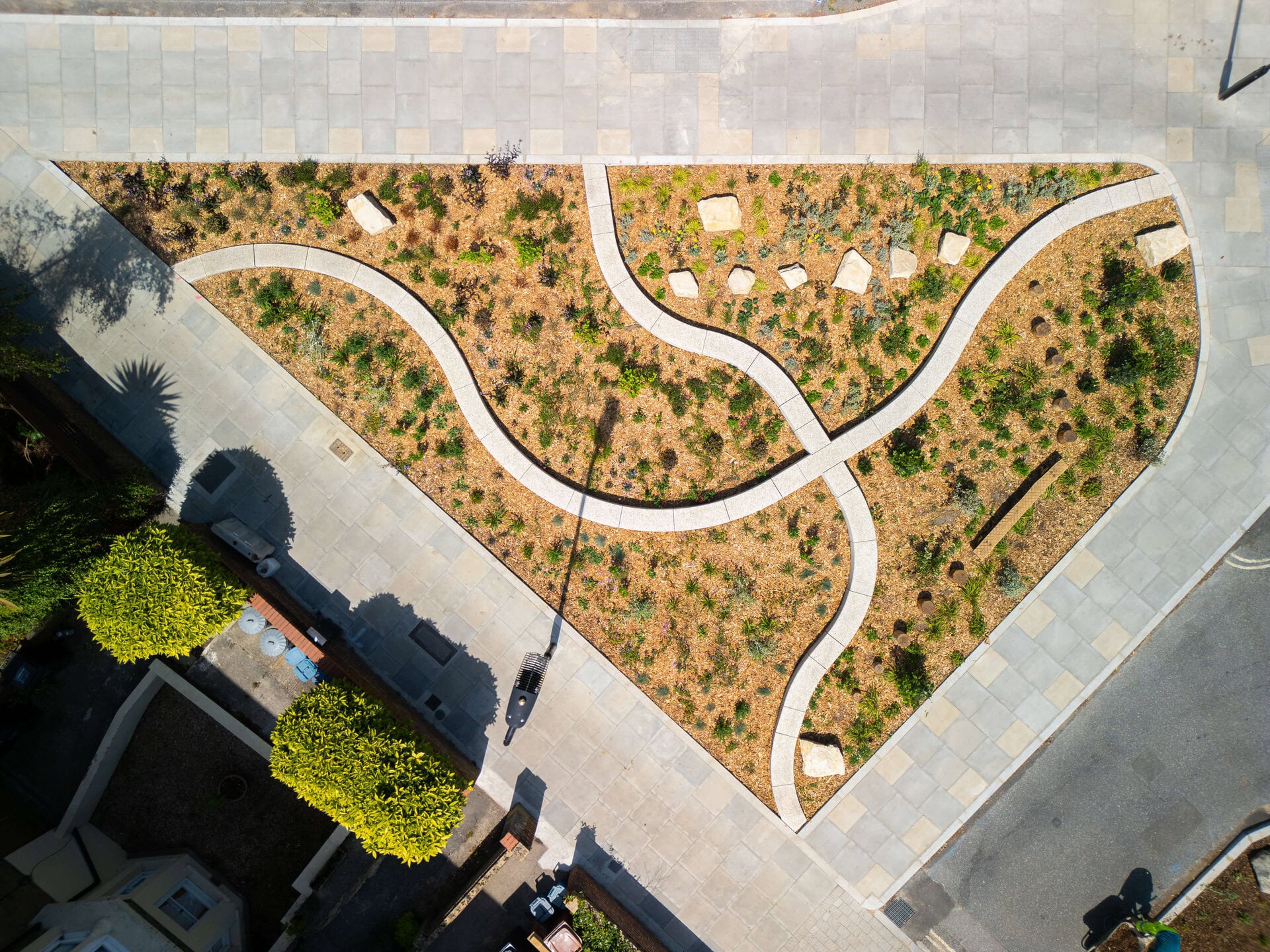
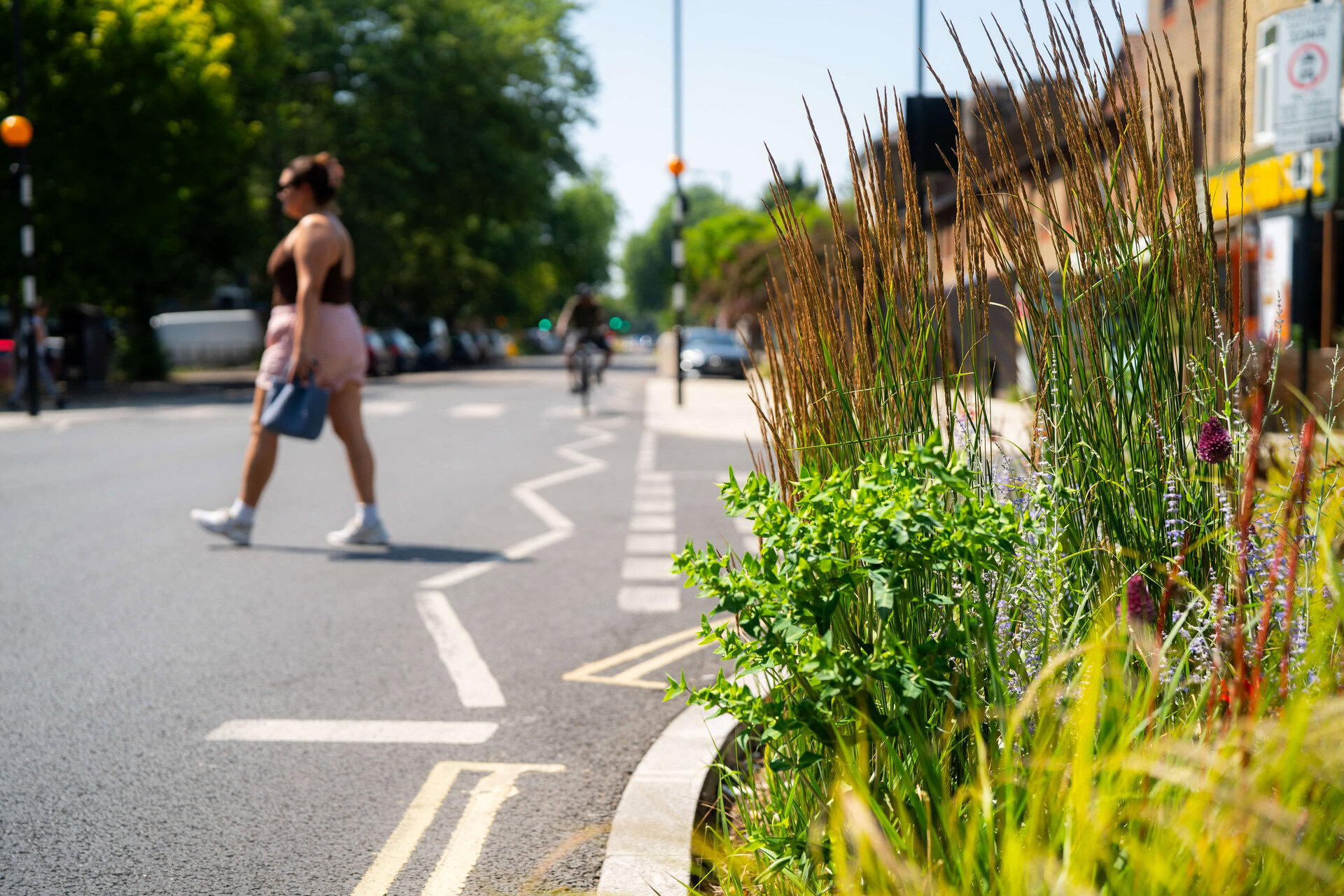
Downham Road, Hackney
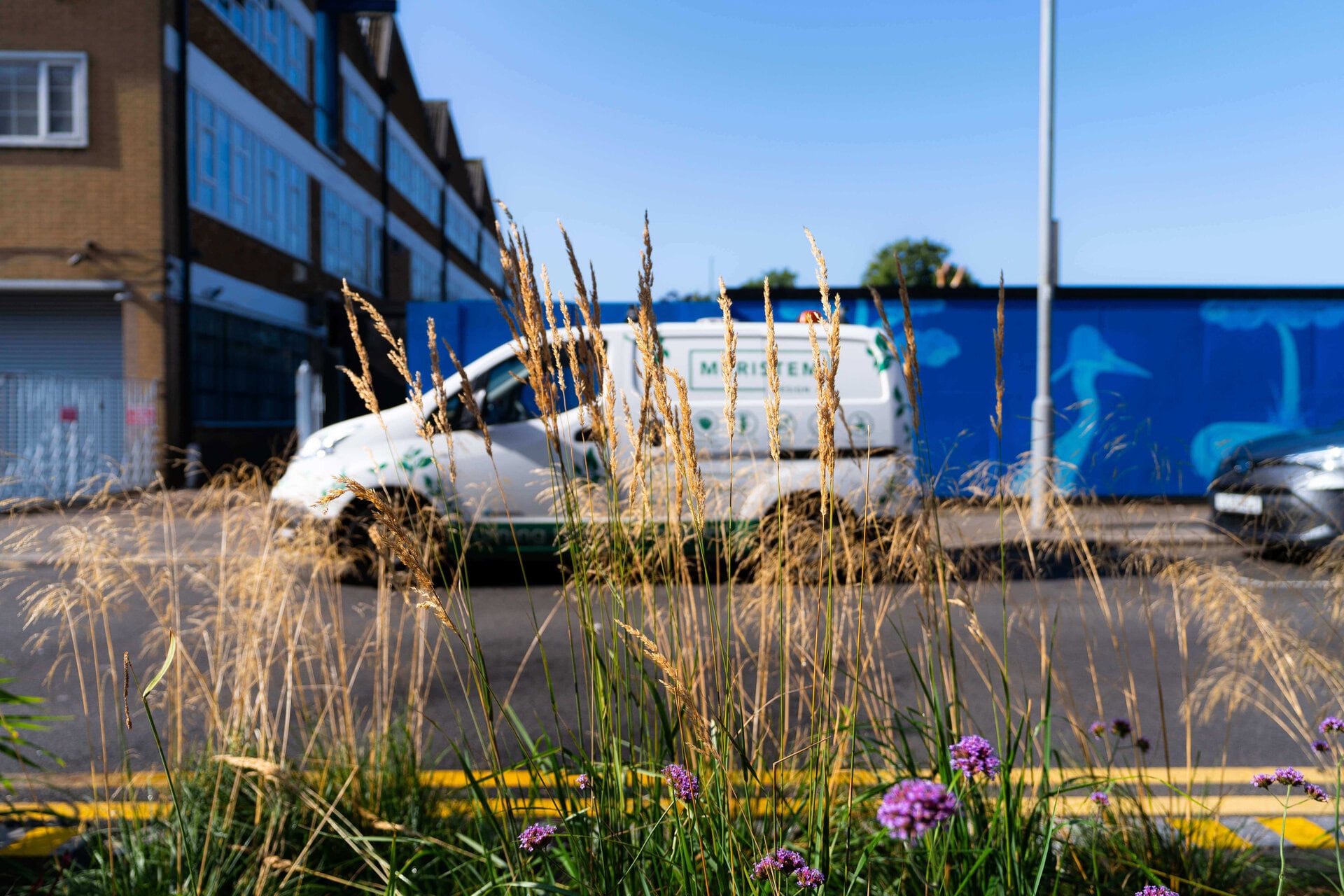
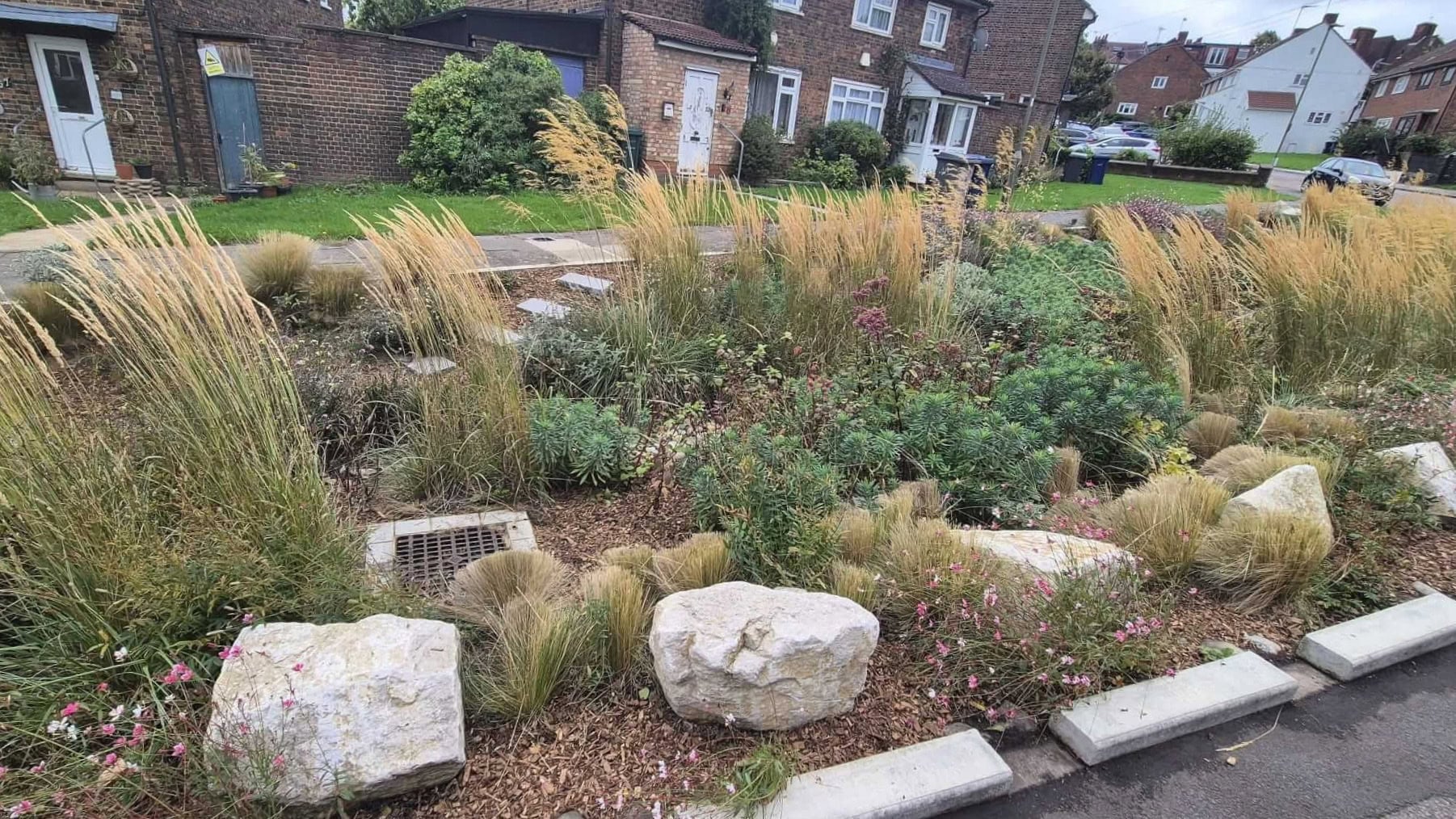
 Keogh Road, Newham
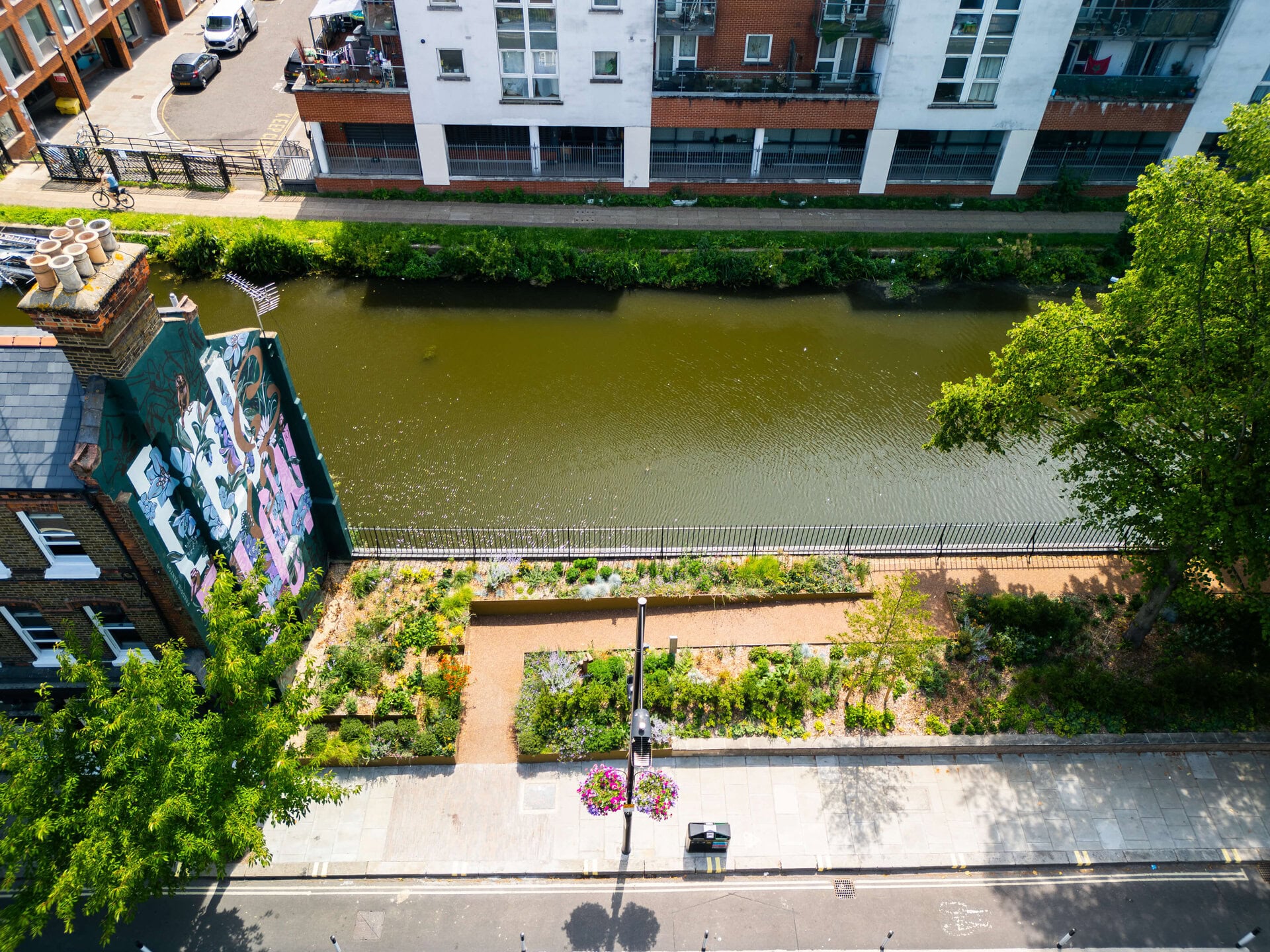
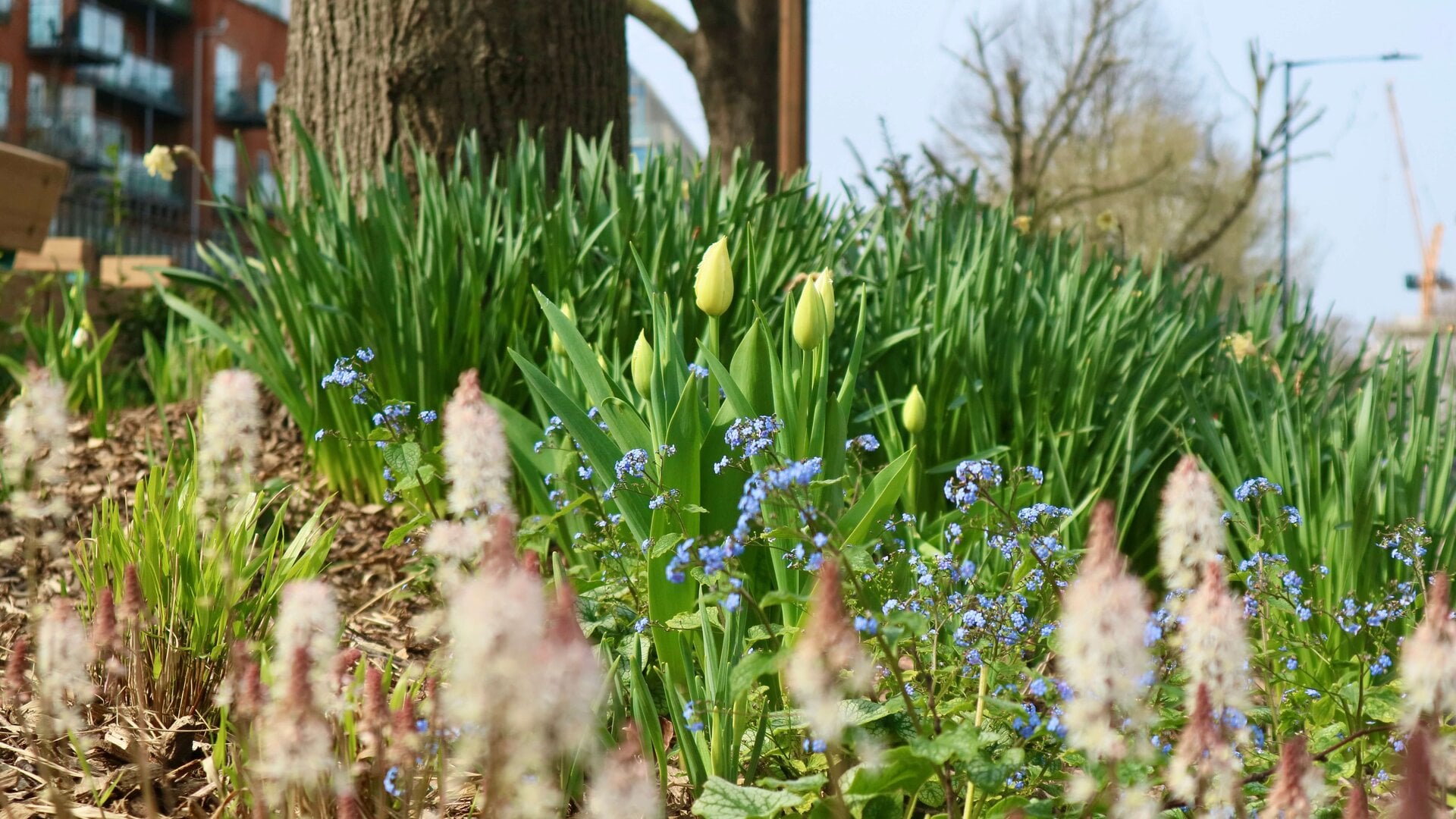
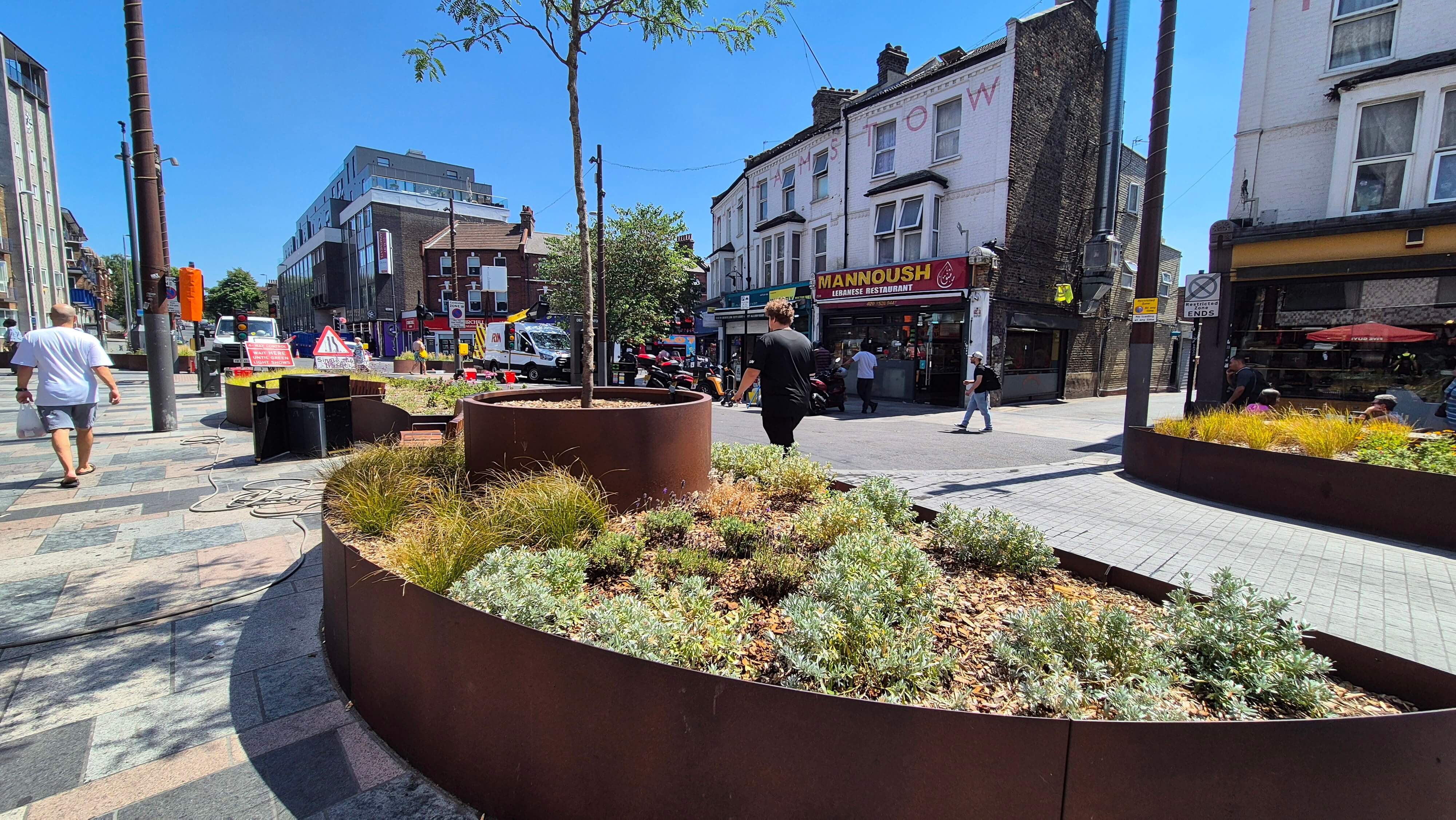
 Fentiman Road, Lambeth
Delivering the SuDS through street works project
The aim of the SuDS through street works project is to work with utility companies to help create a greener city through a world-first market-based approach.
According to Ofwat Innovation Fund: From source to sea
'One of the biggest barriers to SuDS implementation is the cost of excavation and permissions.
Since utility companies are already digging, this project seeks to incentivise them to reinstate excavated sites with permeable surfaces and materials, creating SuDS at a lower cost and on a much larger scale'
Rain gardens for Merton: A SuDS through street works project
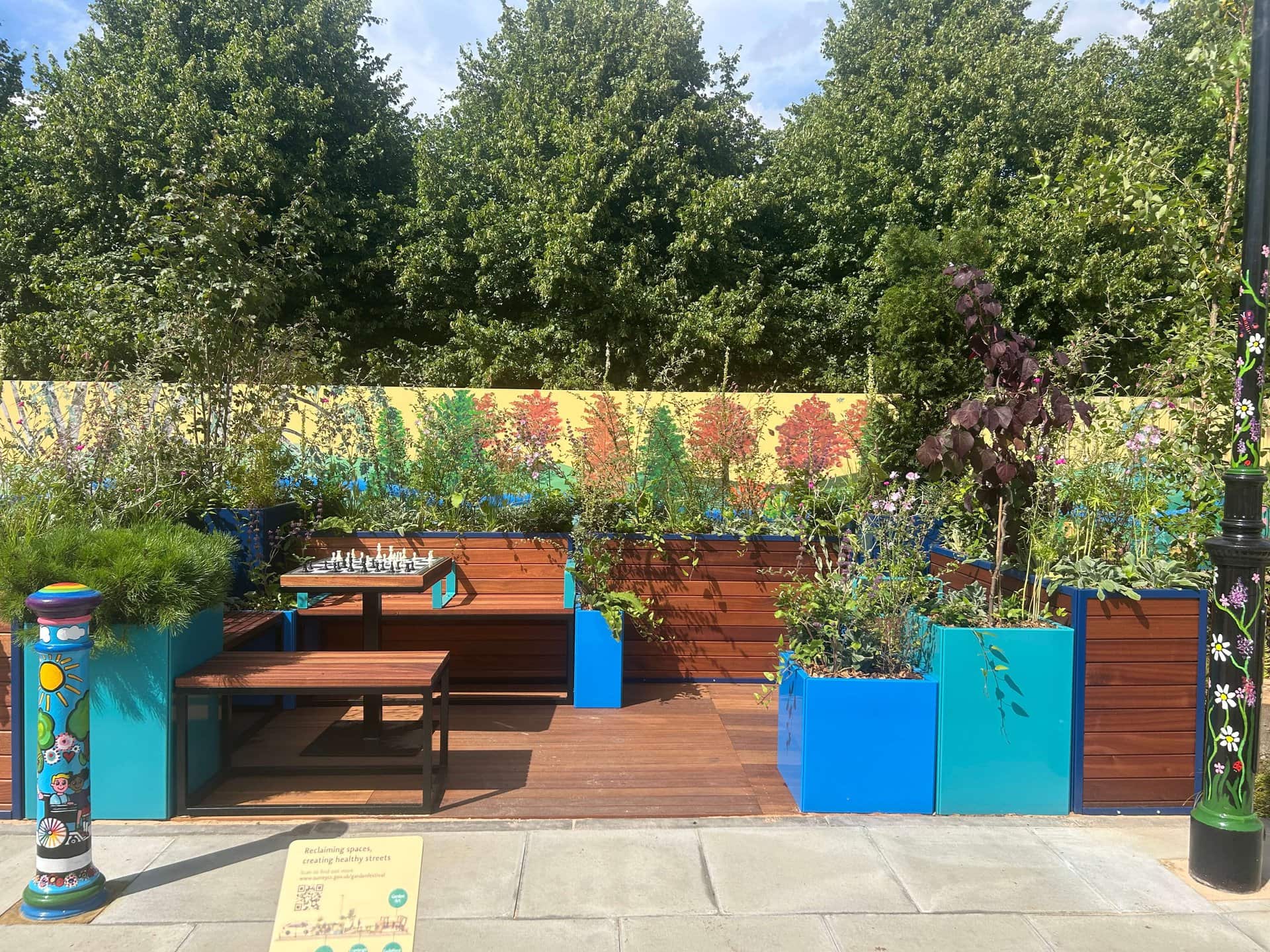
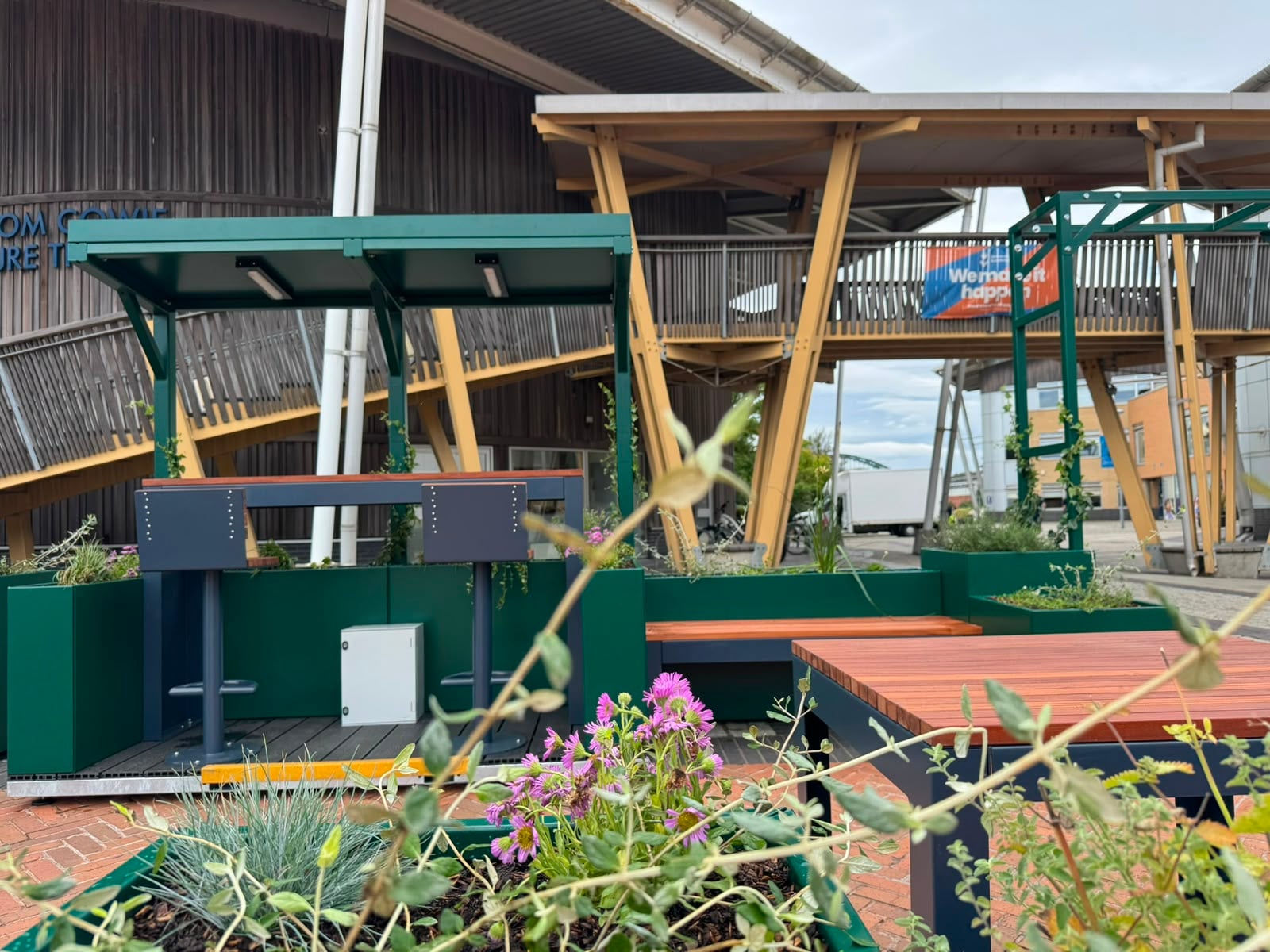
We recently partnered with Merton Council's flood risk team to deliver new rain gardens, working alongside FM Conway, Project Centre, Thames Water, SGN and the GLA. The multifunctional rain garden integrates SuDS features with playful, educational elements to both manage surface water and engage the community.
The rain garden is located on the kerbside of a junction in Mitcham on Lower Green West, consisting of a 54.8m² space supported by two SuDS planters. The scheme made the most out of the small, constrained street space by incorporating play features, a bug hotel, and both educational and interactive signage to create a multifunctional SuDS installation.


The 'dig-once' approach
The Suds through street works scheme builds upon the 'Dig-Once' approach which is a strategy to minimise road disruption and costs through coordinating infrastructure projects to reduce repeated digging, noise and pollution. By using shared data, local authorities and utility companies can work together to see upcoming roadworks and plan in projects such as green infrastructure.
The benefits of integrating SuDS through street works and pre-planned works
By utilising these approaches, the works can provide benefits such as:
- Reduced surface-water flooding during heavy rain
- Less strain on traditional drainage and sewer systems
- Decreased pollution
- Greener, more biodiverse streets
- Cost-effective solutions because streets are already being opened
- A healthier, flood-resilient city built through the work that’s already happening
“We already work with the GLA and other utility companies to deliver shared street works projects to reduce disruption to Londoners. This project will take it to the next level, using the opportunities created by street works to deliver green flood risk solutions that will benefit customers, society and the environment.”
– Nevil Muncaster, Engineering & Asset Director, Thames Water
Due to complete in April 2026, the project has achieved several key milestones, supporting a scalable and effective model for future Sustainable Drainage infrastructure.
Interested in integrating a Rain Garden or SuDS Planter in your area? Get in contact with us.