Happy Pride month! June celebrates diversity in all its forms so why not reflect that in planting too? Whether you're looking to celebrate pride through floral design or simply looking to bring more vibrance to your garden or landscape, here's how to create a rainbow planting palette using colour, texture, scent and seasonal interest.


Choosing the right plants
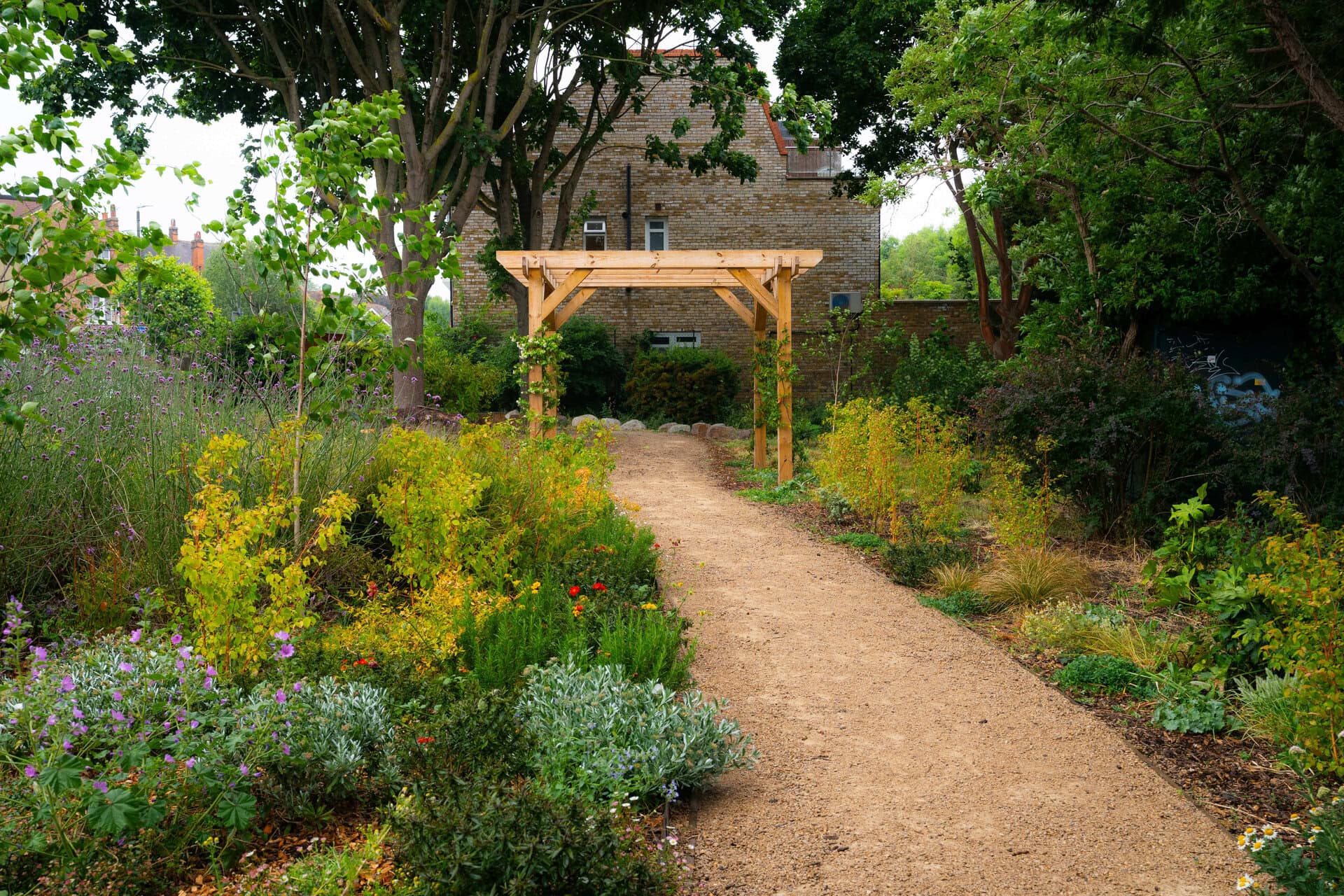
As we know, plants come in all shapes, colours and textures but the most successful planting combines visual impact with sensory and ecological value. We've selected plants from our plant list, a range of reliable and vibrant plants we use in our rain garden, planter and public realm schemes.
Red
Cornus alba can provide a bold structural addition to your landscape. Its red winter stems create a striking seasonal contrast and provide a dense, twiggy texture in your landscape. Pollinator-friendly
Orange
You may have spotted Geum 'Totally tangerine' in our RHS Chelsea Flower Show living wall this year. Reaching around 90cm in height, it provides a strong mid-layer structure and flowers into soft, layered heads that add warmth to the colour palette. It flowers throughout spring, summer and autumn so you can guarantee some long-lasting colour in your green space. Pollinator-friendly
Yellow
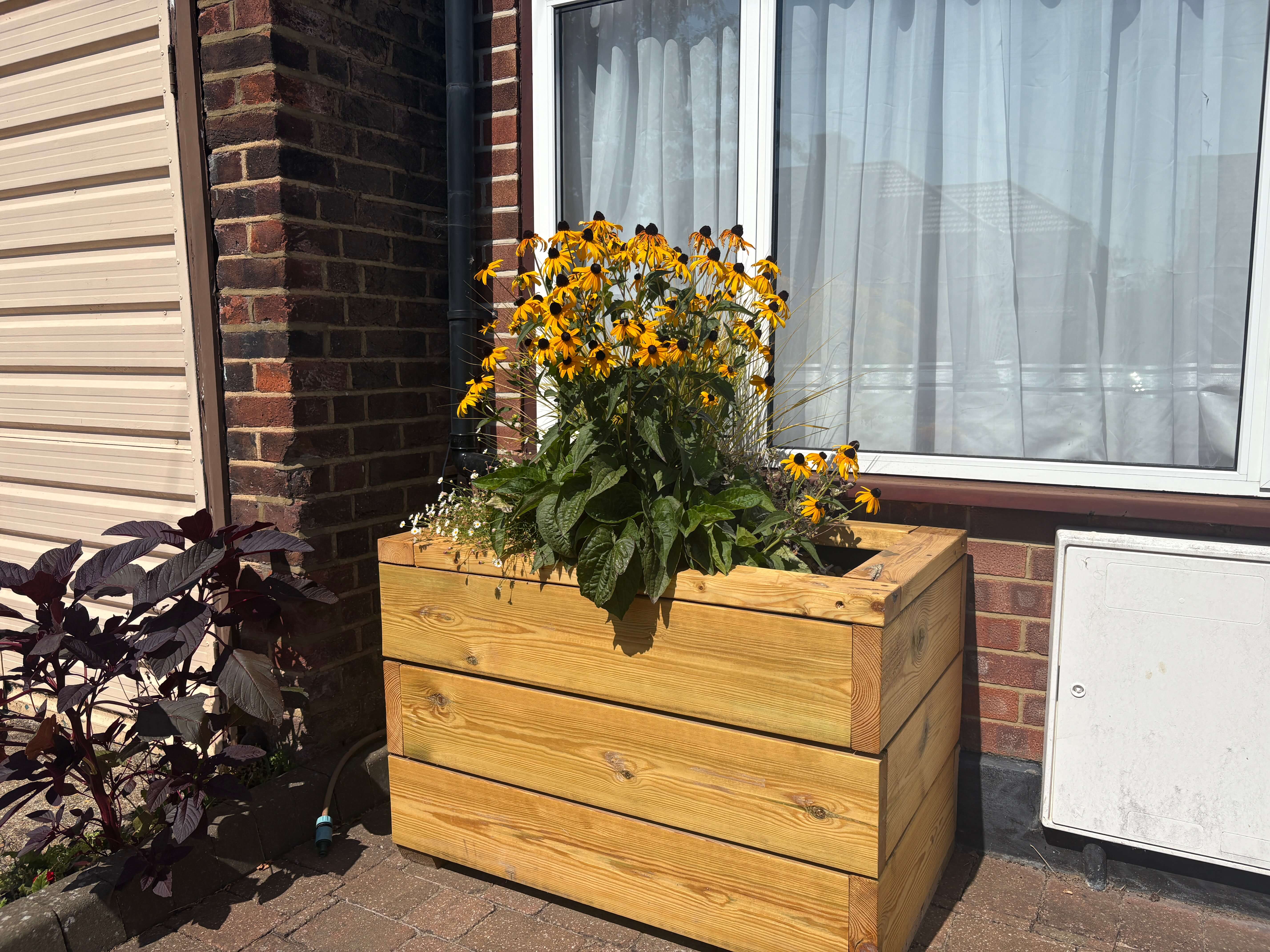
Rudbeckia 'Little goldstar' will bring a ray of sunshine to your garden. Forming in compact clumps, the golden-yellow daisy-like flowers add a striking splash of colour to any green space. They flower from mid-summer to autumn so are a great transitional plant to welcome in the autumnal golden hues. Pollinator-friendly
Green
If you're looking for large leaves and a lush feel, Hostas will bring just that. With leaves coming in all different shades of green, from deep emerald to blue-green variegated forms, hostas are easy to grow and care for with many thriving in shaded conditions. If you're limited to container-only plants, Hosta 'Pandoras box' is a brilliant miniature variation of the plant, offering compact variegated foliage.
For fast growth and placement variation, Muehlenbeckia can be used as a trailing or climbing plant. Its wiry stems create movement and can be trained across walls, fences or containers, which makes it a very flexible option.
Blue
Echinops bannaticus 'Taplow blue' is a wonderful plant to use when you want to create bright shapely clusters in your green space. The plant flowers in spherical structures and sit on tall, silver stems, creating structure, contrast and a strong focal point within planting schemes. Pollinator-friendly
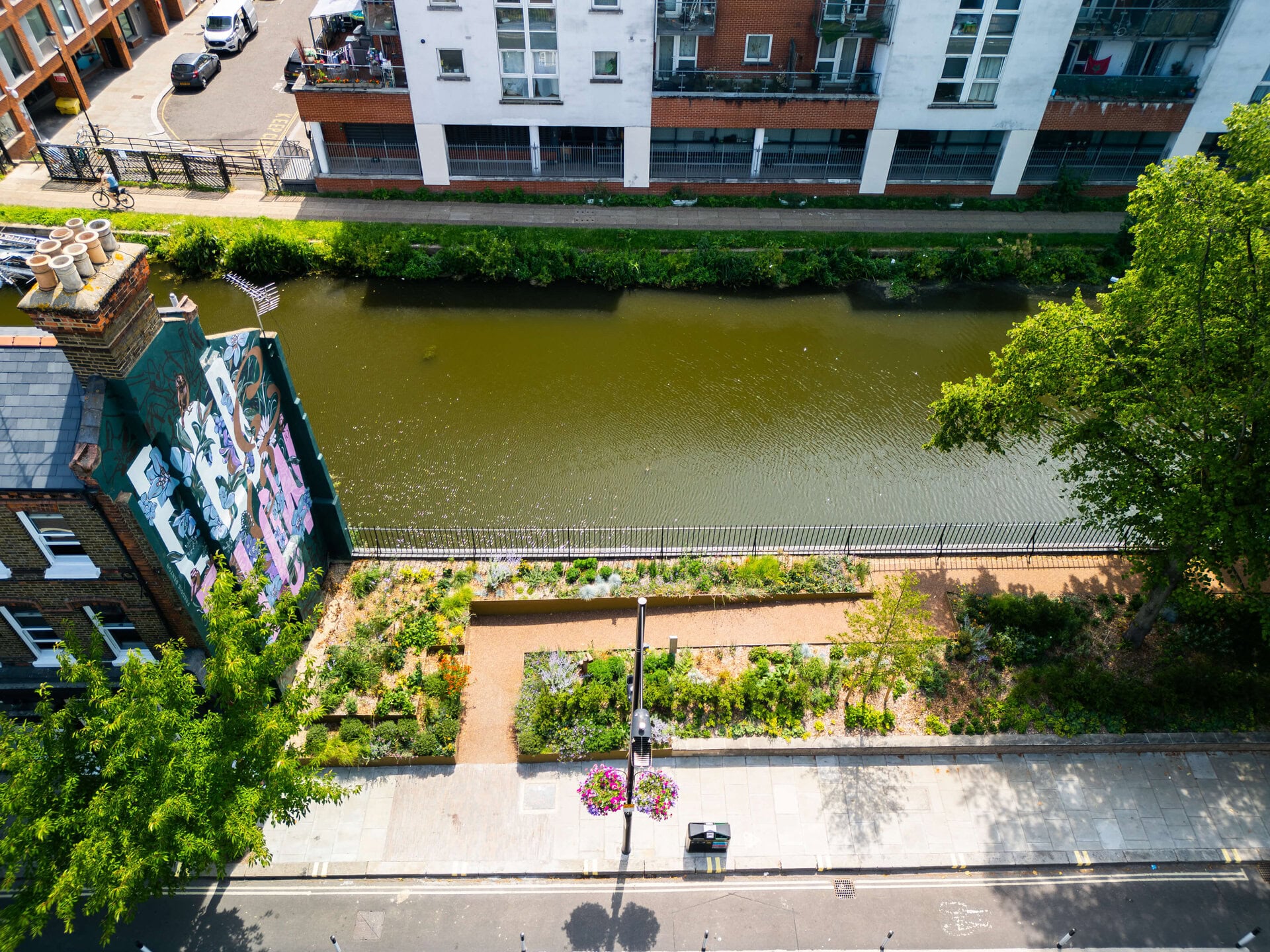
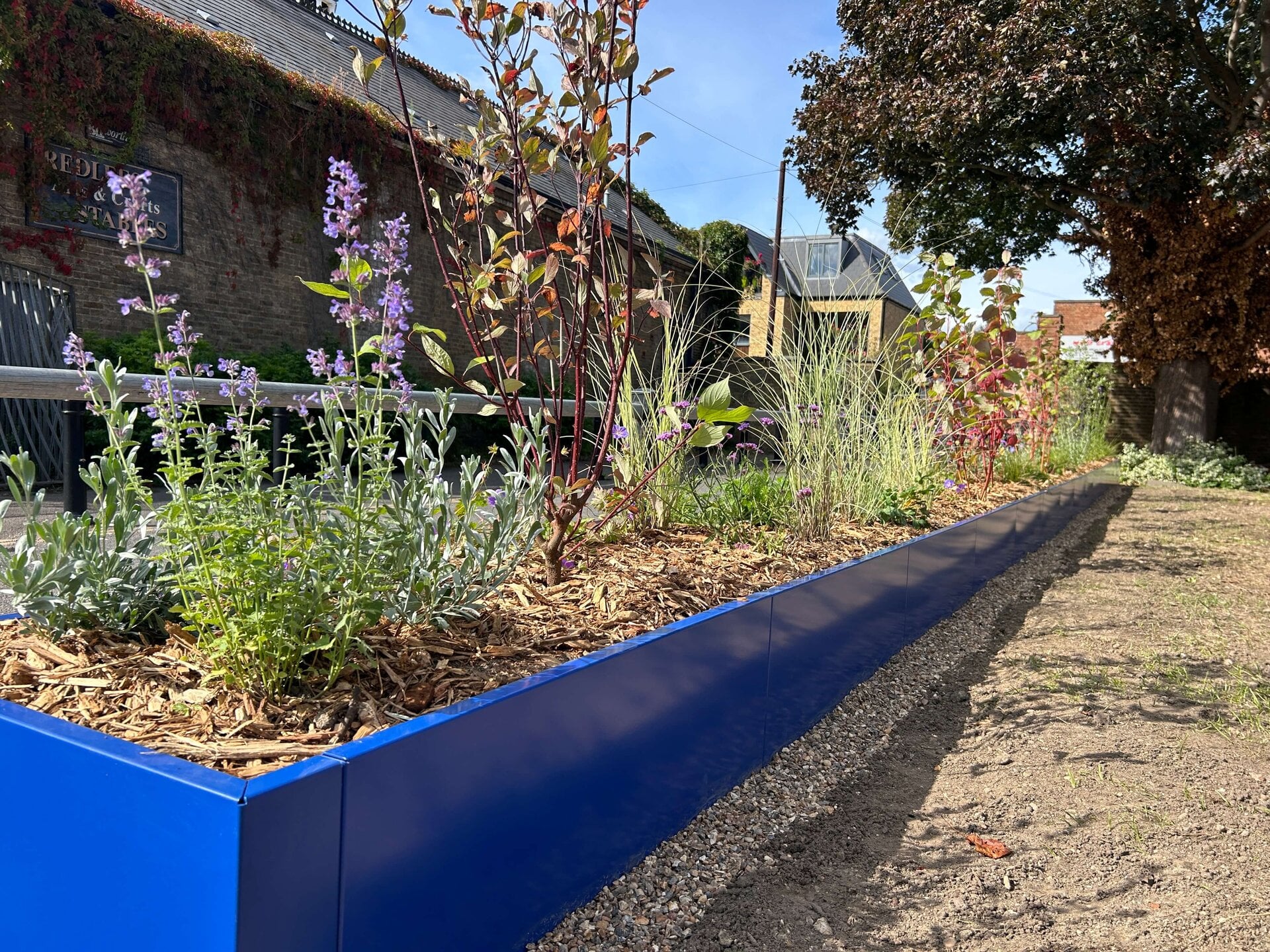
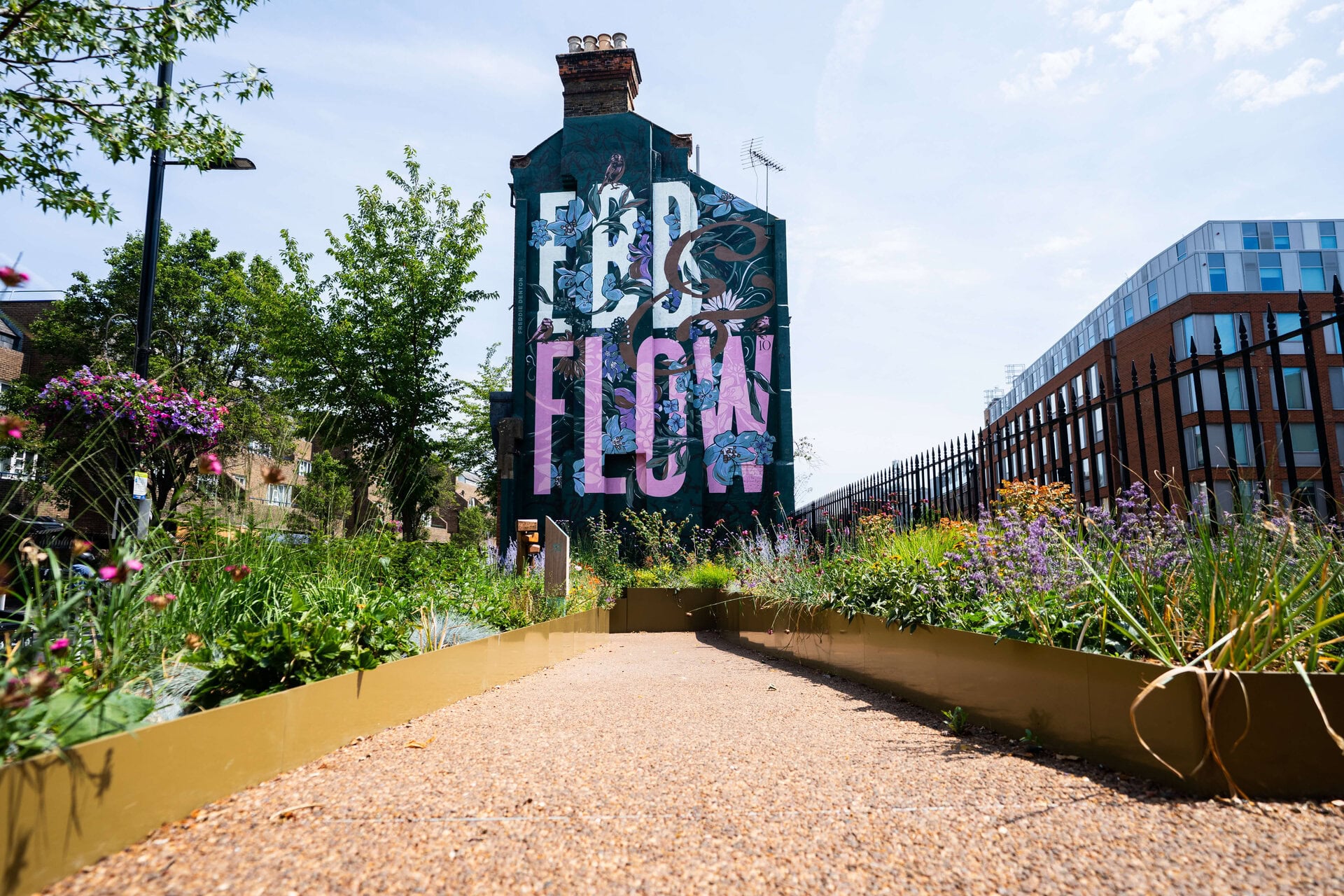
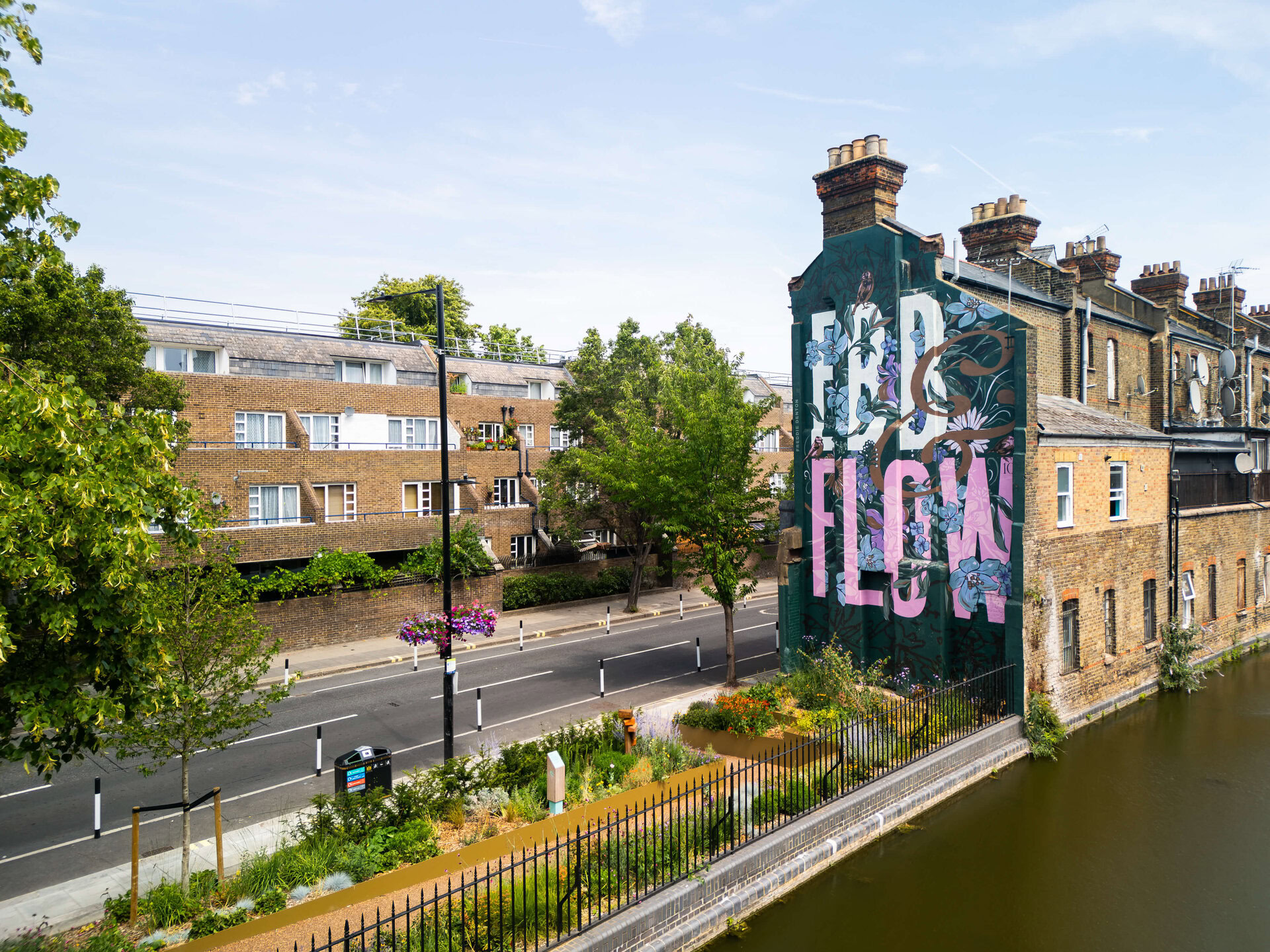
Spot the Echinops bannaticus in this vibrant planting scheme along Sutherland Road
Purple
A Meristem favourite, Verbena bonariensis brings a softer, airier quality to purple planting. With thin slender stems and clusters of small lilac flowers, it creates a lighter effect that floats above lower planting layers, adding movement to the landscape. Pollinator-friendly
Bringing colour to our landscapes is about making places feel uplifting, inclusive and alive. A bright planting palette reflects how diversity in nature can mirror diversity in people with different forms, textures and colours coming together in the same garden. Designing with diversity in mind helps create spaces that are not only visually engaging but also better for people and pollinators.