The definition of the public realm
The public realm encompasses any outdoor space that is open and accessible to the public. Streets, squares, parks and pedestrian routes all form part of it. If you can walk through a space, sit in it or pass by it without needing permission, then it is part of the public realm. Think of it as the accessible space between all the buildings that make up our towns and cities.
But public realm is more than just leftover space, it is part of what shapes people's everyday experiences of an area. It's where people move, meet, relax and interact with their surroundings, supporting everything from commuting and shopping to socialising. It influences how people move through towns and cities, where they are choosing to spend time and how they connect with these spaces around them.
A well-designed public realm can:
- Make streets feel safer and more accessible
- Encourage people to spend more time outdoors
- Support local businesses
- Create a stronger sense of identity, place and community
- Strengthen biodiversity and green spaces
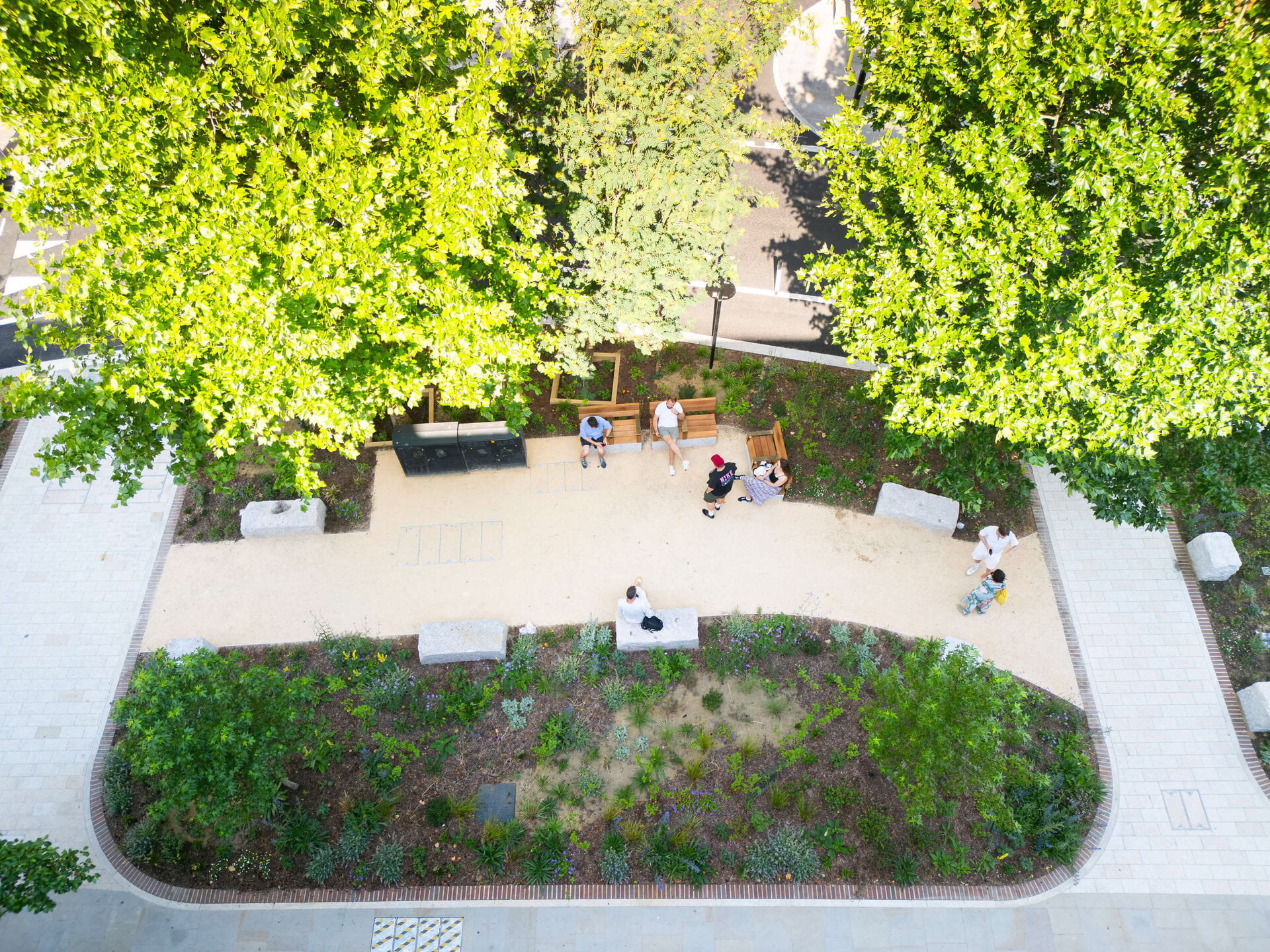
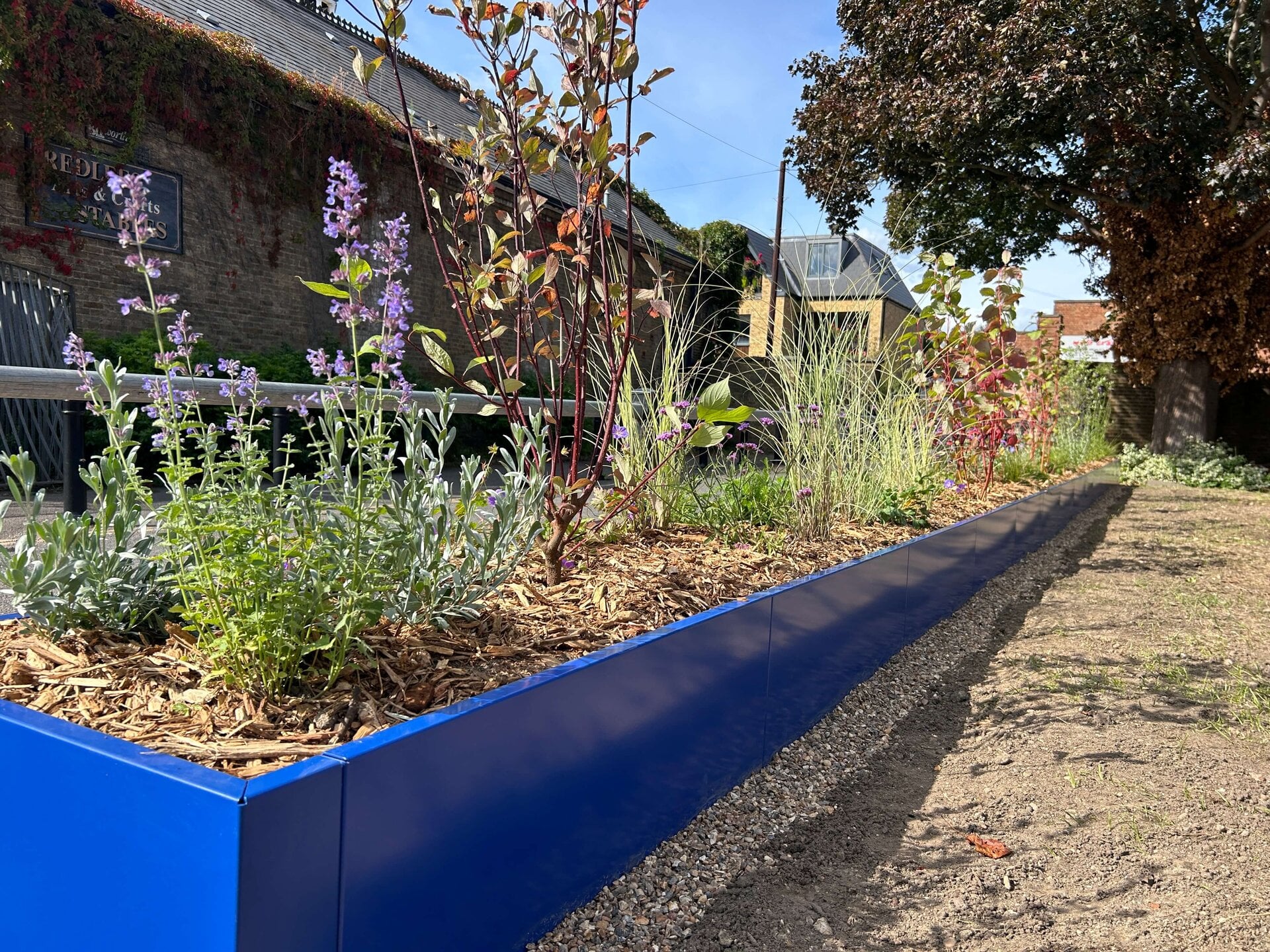
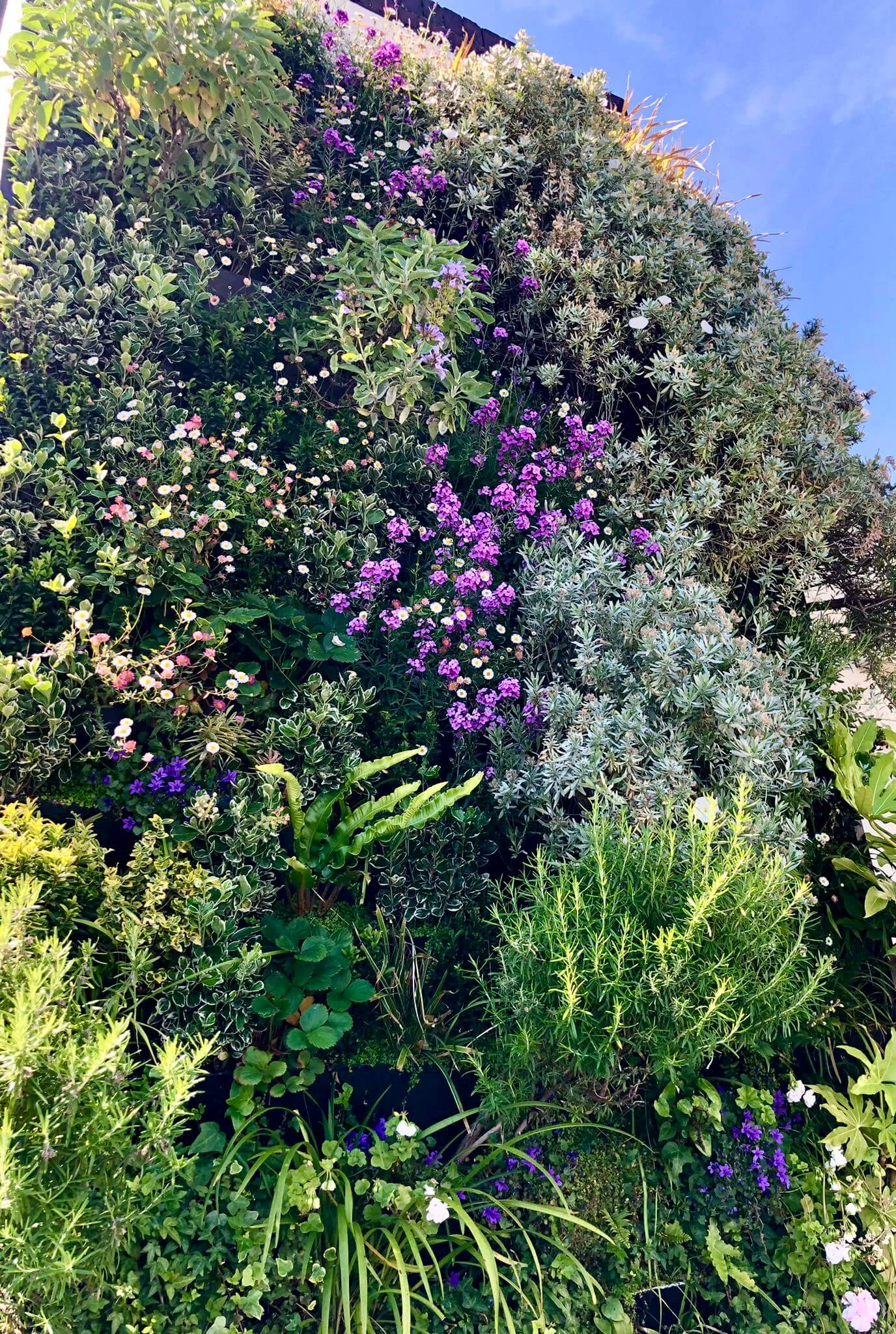
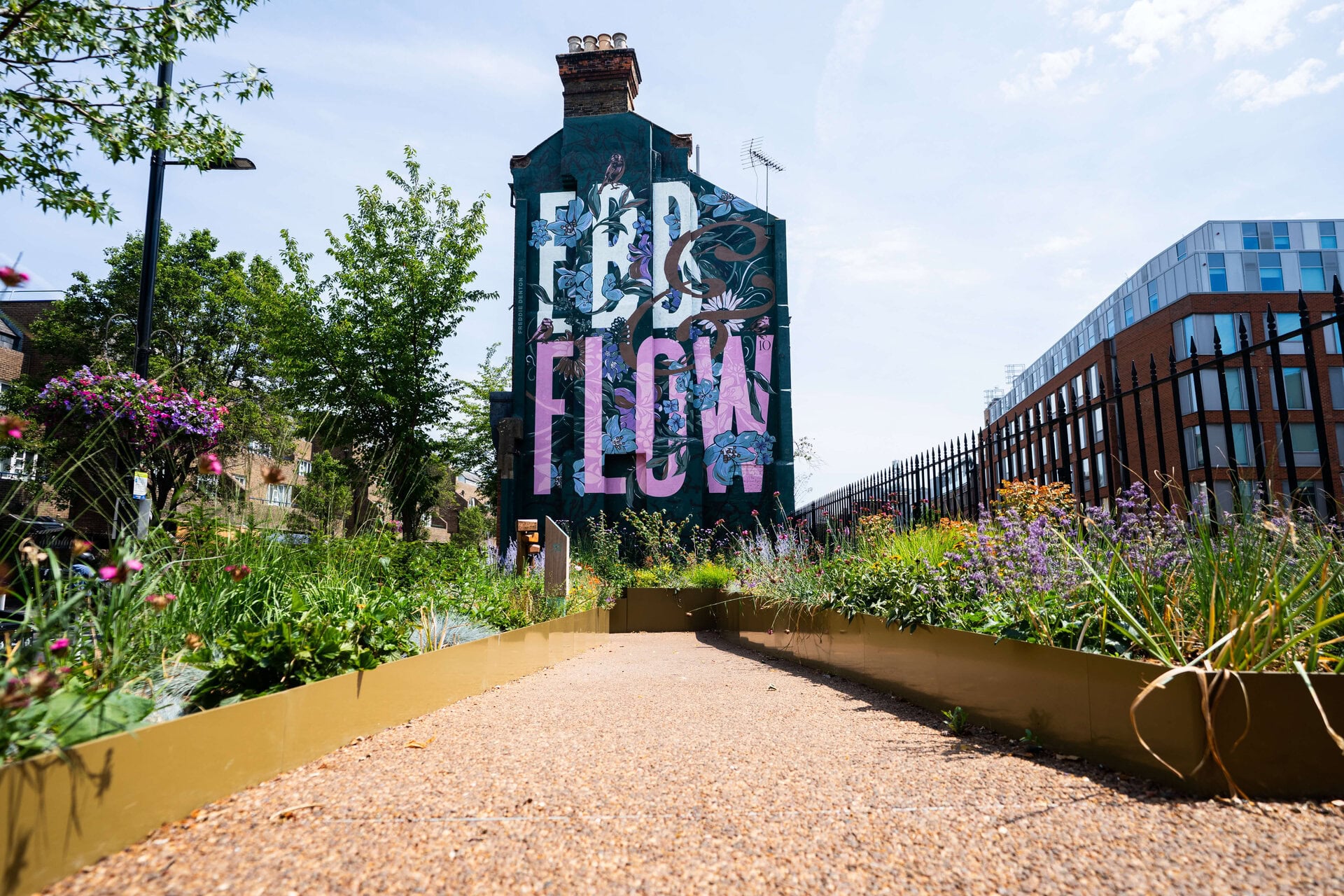
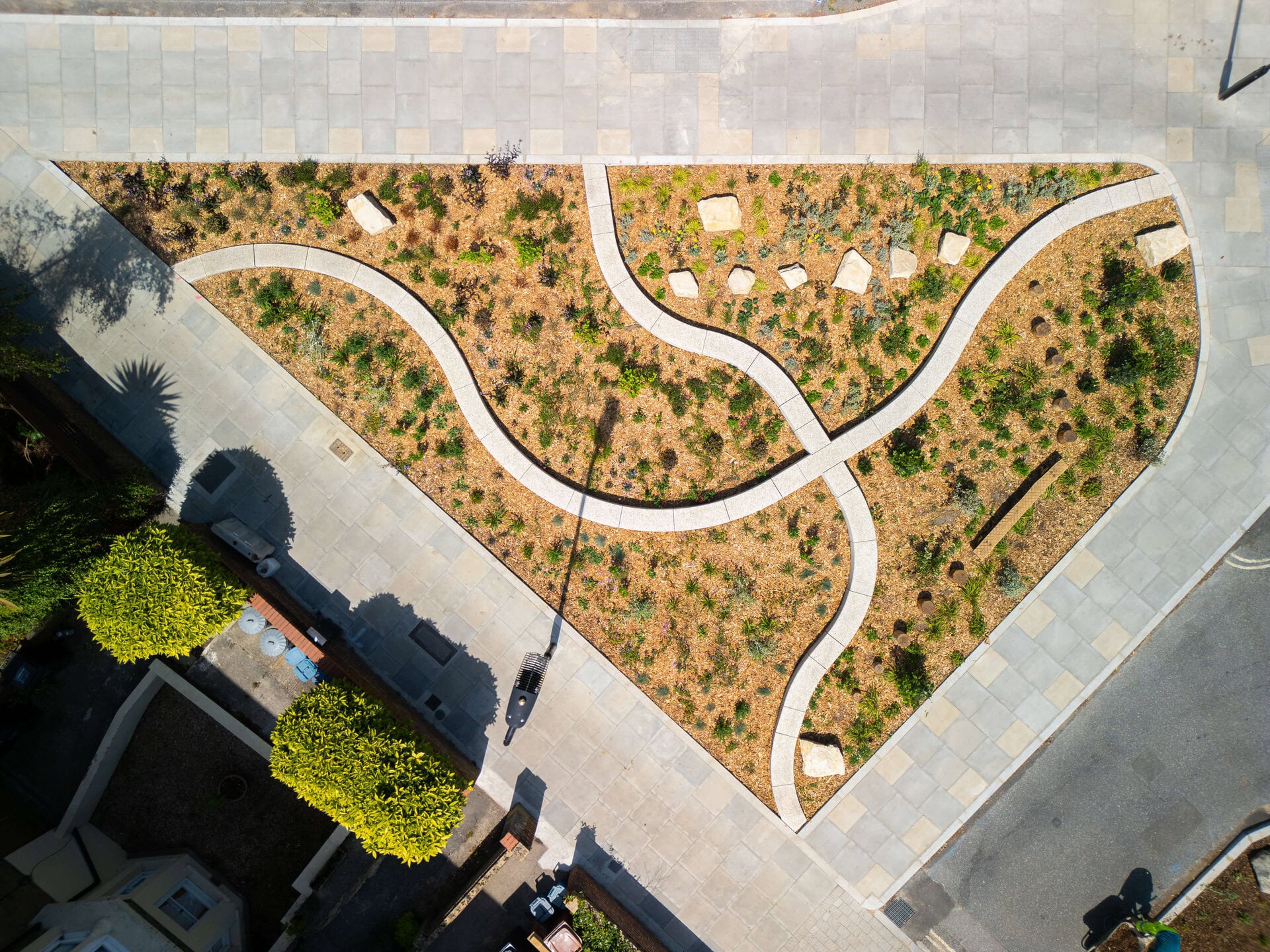
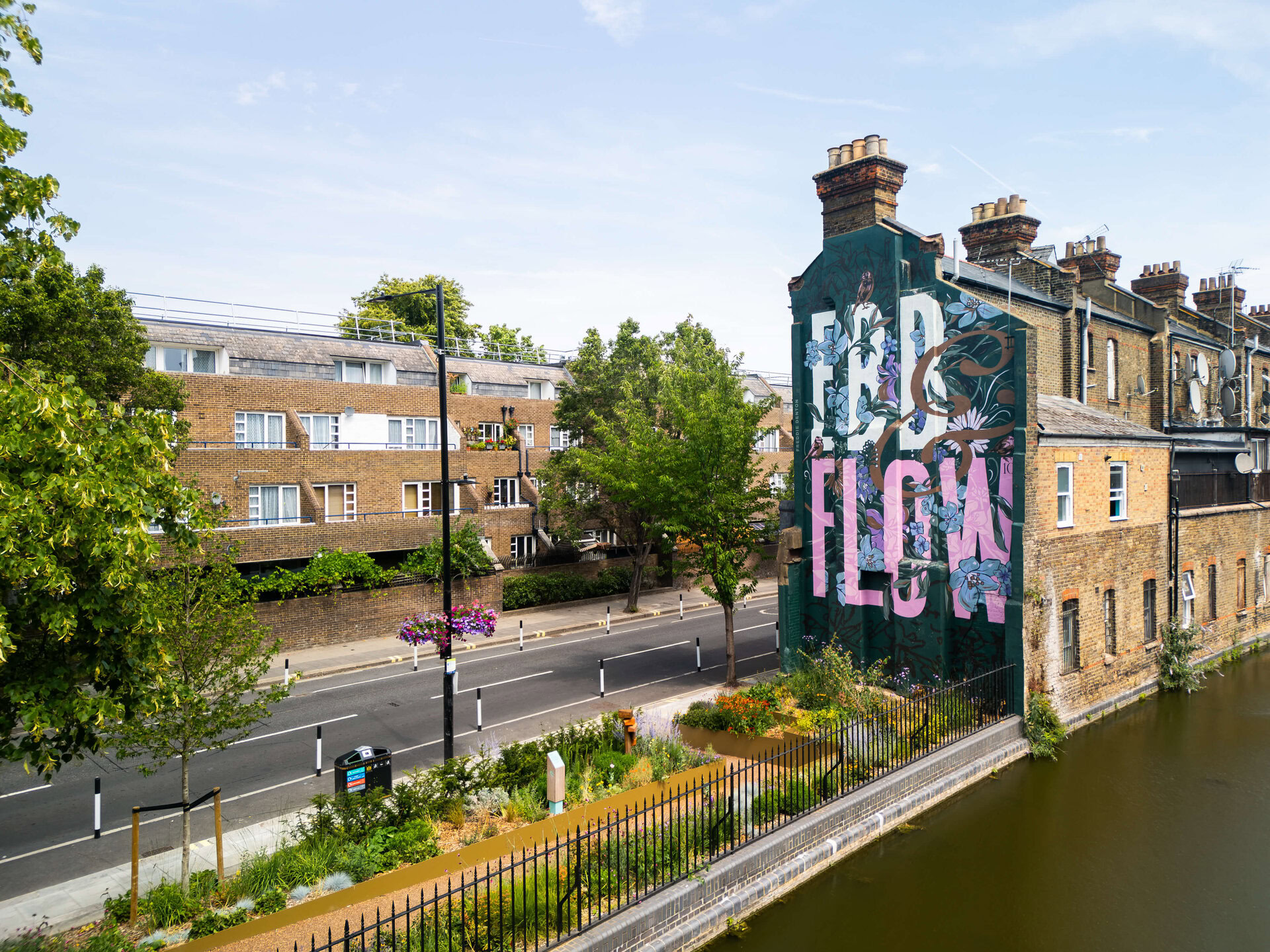
 Juniper House - Waltham Forest

What makes a good public realm?
A good public realm design balances function with experiences. It must be able to manage practical challenges like pedestrian safety and surface water drainage while also creating spaces that people actually want to see, pass through and spend time in. Successful public realm schemes typically prioritise:
- Accessibility - creating inclusive spaces that are easy for everyone to navigate
- Placemaking - enhancing an area's sense of identity and place
- Active travel - encouraging walking, wheeling and cycling through safe and thoughtfully designed streets
- Public space greening - integrating planting and sustainable drainage to improve biodiversity and climate resilience
How does the public realm improve accessibility?
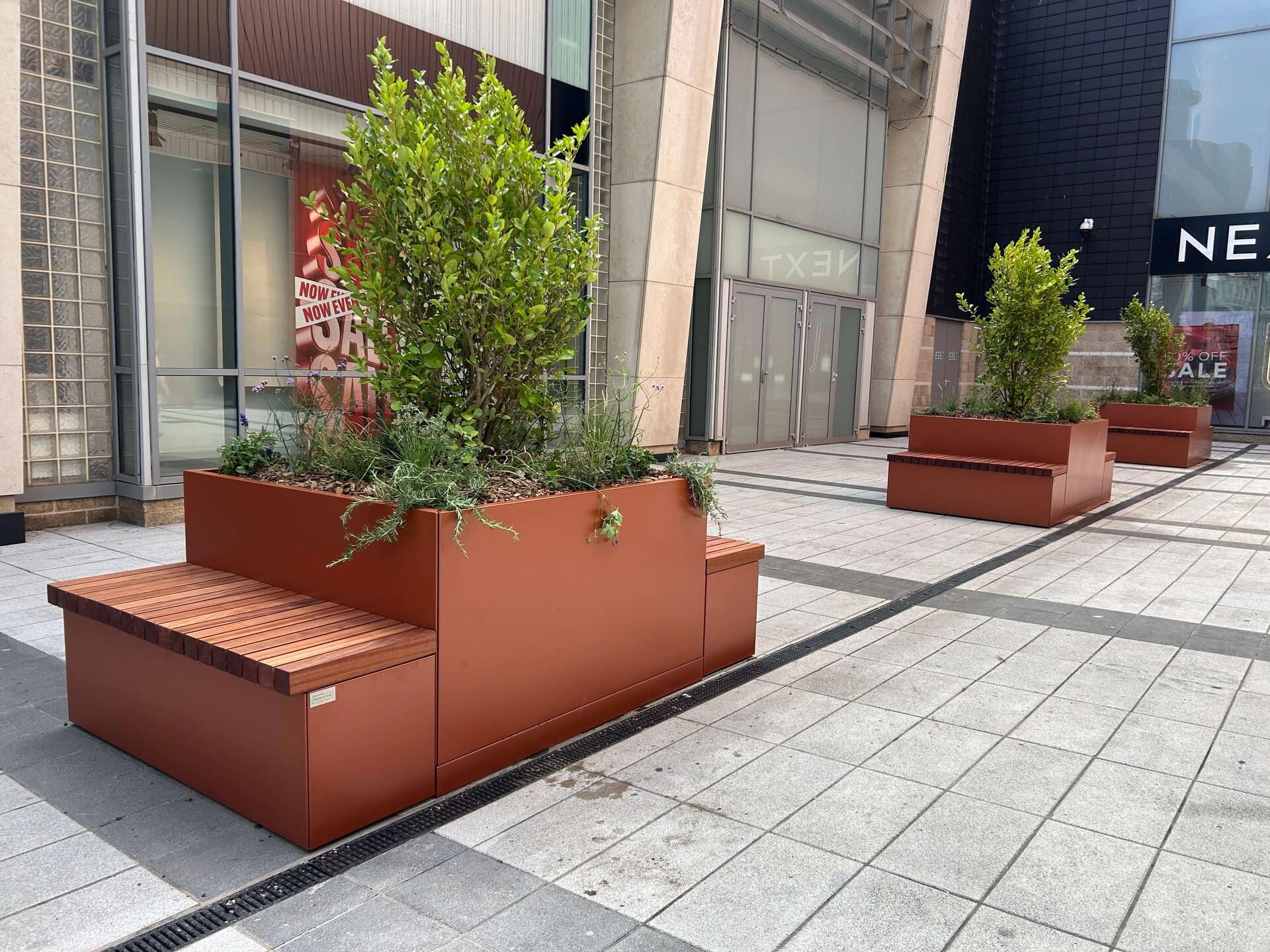
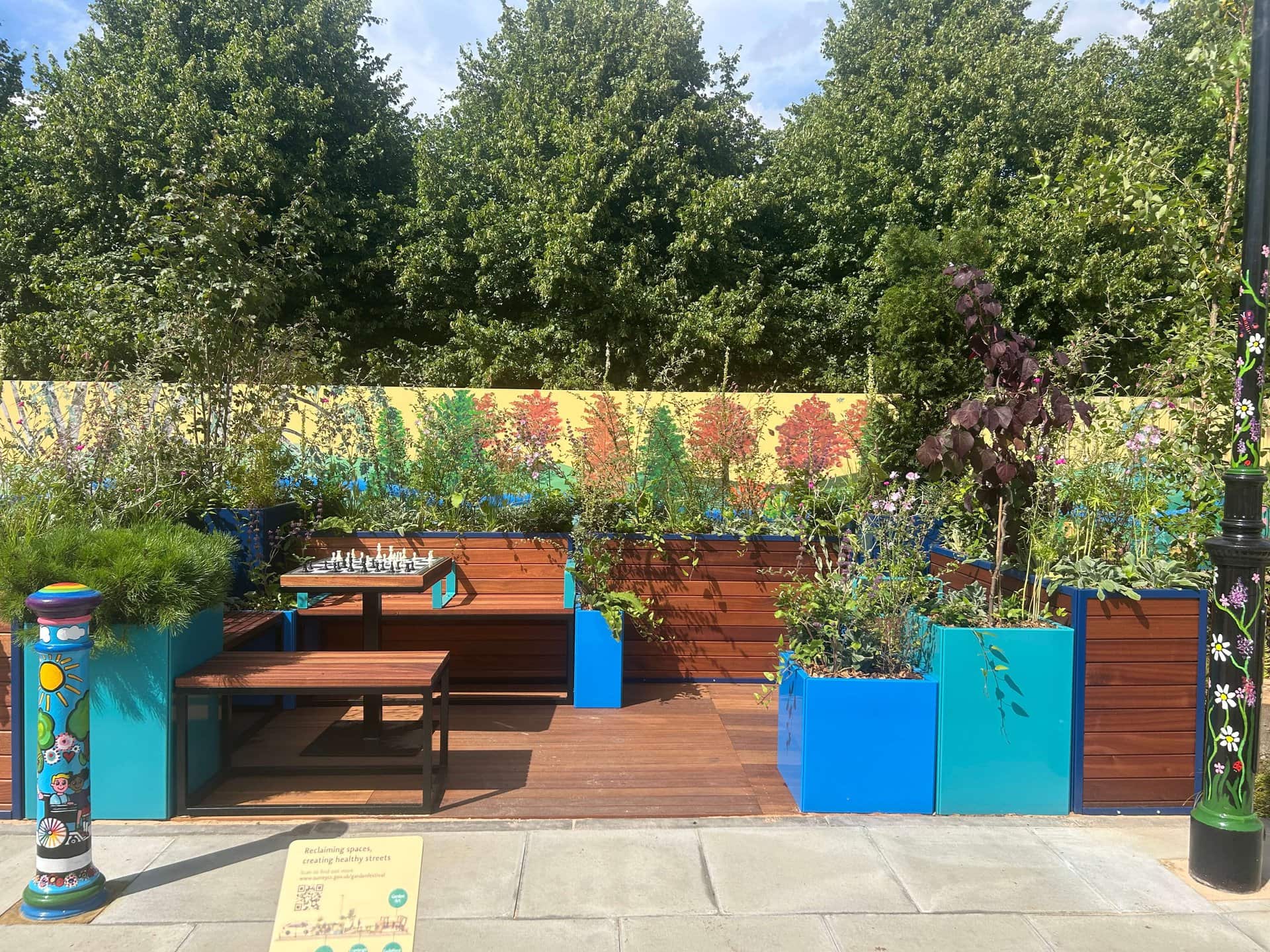
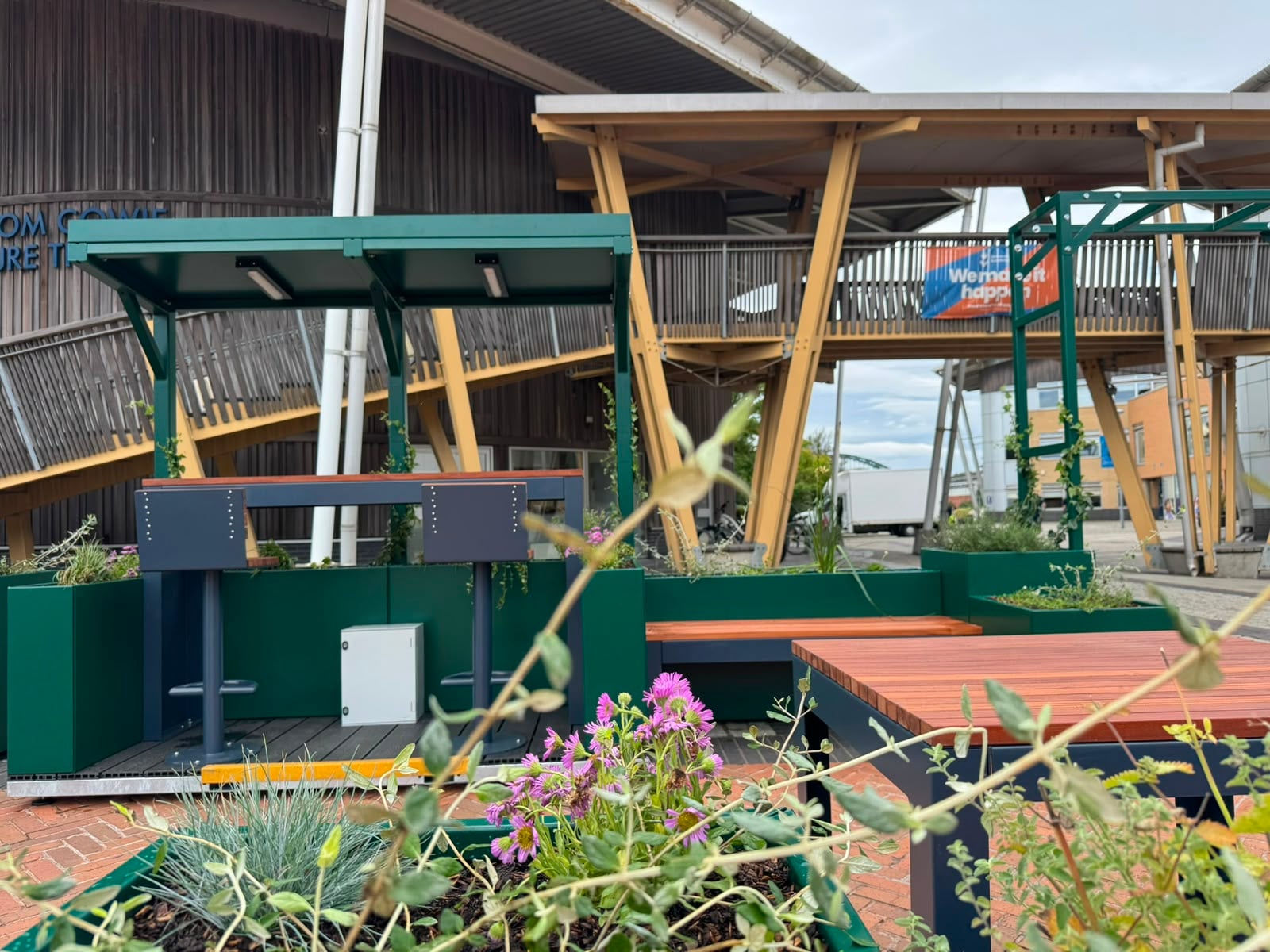
Accessible public realm design creates safe, more welcoming spaces for everyone. Wider and more balanced footways, pedestrian routes and strategically positioned street furniture provide places to rest while vibrant custom planters and integrated planting can help define routes, soften surroundings and build more comfortable environment for people passing through the space.
Before - Kenilworth Green Nature Garden
After - Kenilworth Green Nature Garden
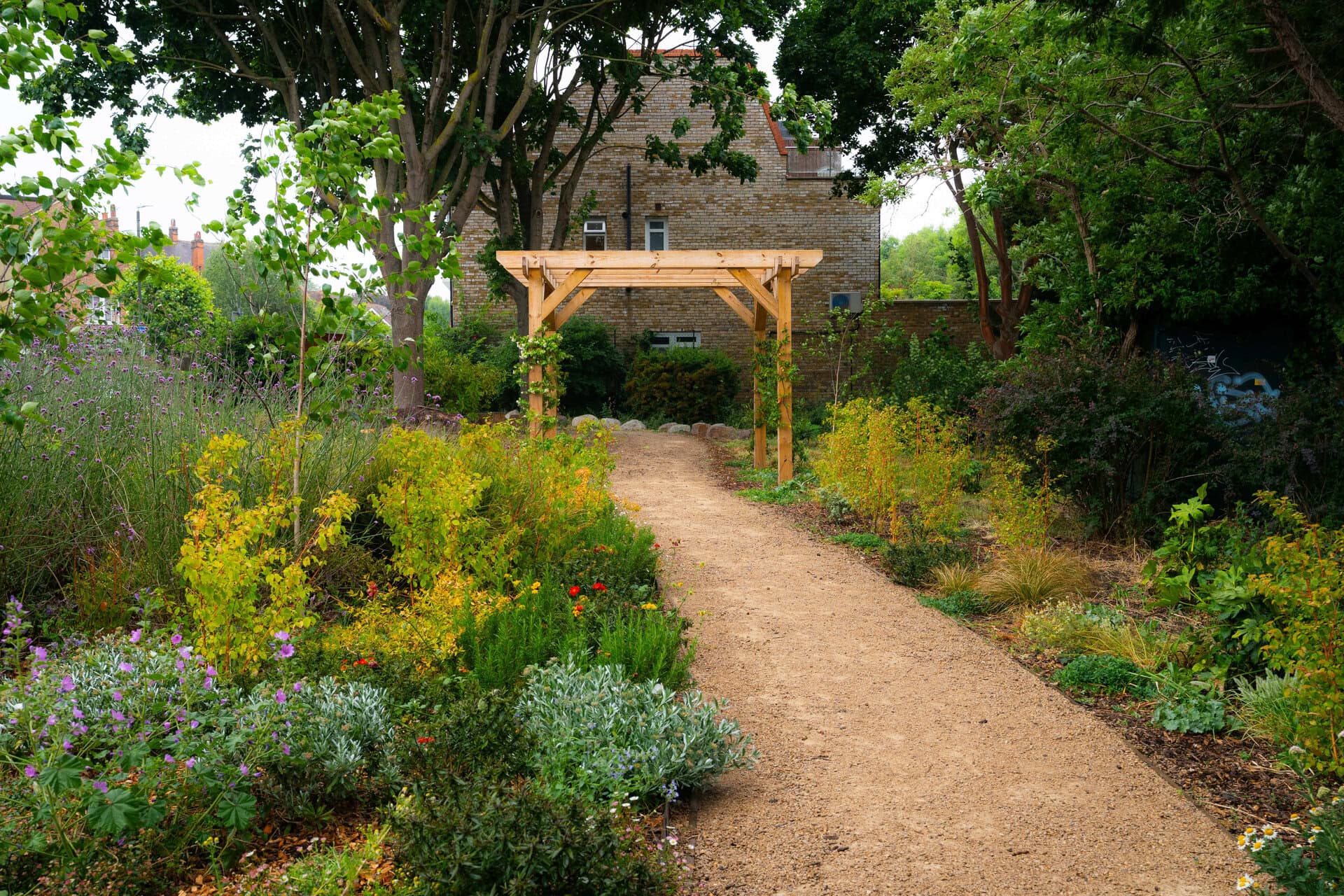
For example, Kenilworth Green Nature Garden was once an unused space with overgrown hedges but has now been transformed into a vibrant and used public space in Wimbledon, Merton.
How does the public realm create a sense of place?
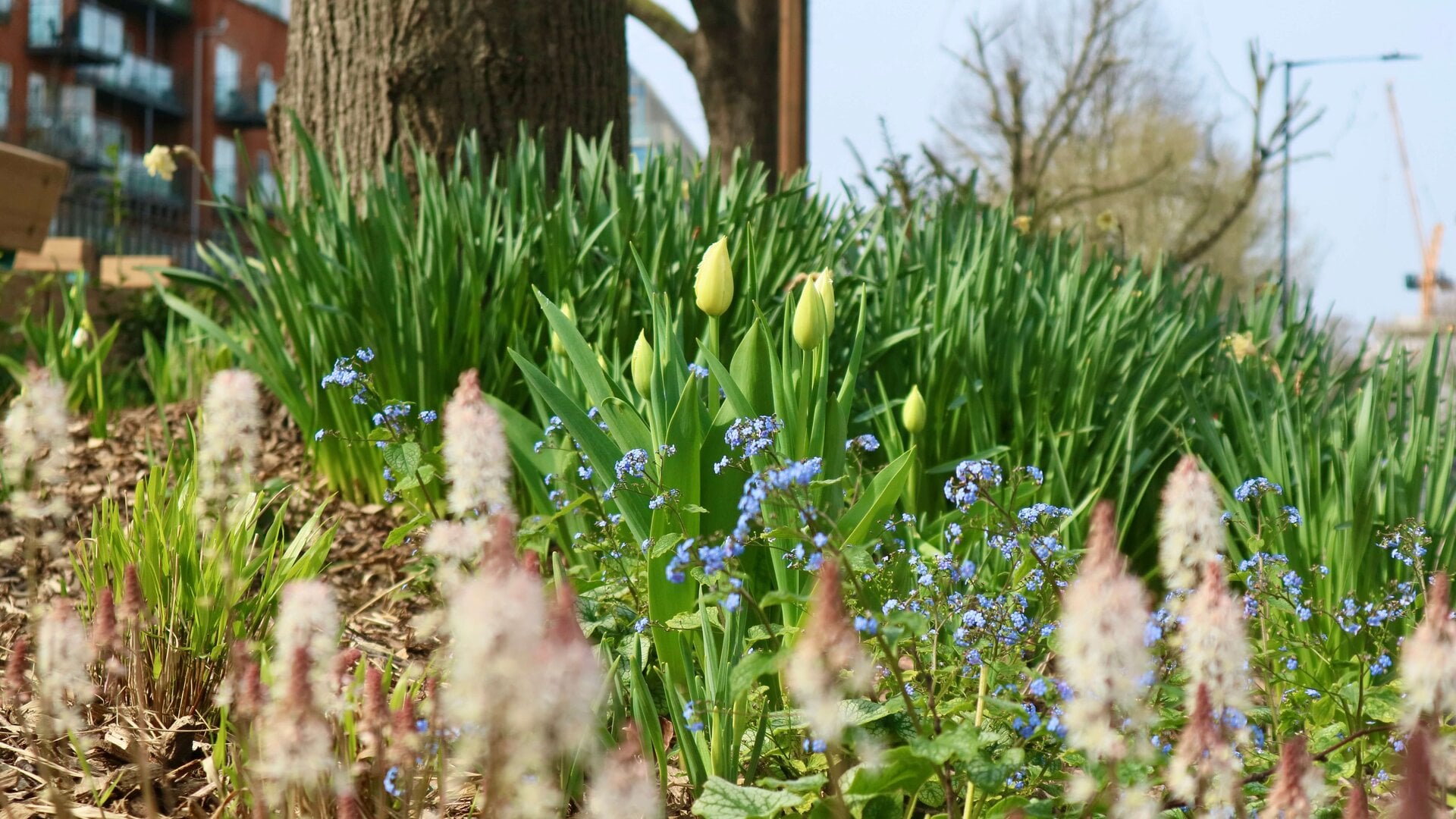
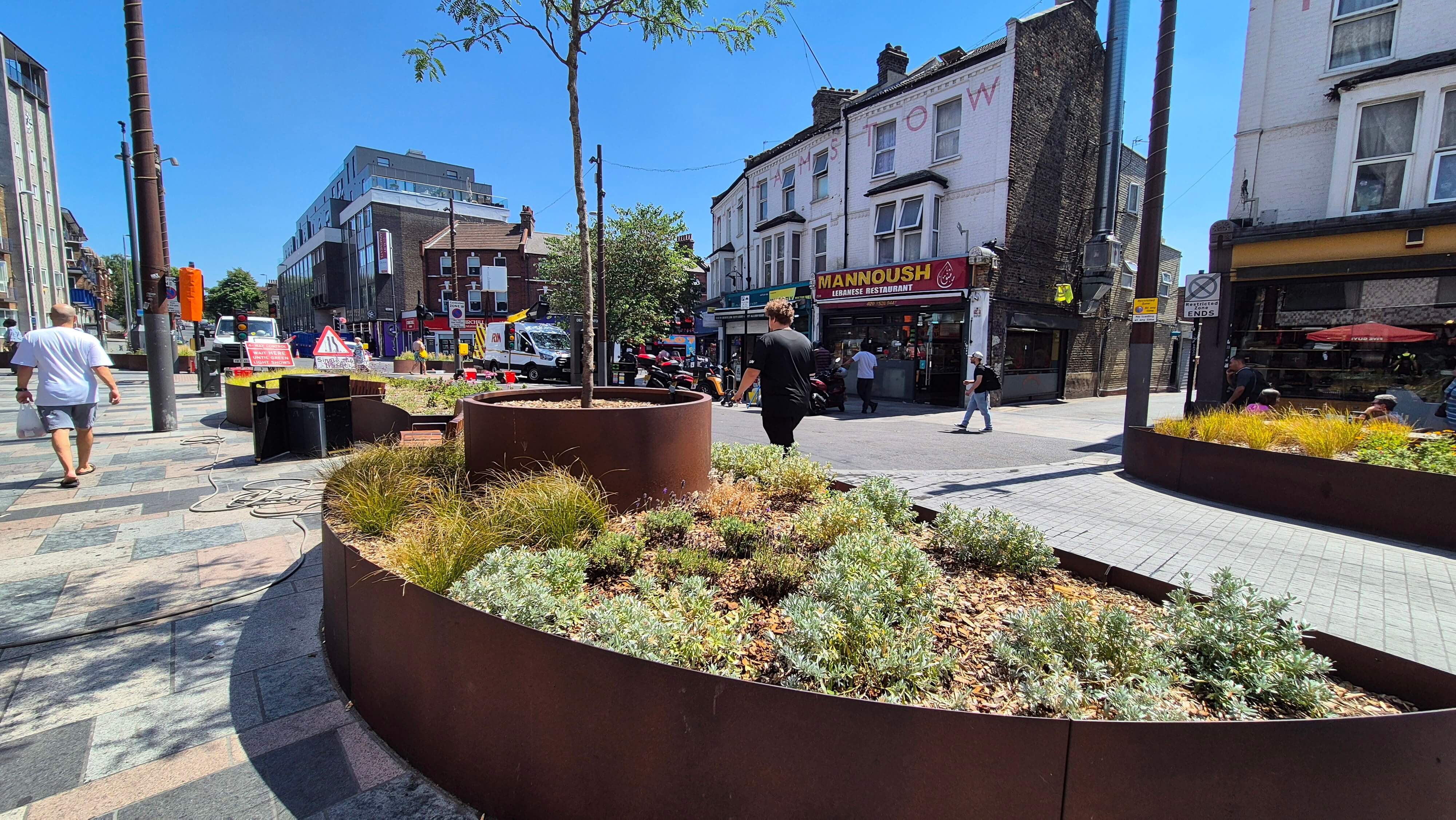
Successful public realm schemes reflect the unique character of its surroundings. Through tailored planting schemes, soft landscaping like turfing and planting, bespoke planters and community input, public spaces can become much more memorable destinations that encourage people to stop, spend time and return.
How does the public realm support active travel?
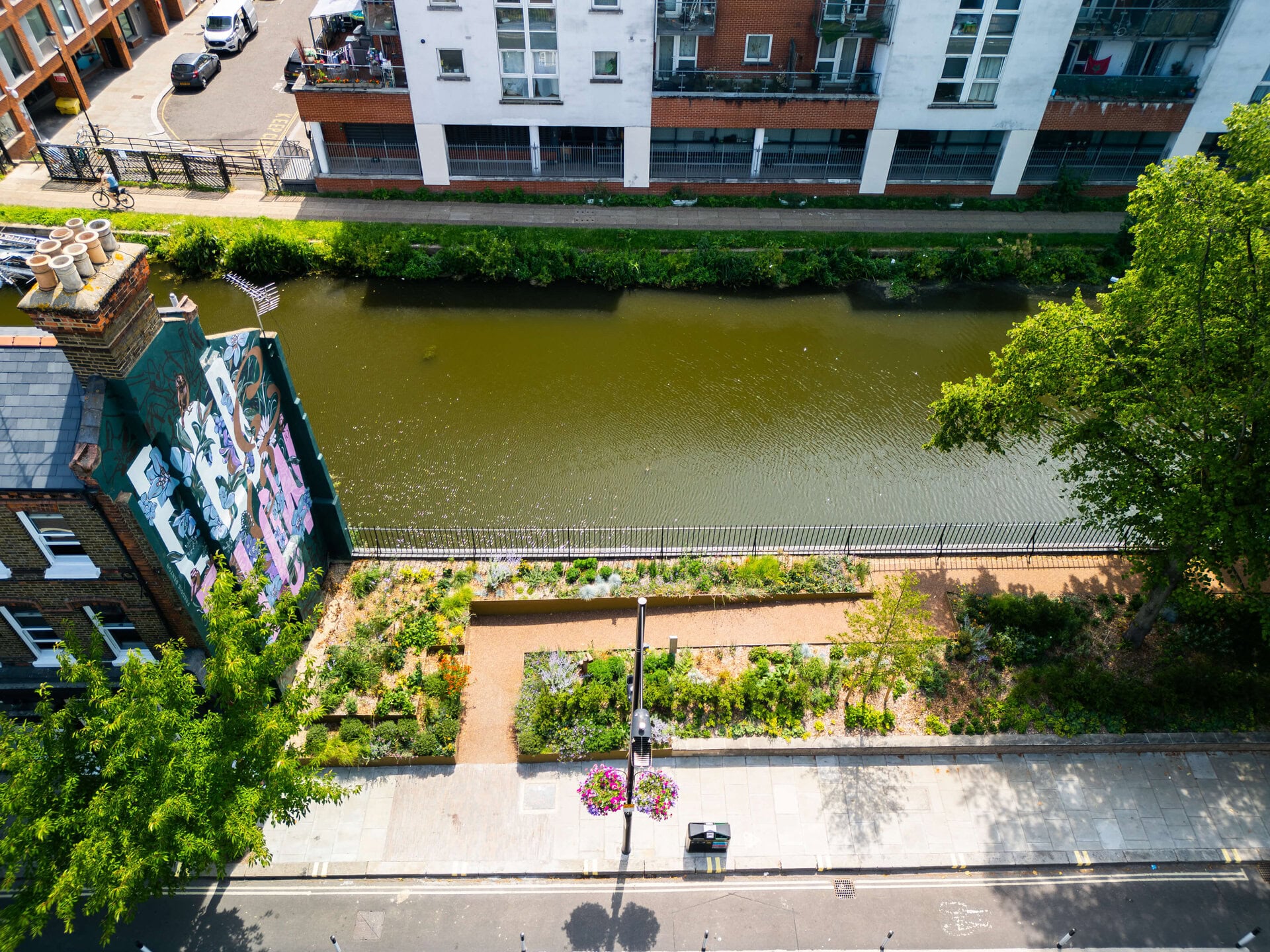
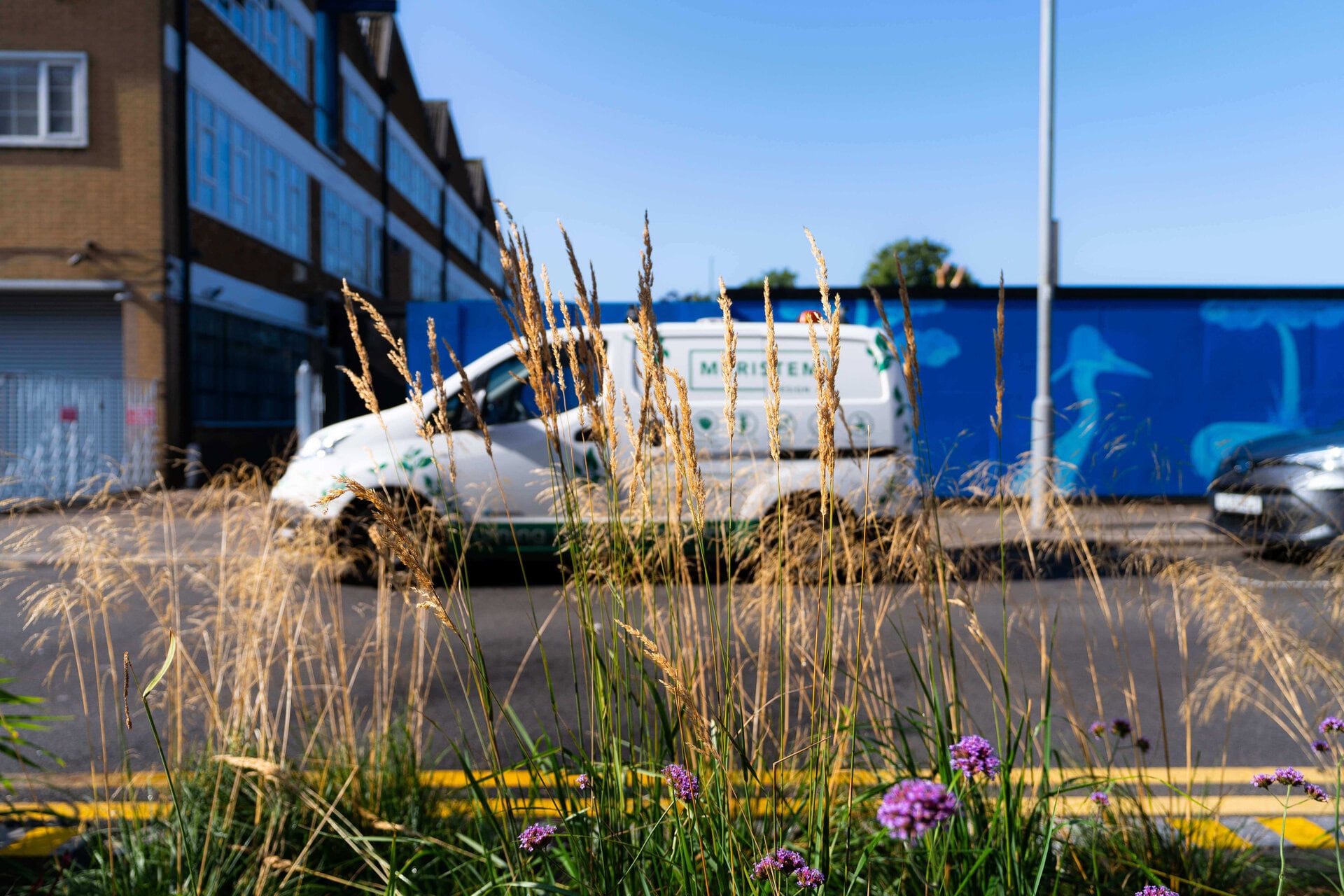
Walking and cycling are quickly becoming a priority within urban environments. Integrating rain gardens, street trees and biodiverse planting alongside pedestrian and cycle routes helps to create greener, safer and more attractive journeys while improving the everyday experience of people who use active travel.
Markhouse Corner rain gardens, tree pits and cycle lanes
Forest Road rain gardens and cycle lanes
How can public realm greening improve the public realm?
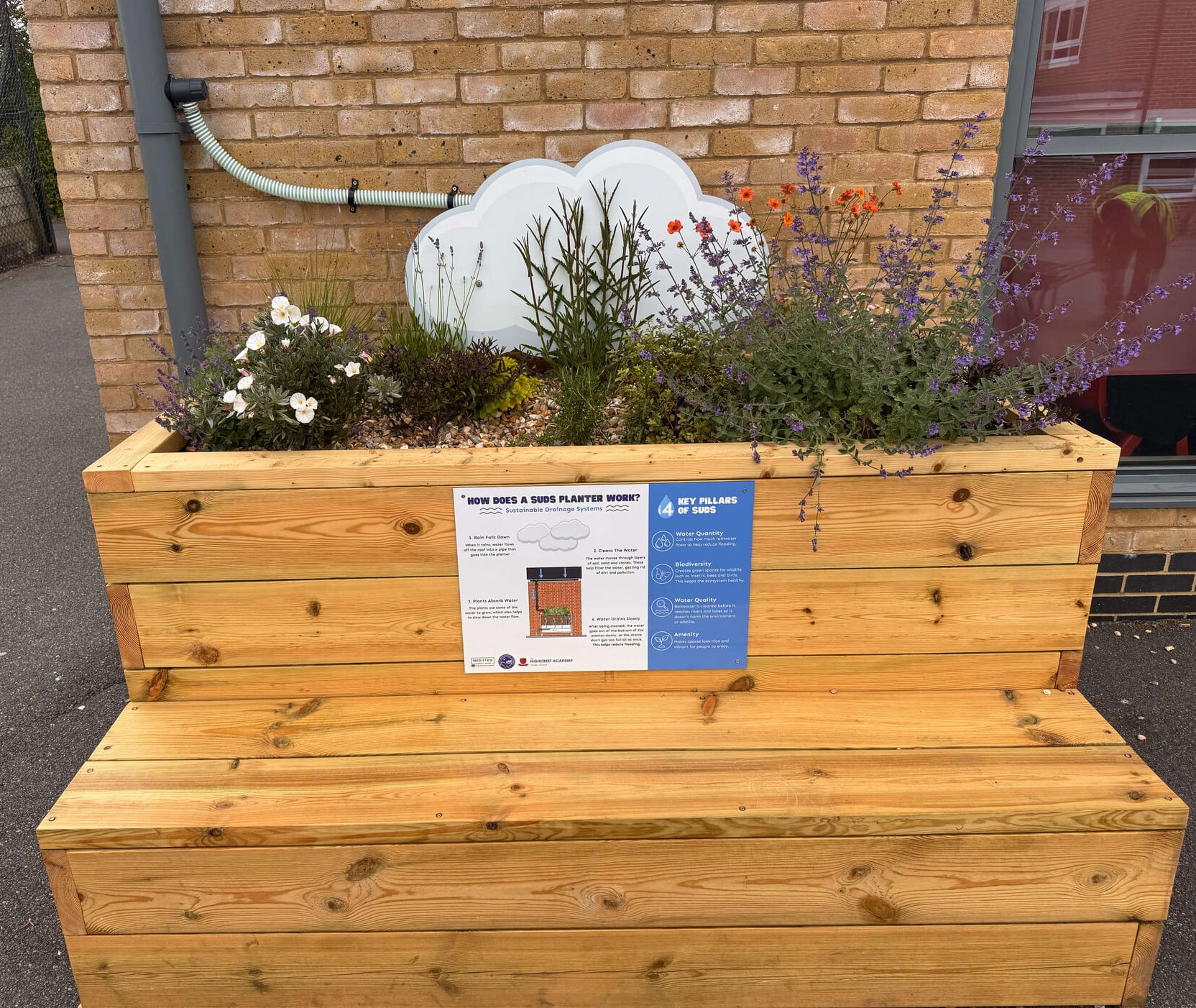
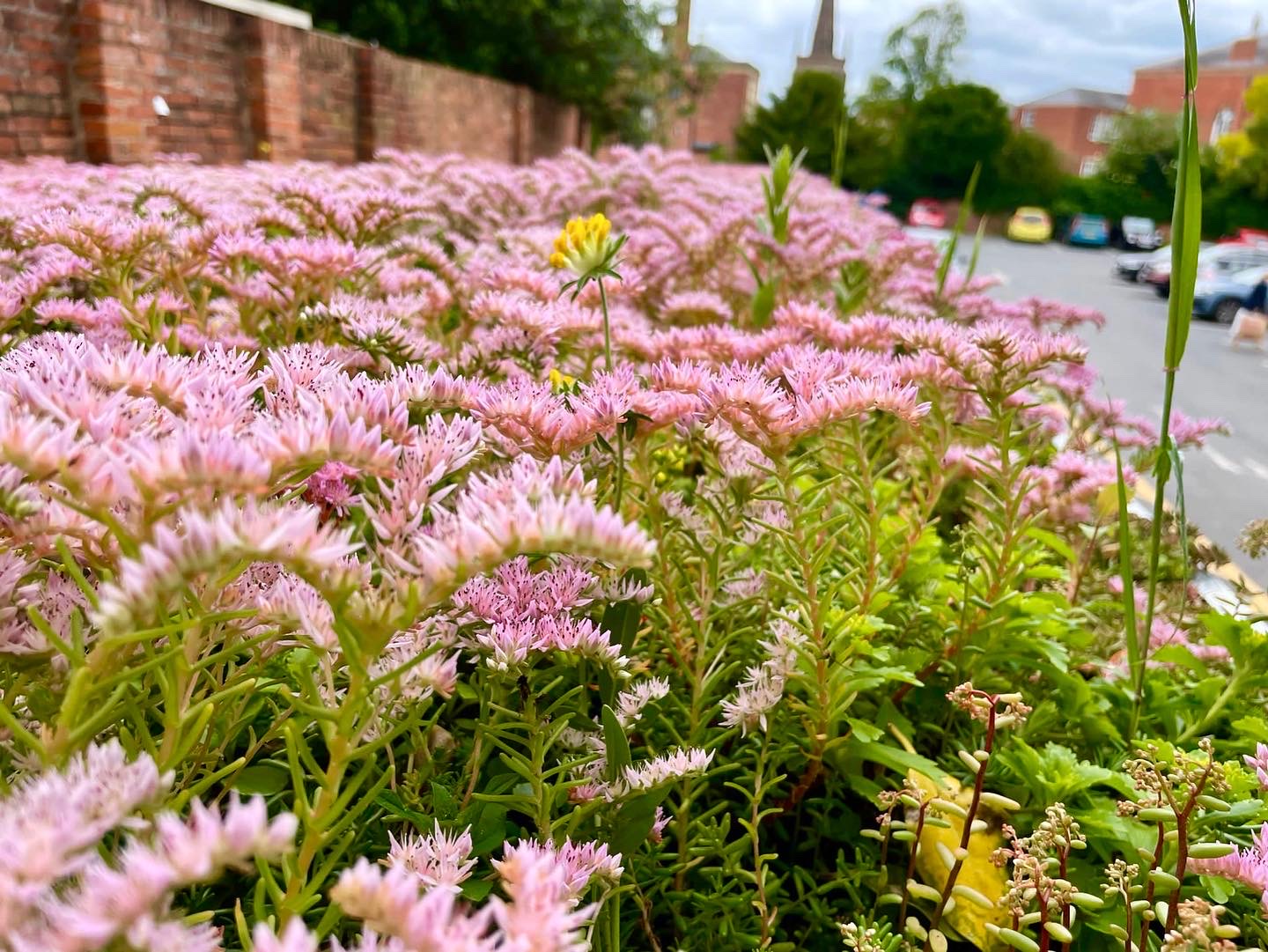
At Meristem, we prioritise greenery, climate resilience and biodiversity in every project we undertake, rather than treating sustainable drainage and planting as secondary elements. By incorporating public space greening features like rain gardens and SuDS planters, we create landscapes that help manage surface water and support local wildlife.
Through ongoing landscape maintenance, we ensure these spaces continue to establish successfully and thrive long-term.
How do we approach public realm?
At Meristem Design, we prioritise public realm greening, climate resilience and biodiversity in our designs from the outset, rather than treating drainage and planting as separate issues. Focusing on designing and integrating planting and sustainable drainage can provide multiple benefits for people using the space and so it makes sense to include them right from the outset.
The best public realm schemes are about more than filling the gaps between buildings, they are built to enhance the environment and the experience of those who use them on a daily basis.