The challenge that Stockholm Tree Pits address
A healthy urban tree can need as much as 30 cubic metres of loose, uncompacted soil to grow, thrive, and reach maturity. But in modern cities that are layered with underground utilities, crowded with infrastructure, and sealed with layers of pavement, this number can feel unrealistic. As our urban environments become denser and green space declines, finding smarter ways to support tree health is an essential challenge for the future of our cities.
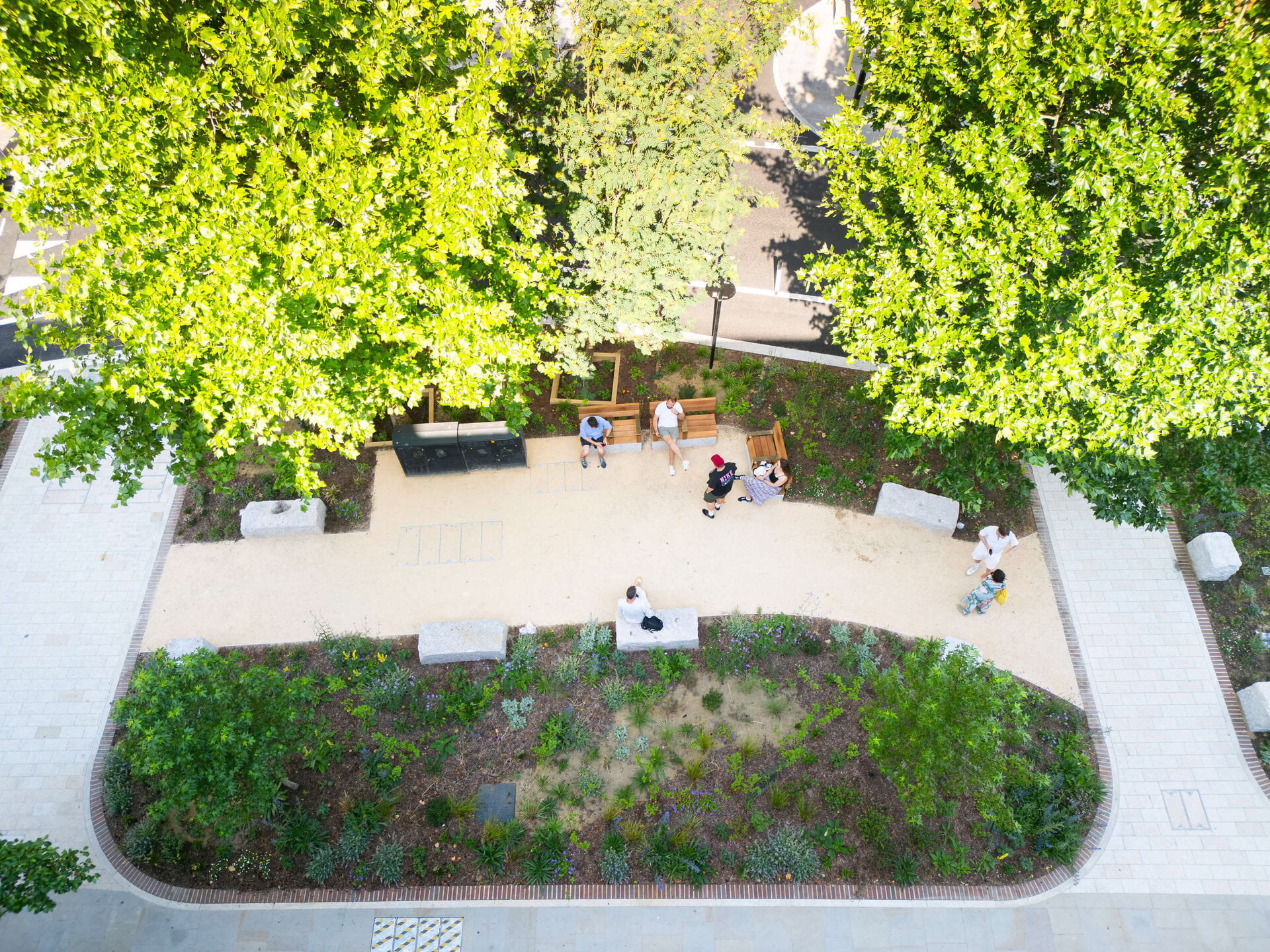
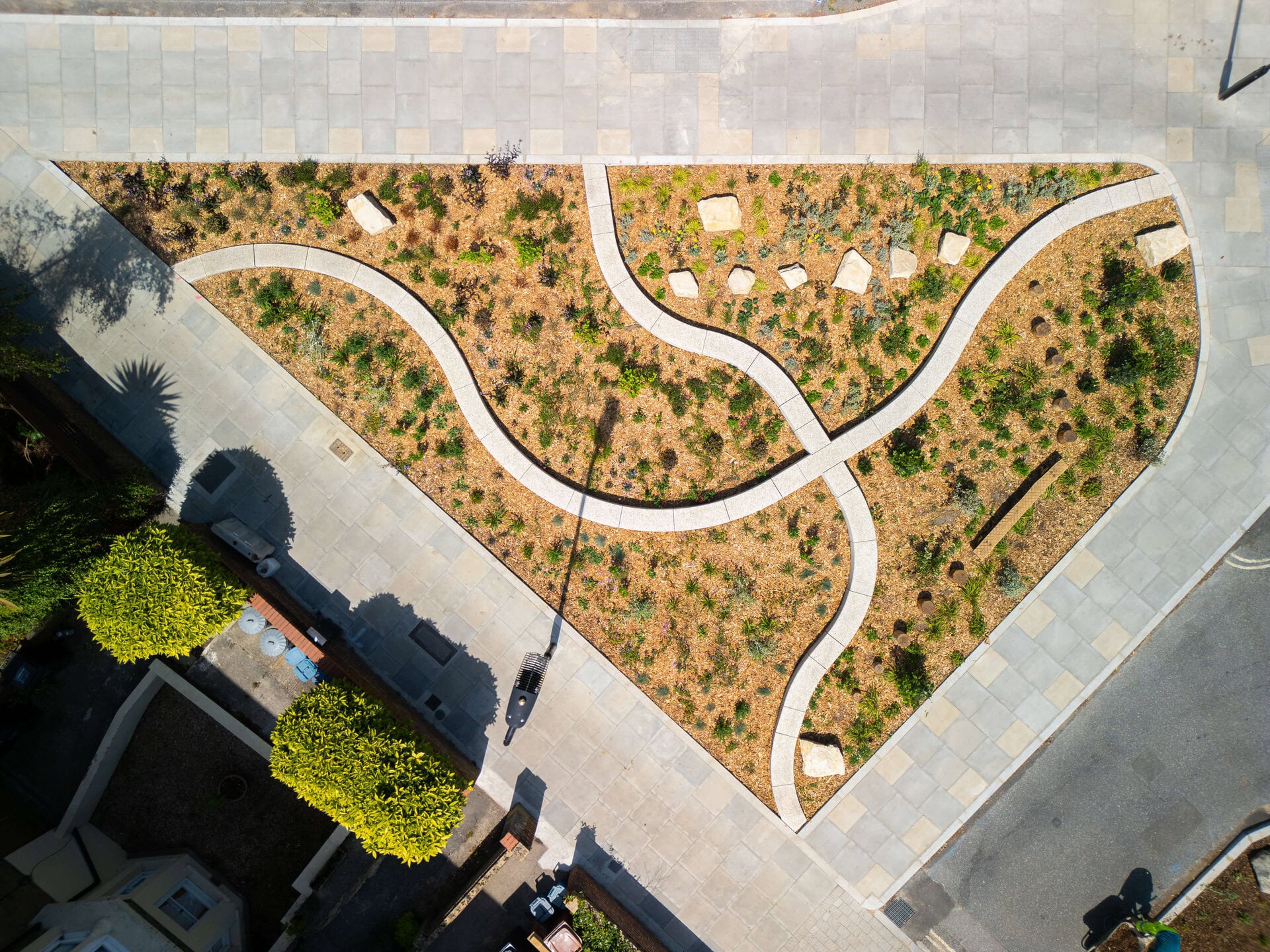
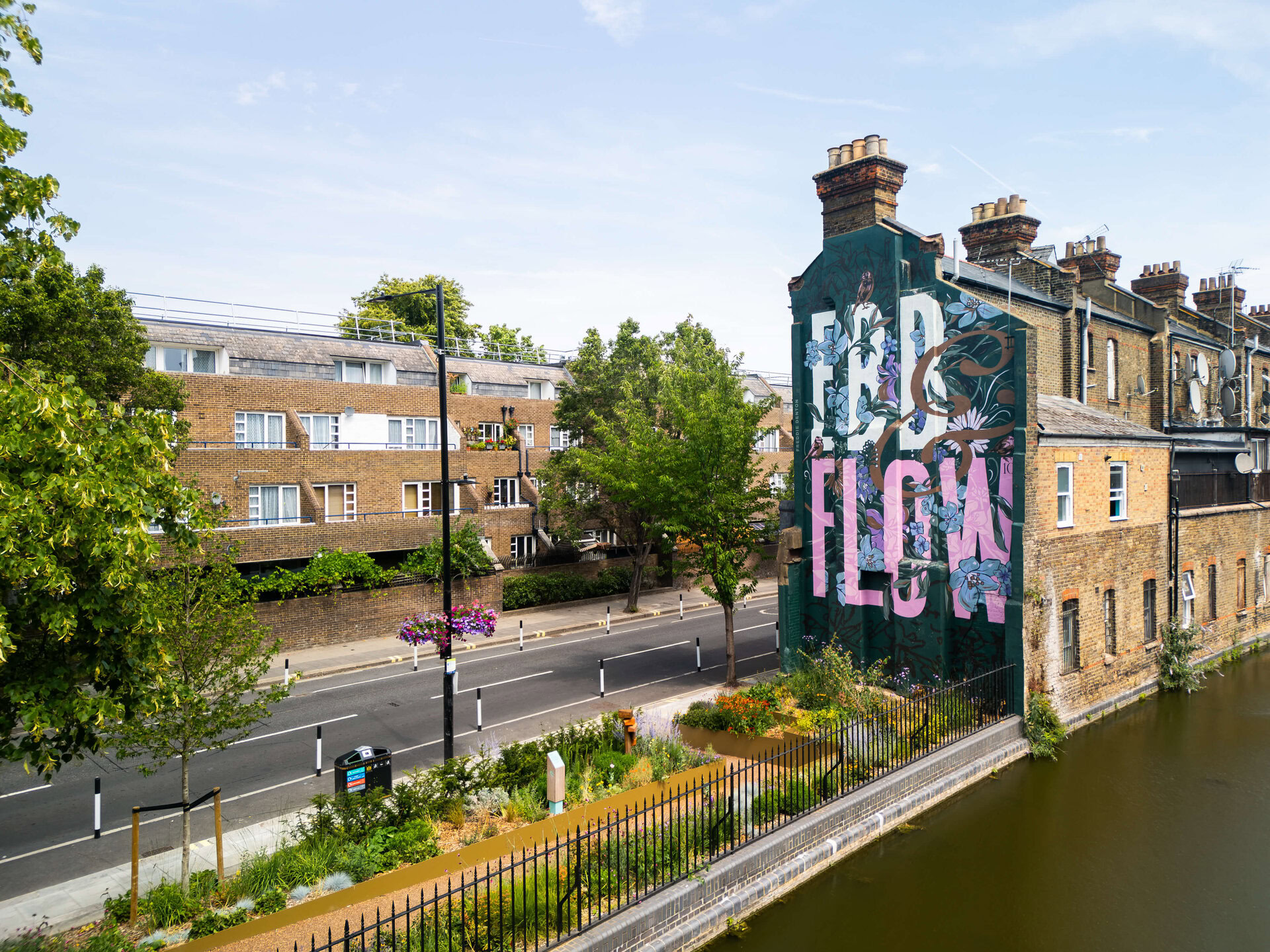
 Birdseye view of Rain Gardens and trees installed by Stockholm Tree Pit systems, Markhouse Corner
Why traditional tree pits fail in our cities:
Our paved spaces are built to accommodate heavy footfall, new infrastructure and services, and high levels of vehicle traffic - not trees and greenery. They require underlying soil to be highly compacted to support the activity above ground and are designed to inhibit water from getting under the paving. Traditional tree pits, often small and isolated with compacted soil, provide little water or space for roots, so trees struggle to thrive and are frequently overlooked in street planning.
Stockholm Tree Pits: An innovative solution
Stockholm tree pits approach tree planting with considerations of our urban limitations. Originating in Sweden, these tree pits are designed to recreate forest-like soil conditions beneath hard surfaces to better support tree growth and maturity. Their features include:
- Large underground rooting zones that can be shared across multiple trees
- Load-bearing uncompacted soil structure consisting of a mix of stone, soil and biochar - strong enough to support bikes, pedestrians and cars above
- Irrigation systems such as inlets and trenches are often incorporated to direct runoff into the pits
- Drainage layers and pipes to prevent waterlogging and encourage sufficient water availability
 Tree pit and drainage proposal for Markhouse Corner - Supplied by Churchman Thornhill Finch
Markhouse Corner: A Stockholm Tree Pits case study
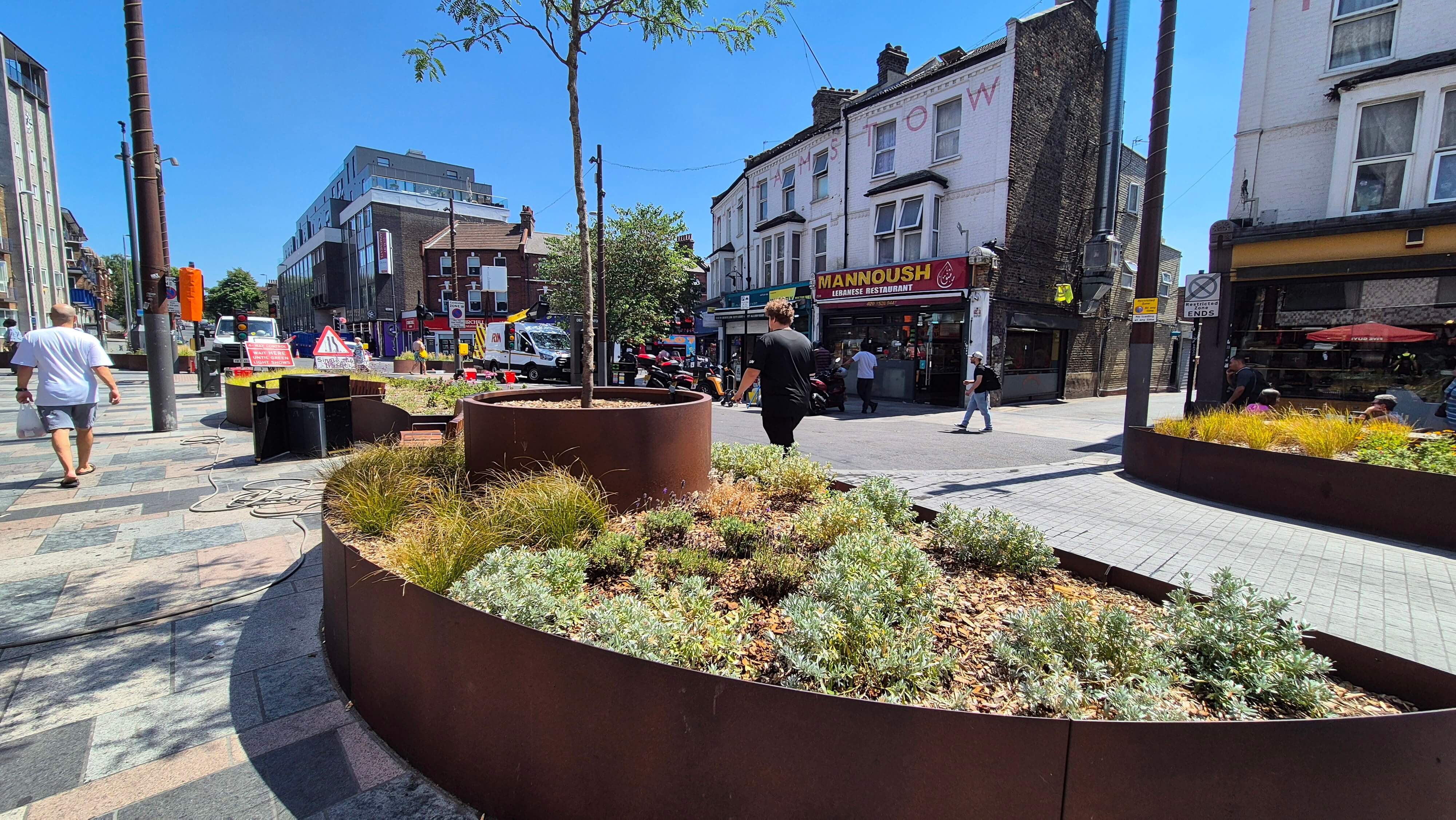
Markhouse Corner is a bustling corner nestled on a Waltham Forest high street, centring many businesses and restaurants and was very much in need of some canopy cover. We worked with the London Borough of Waltham Forest to transform the area.
Using Stockholm tree pits, we were able to plant 3 new trees and enhance 1 existing tree during the process. 88 square metres of the Stockholm system that spanned the four trees was installed, boosting the available rooting volume, improving soil health and ensuring long-term resilience.
Stockholm Tree Pit installation at Markhouse Corner
 Finished Tree Pit installation
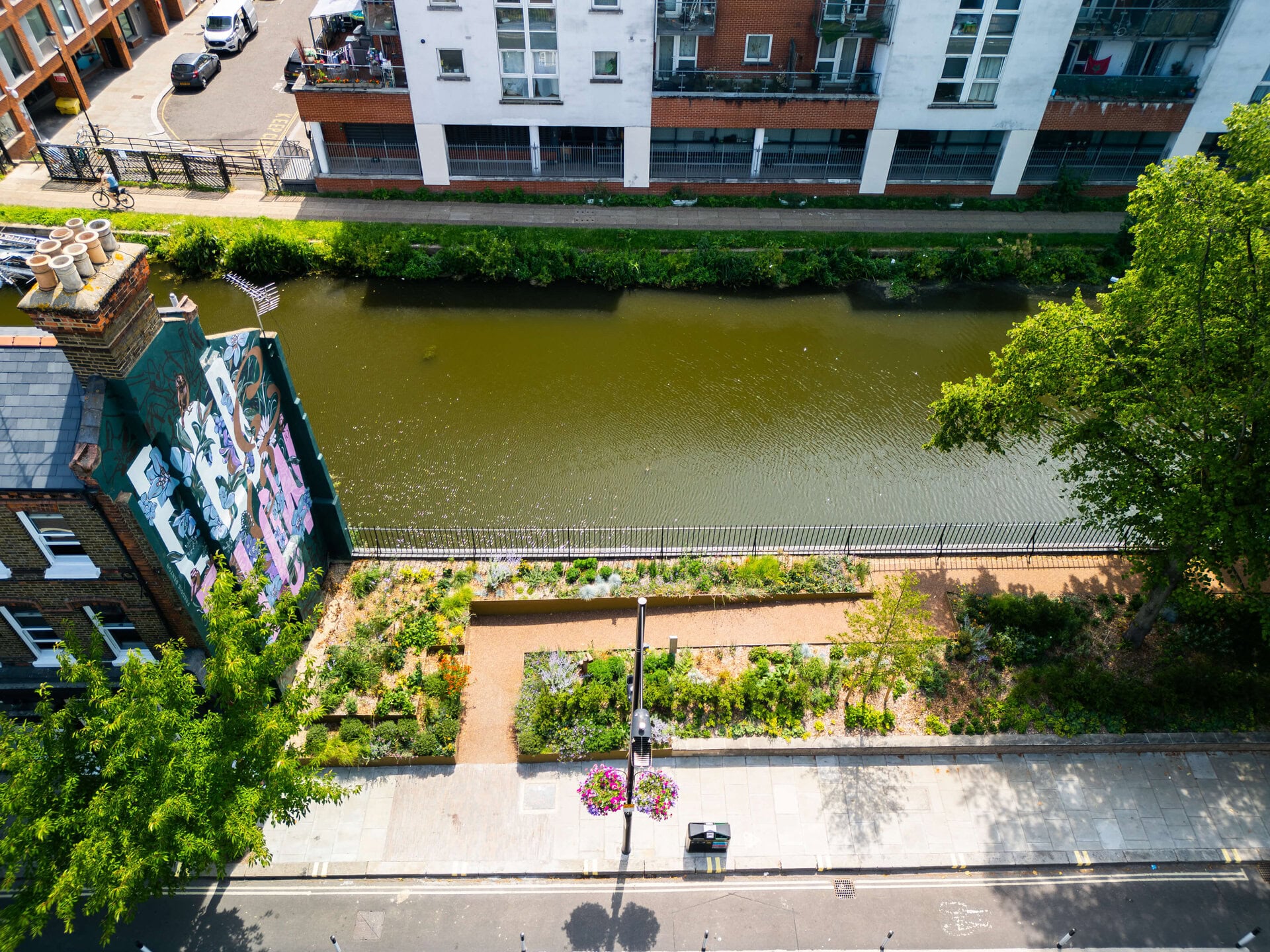
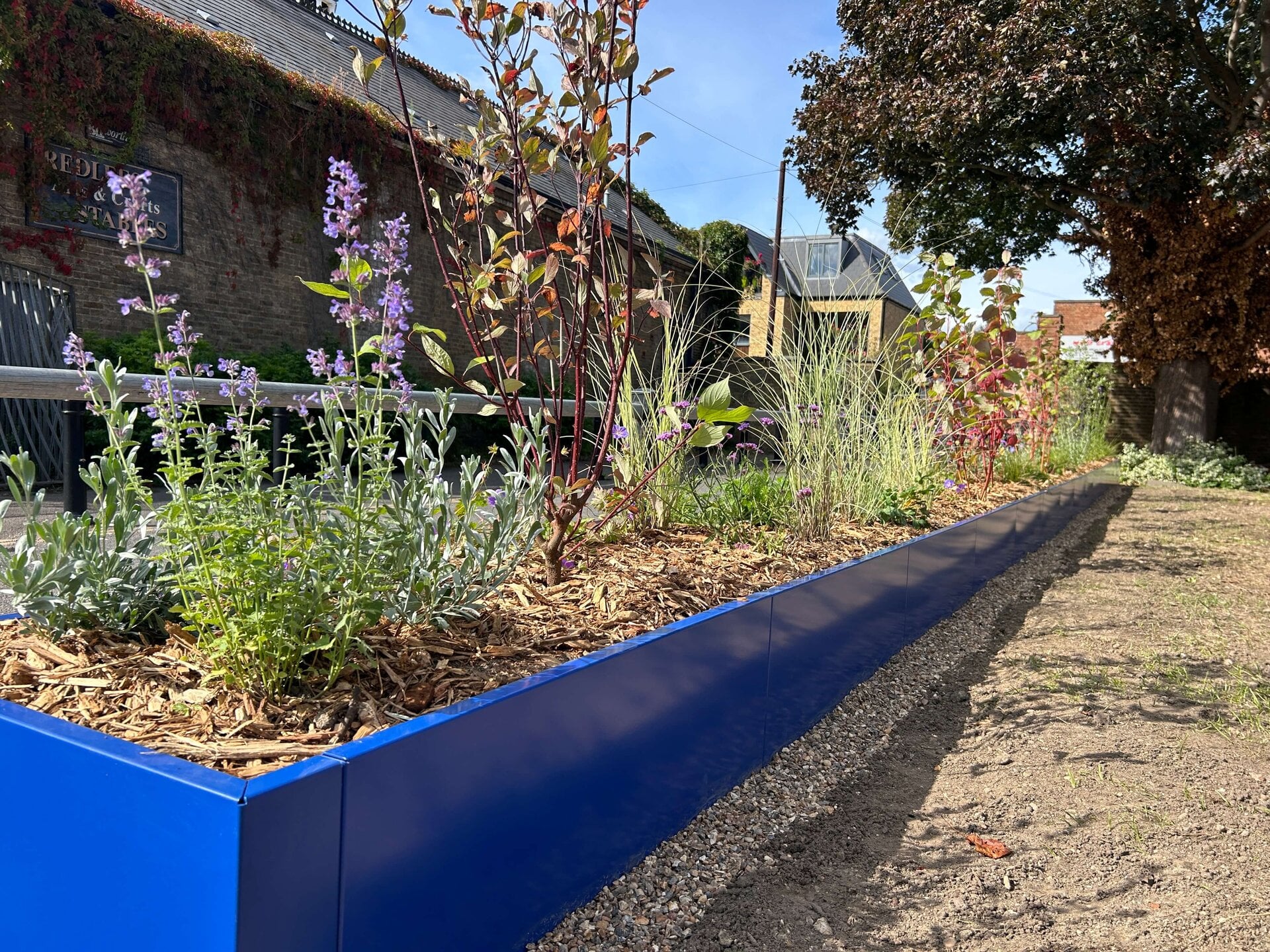
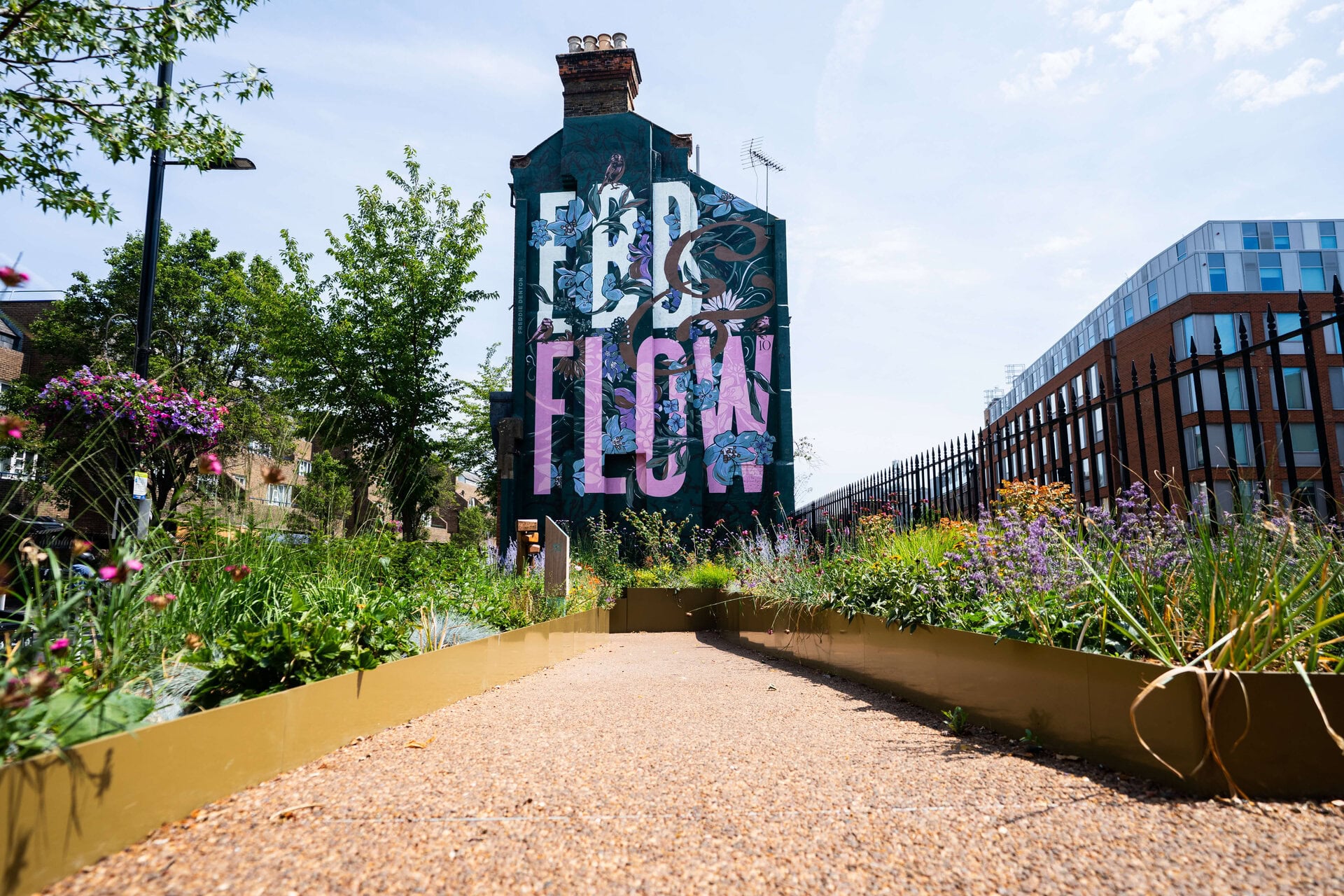
The project also introduced rain gardens along the pedestrian and cycle route. Rainwater from these gardens and surrounding surfaces is directed into the tree pits via surface channels, making efficient use of runoff and supporting the trees through passive irrigation.

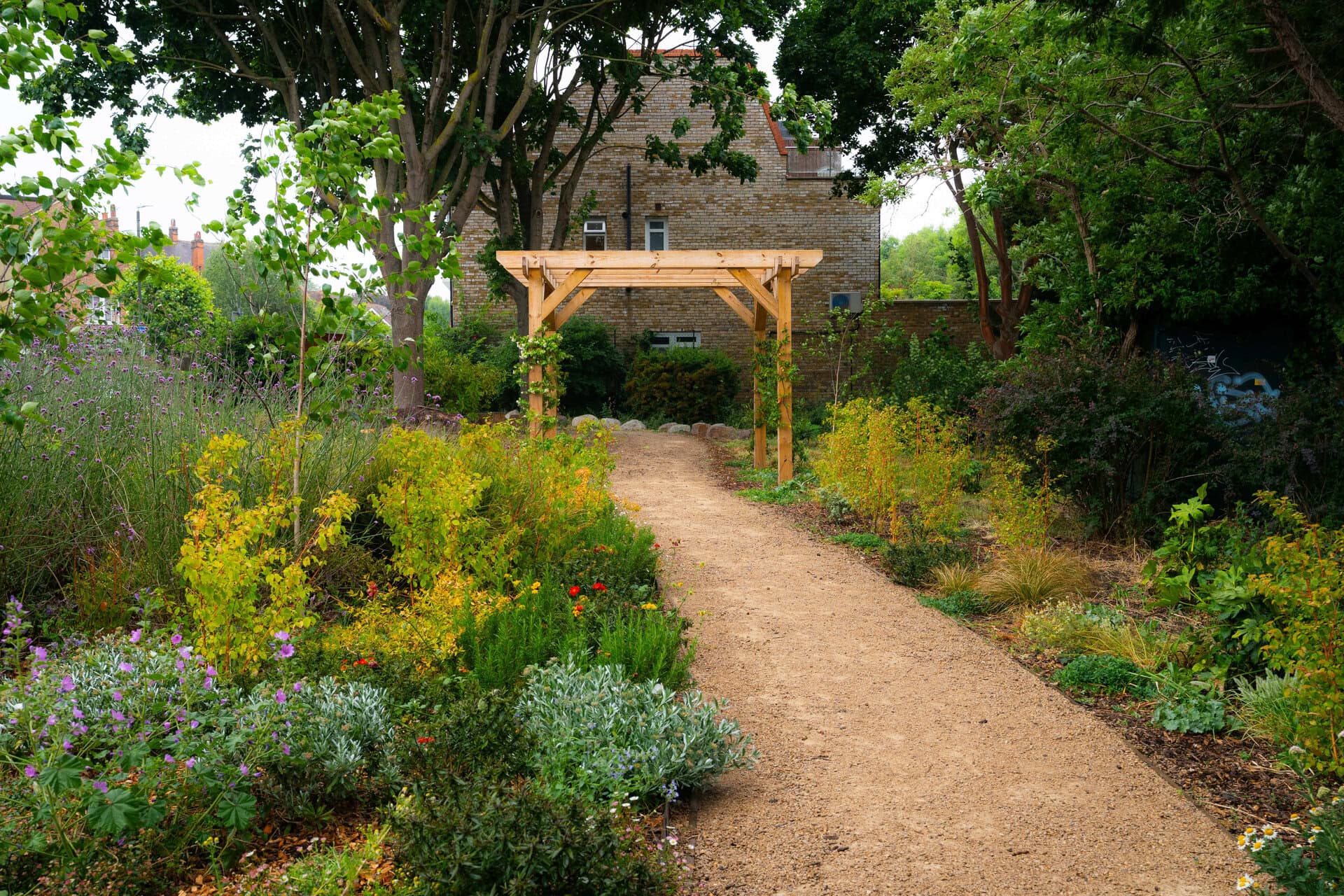
Completed tree and rain garden installation at Markhouse Corner
This integrated approach not only supports healthier, longer-lived trees, but also enhances the local streetscape for residents and active travel users. By combining structural soils with sustainable drainage features, Markhouse Corner now performs as a greener, more resilient example of urban infrastructure. Demonstrating how even the most constrained city spaces can function positively for both the environment and local community.