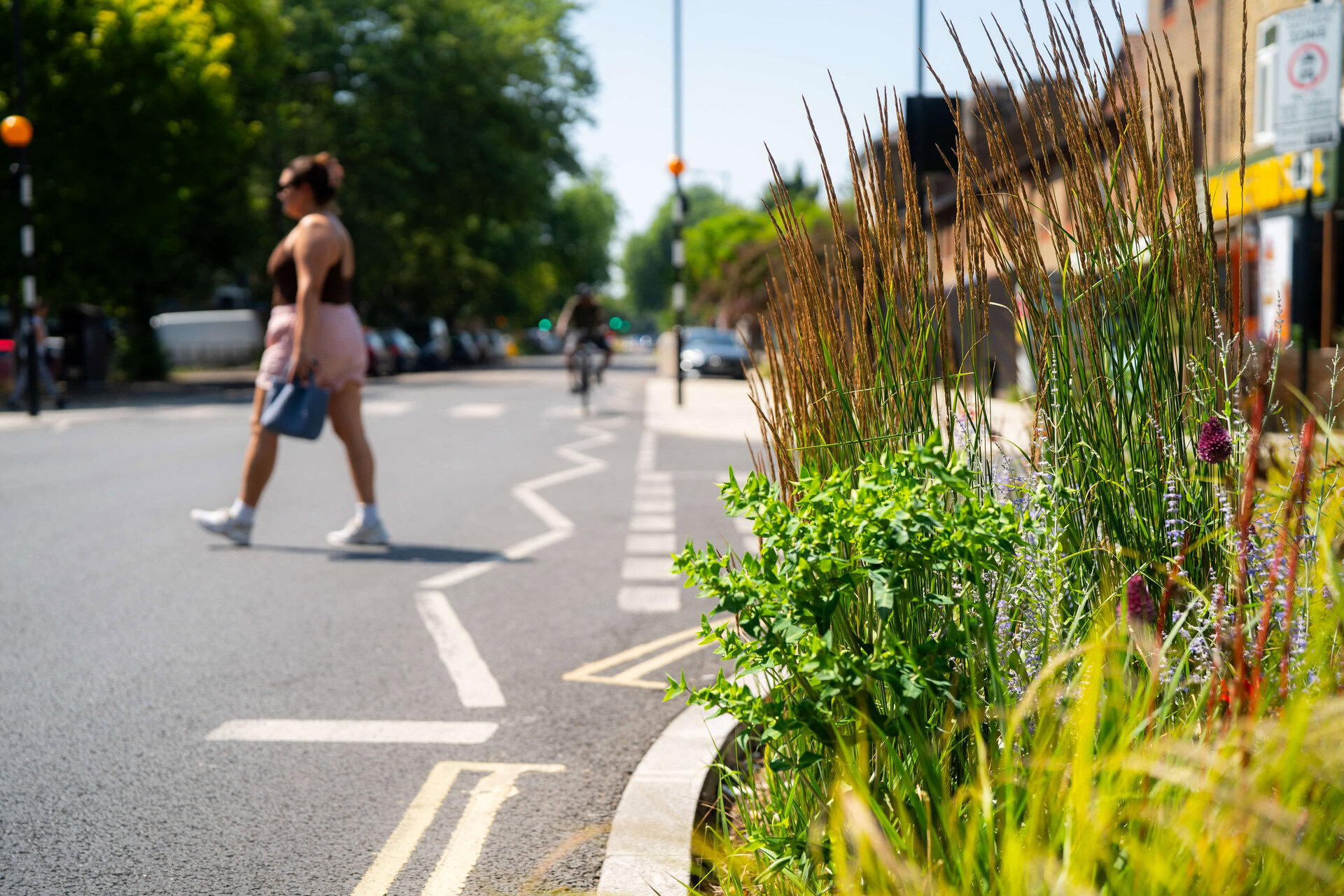
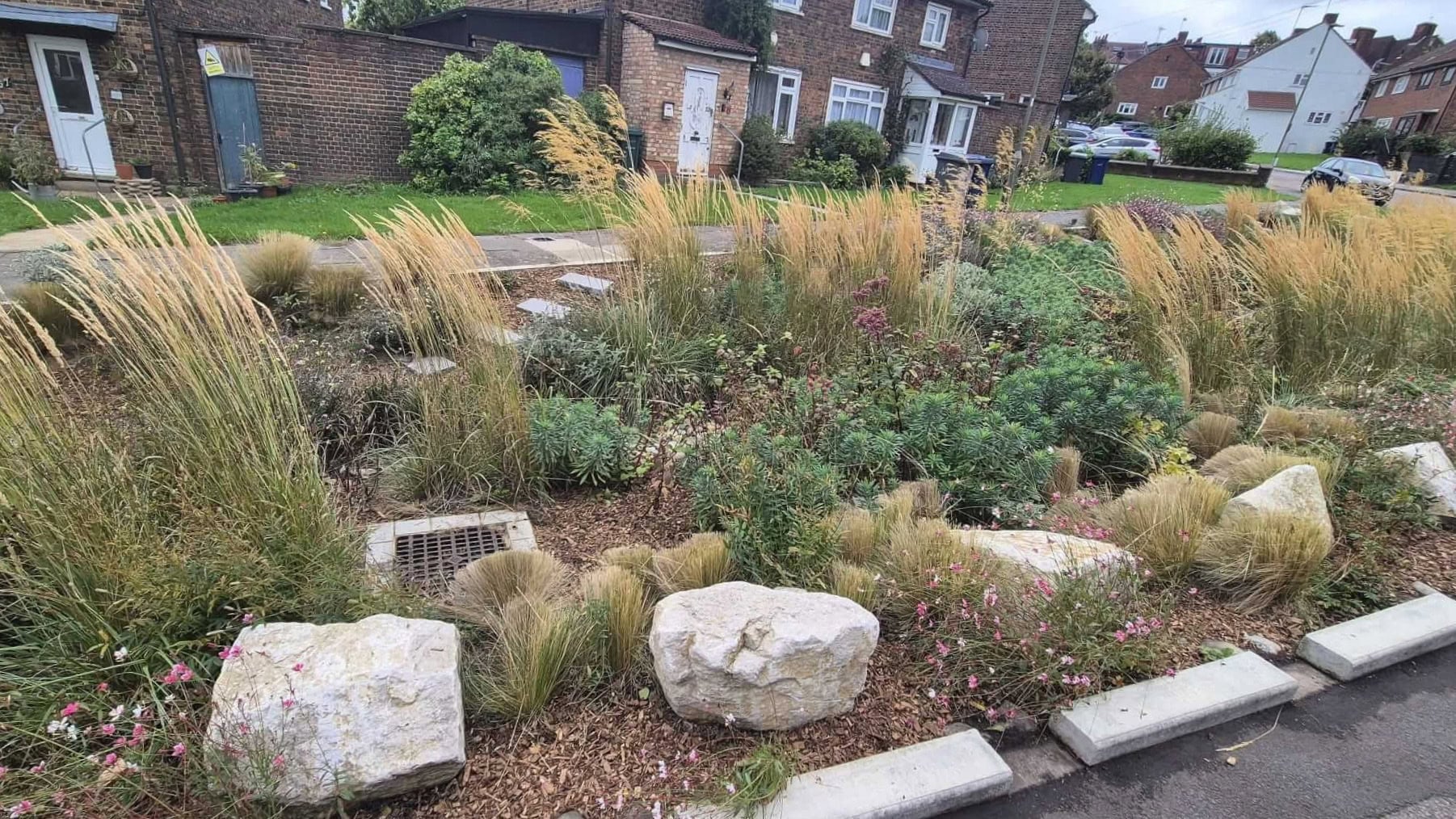
How to design Rain Gardens with trees
Rain garden planting is often treated as a low-level, herbaceous and evergreen layer. But some of the most effective and resilient schemes start with trees.
Designing rain gardens with trees integrated from the outset changes how the system performs - both above and below ground.

Why include trees in Rain Garden planting?
Trees bring a different scale and function to rain gardens. They can:
- Increase canopy cover, helping reduce urban heat
- Intercept rainfall before it reaches the ground
- Draw water from the soil through transpiration
- Provide structure and seasonal interest within the scheme
When combined with resilient planting, they create a more complete and layered system - both visually and ecologically.
Designing the planting scheme
Integrating trees into rain gardens isn’t just about adding them in - it requires a coordinated planting approach.
Key considerations include:
Weather and water storage
Trees must be able to tolerate fluctuating conditions - from periods of water storage to drier phases.
Soil design
Engineered soils need to balance drainage with water retention, ensuring both tree roots and other plants can thrive.
Plant compatibility
Tree species should work with surrounding planting - allowing enough light while supporting a diverse mix of perennials and grasses.
Long-Term growth
Spacing and positioning need to account for canopy spread and root development over time.
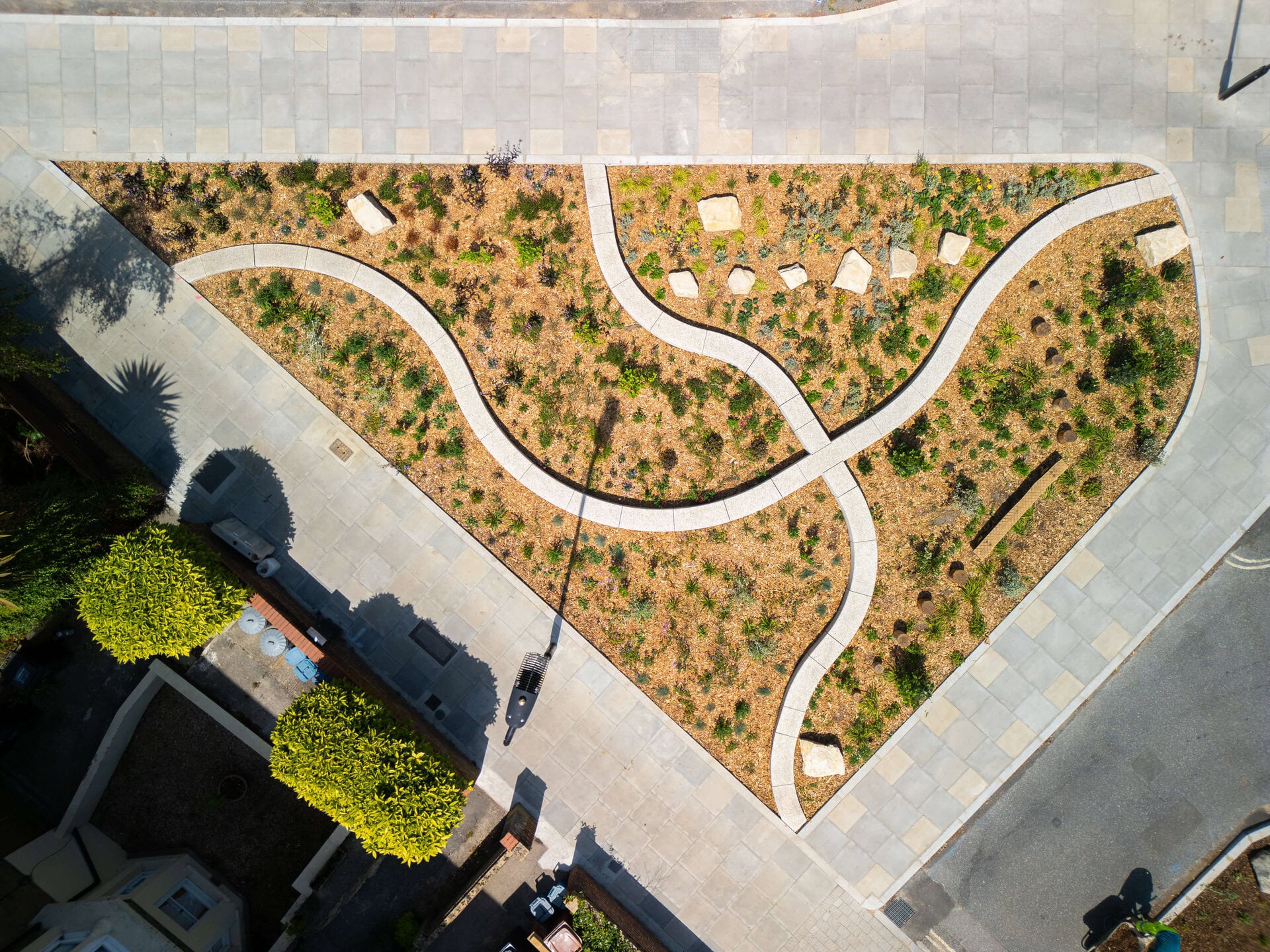
Case Study: Sutherland Road Rain Gardens
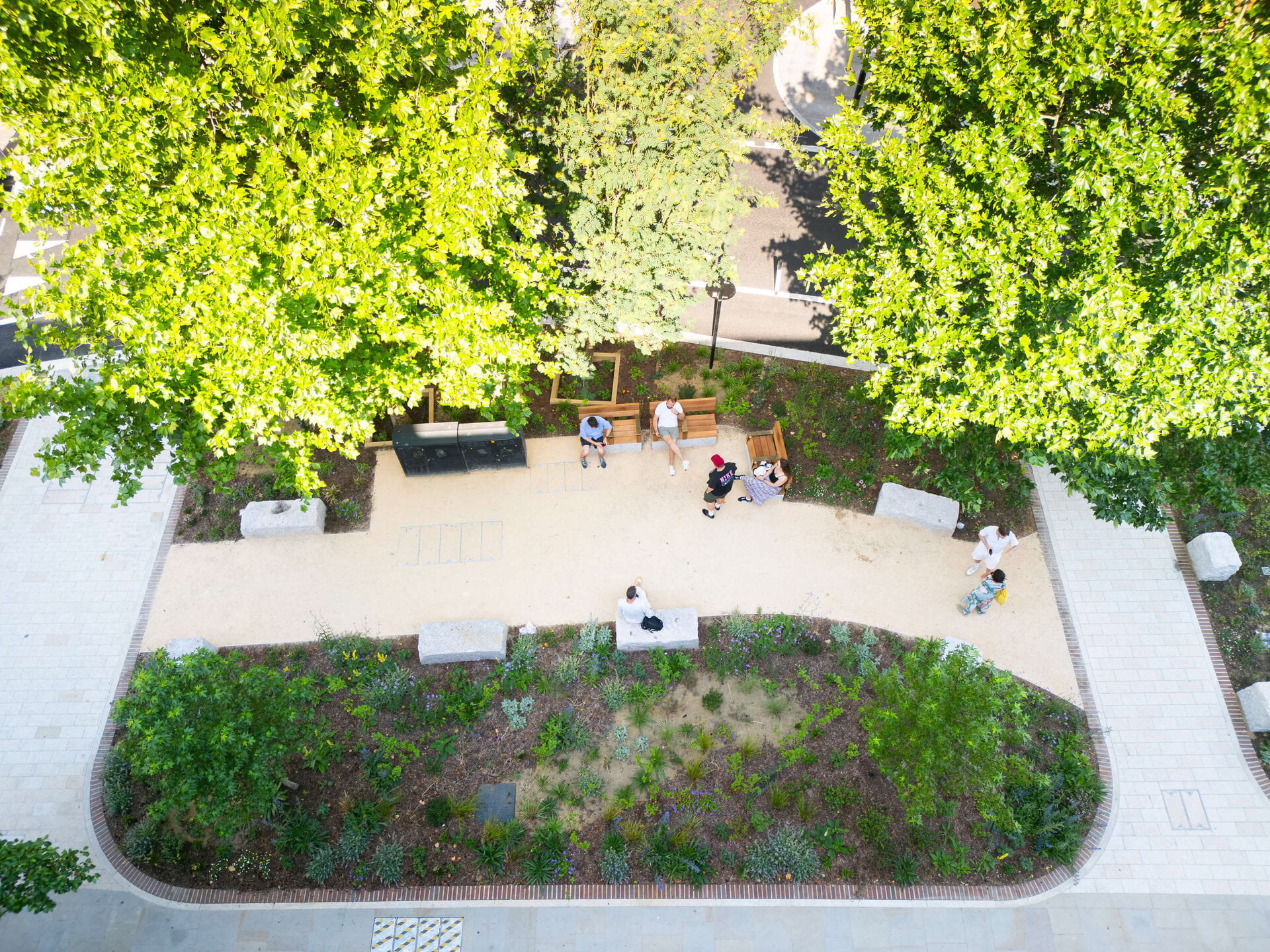
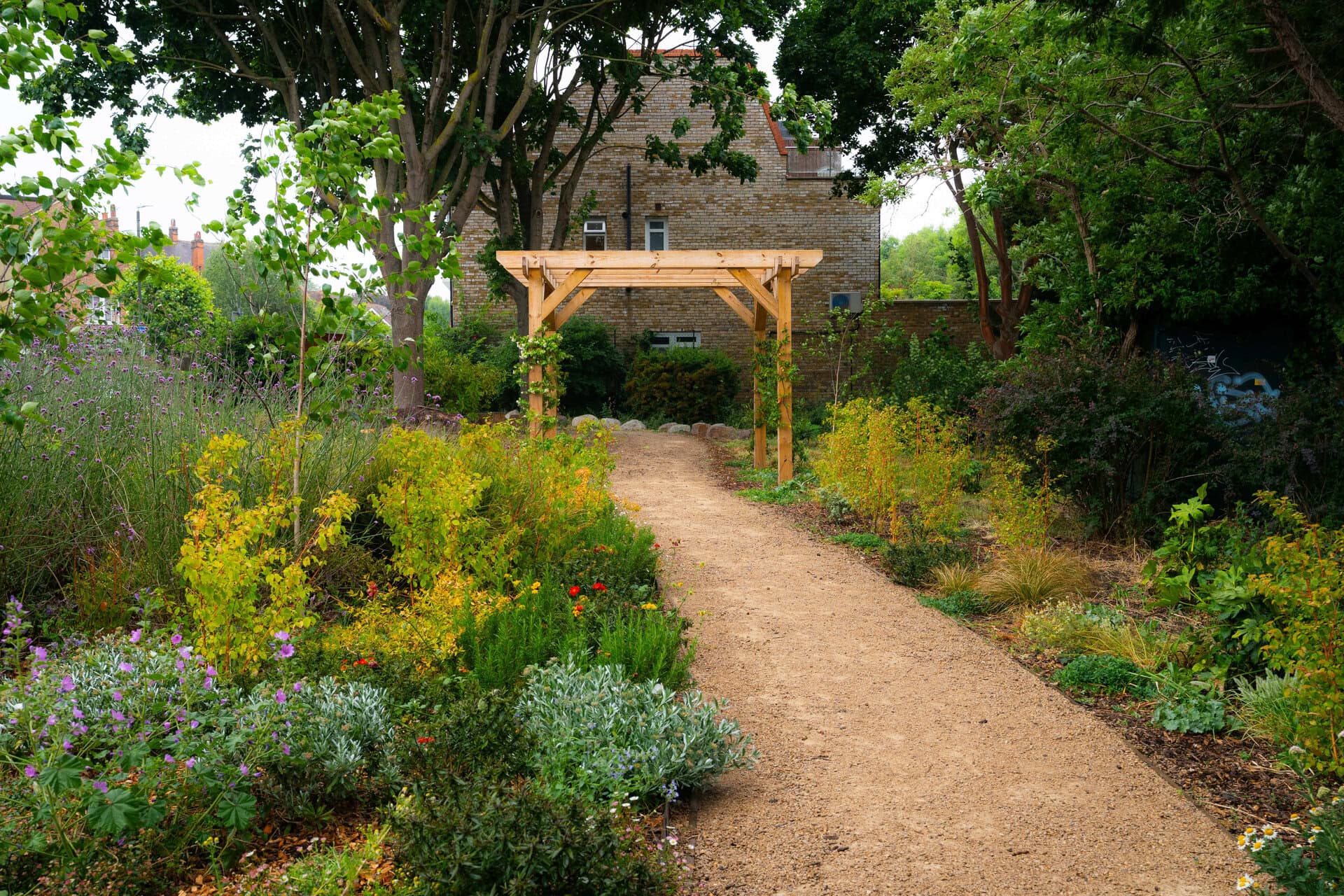
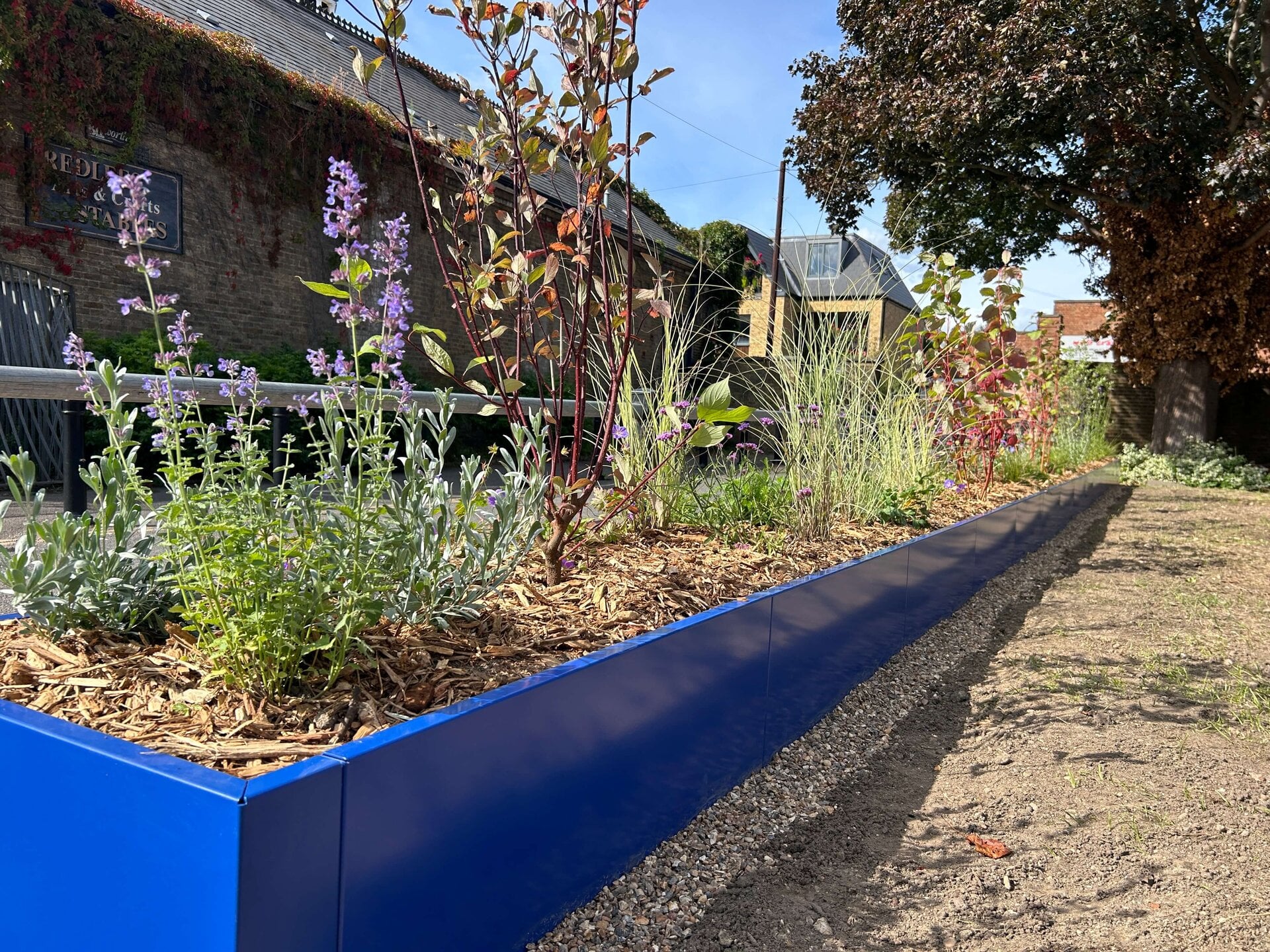
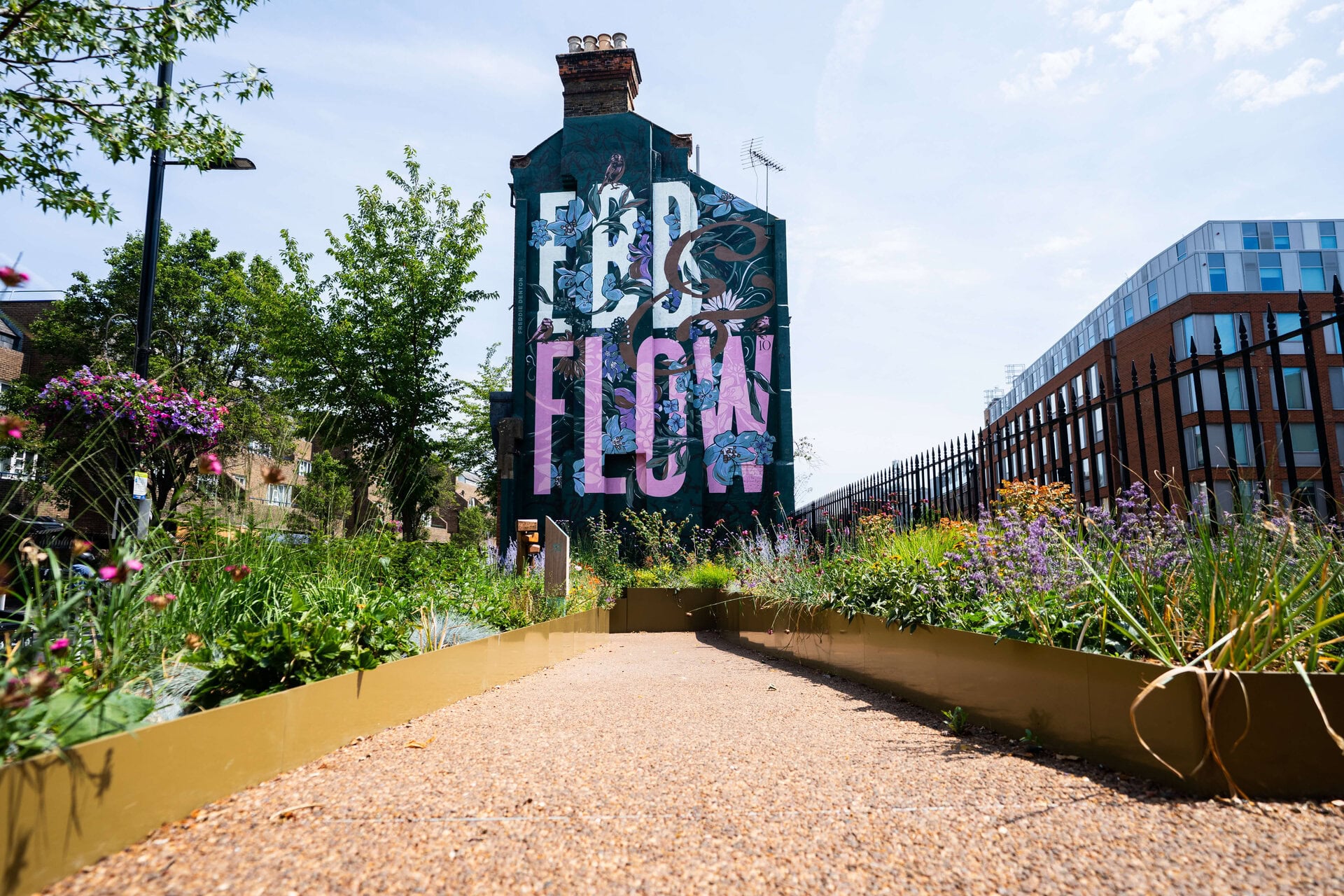
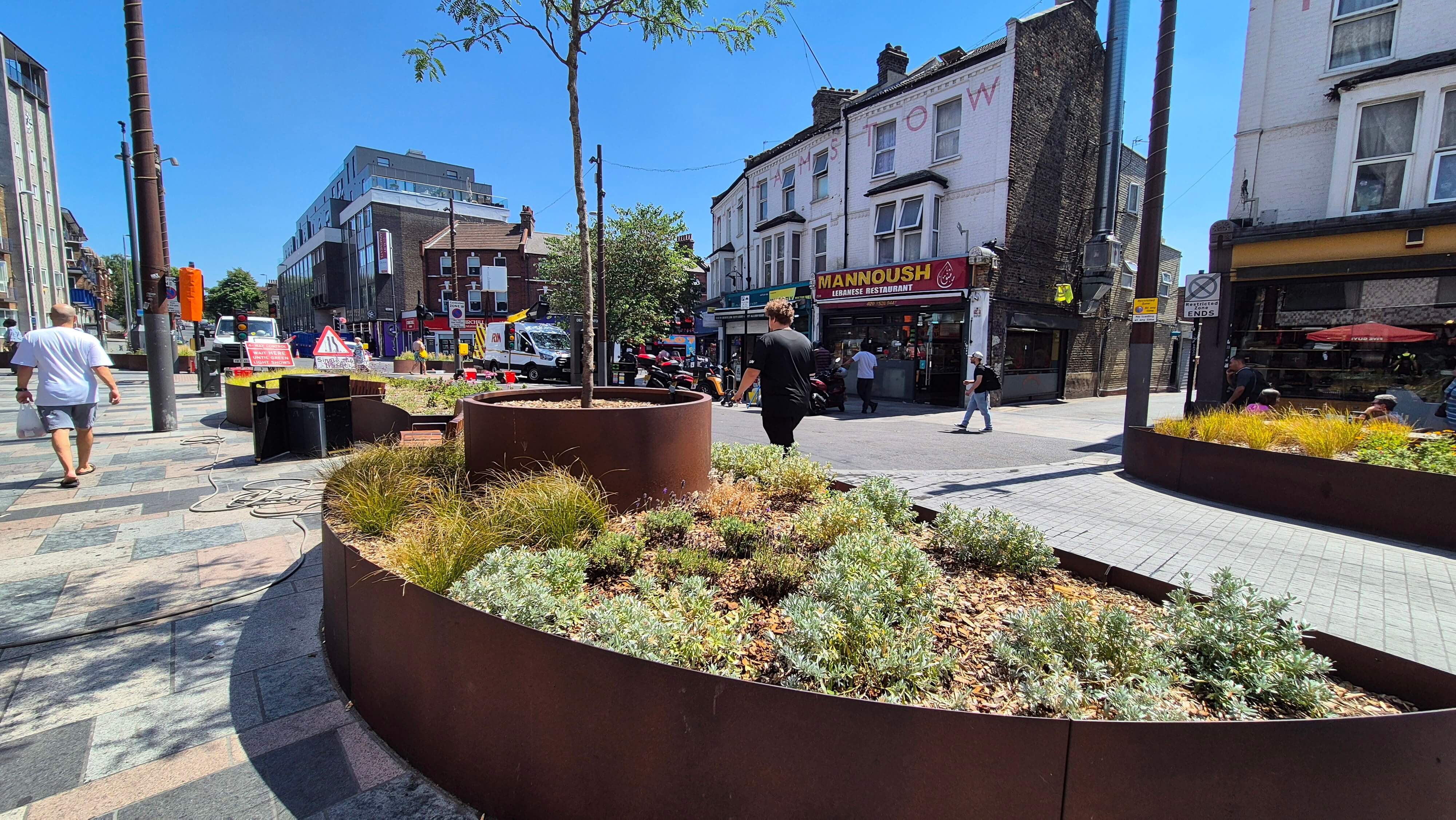
On Sutherland Road in Waltham Forest, the rain garden planting scheme was designed to integrate trees such as Prunus 'Umineko' (Japanese cherry / Snow Goose) as a key structural element.

This species was selected for its:
- Upright form, suitable for street conditions
- Tolerance to urban environments
- Strong seasonal interest through blossom
The trees sit within a wider rain garden planting palette, allowing the system to function effectively while delivering visual impact throughout the year.
What are the benefits?
Designing rain gardens with trees delivers benefits at multiple levels:
For the Rain Garden system
- Increased water interception
- Improved soil structure through root systems
- Greater resilience to extreme weather
For the trees
- Access to consistent moisture through passive irrigation
- Better soil conditions than traditional tree pits
- Reduced stress during dry periods
For the street or public space
- Stronger visual identity
- Increased shade and cooling
- Enhanced biodiversity
A more integrated approach
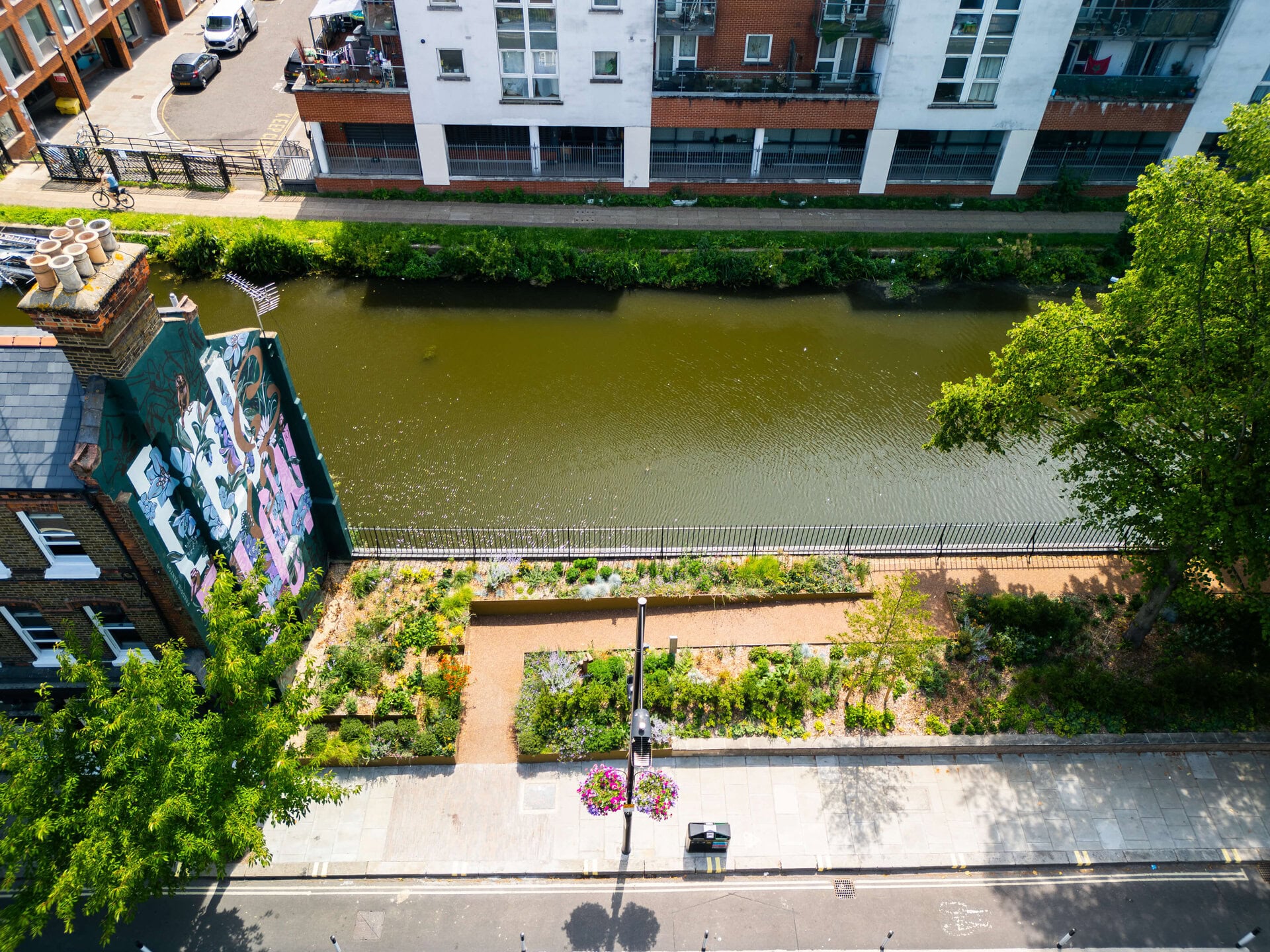
Rain gardens offer an opportunity to bring trees and drainage together - creating systems where planting isn’t just aesthetic, but integral to how the space functions.
Designing with trees at the heart of rain garden planting schemes leads to streets that are not only greener, but more robust over time.