As UK summers are becoming hotter and more unpredictable, playground heatproofing is becoming an urgent priority for those designing them. Rubber surfaces, metal-based play equipment and a lack of shade are turning playgrounds into dangerous heat traps for children, parents, caregivers and teachers.
A study by Greenpeace found that the black rubber floor of a playground in Islington reached 53°C at 5pm during one of the recent heatwaves of 2026. These temperatures are hot enough to cause burns and without intervention the problem can only get worse as the climate continues to warm.
Playground heatproofing does not require a complete redesign. By combining shade, better material choices and planting can make a huge difference to temperatures and people's experiences of local play spaces.
Why are playgrounds getting so hot?
The materials making playgrounds dangerously hot
Rubber, plastic and metal are some of the worst materials for heat absorption. Under direct sunlight, these materials can heat up to dangerous temperatures and cause skin burns when touched. Dark colours also make the problem worse as they absorb and retain heat a lot more than lighter or natural materials.
Playground heatproofing through shade
Shade is the most effective playground heatproofing tool available. A study by Westminster Council found that surface temperatures in direct sunlight could be up to nearly 30°C higher than those under shade or tree canopy. This figure demonstrates just how important shade is in creating healthy green spaces.
Trees as natural playground heatproofing
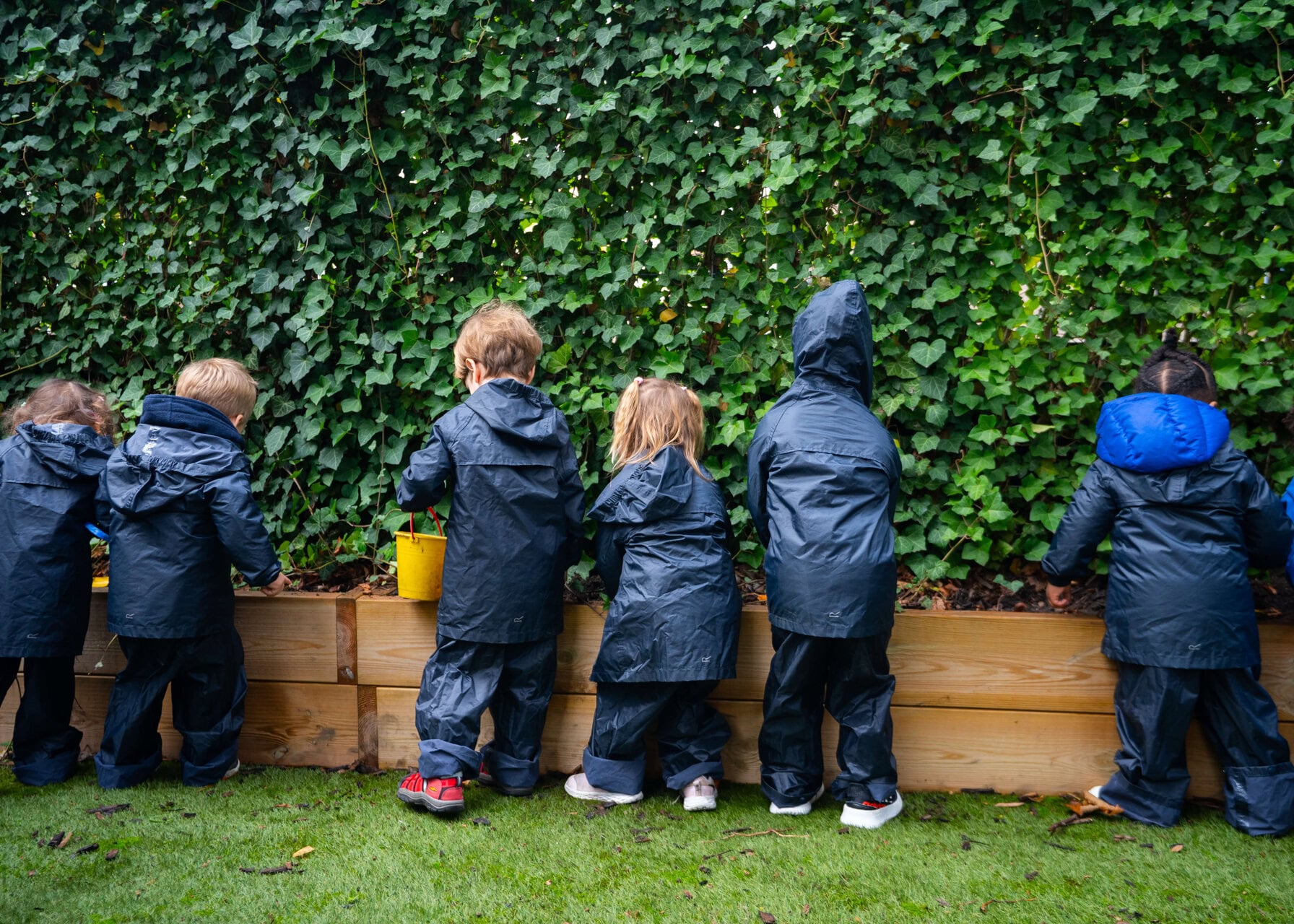
Trees are the most effective and sustainable form of shading a playground space. We've been helping to future-proof schools by planting semi-mature trees so that once they establish, they provide canopy cover and cooler spaces for children.
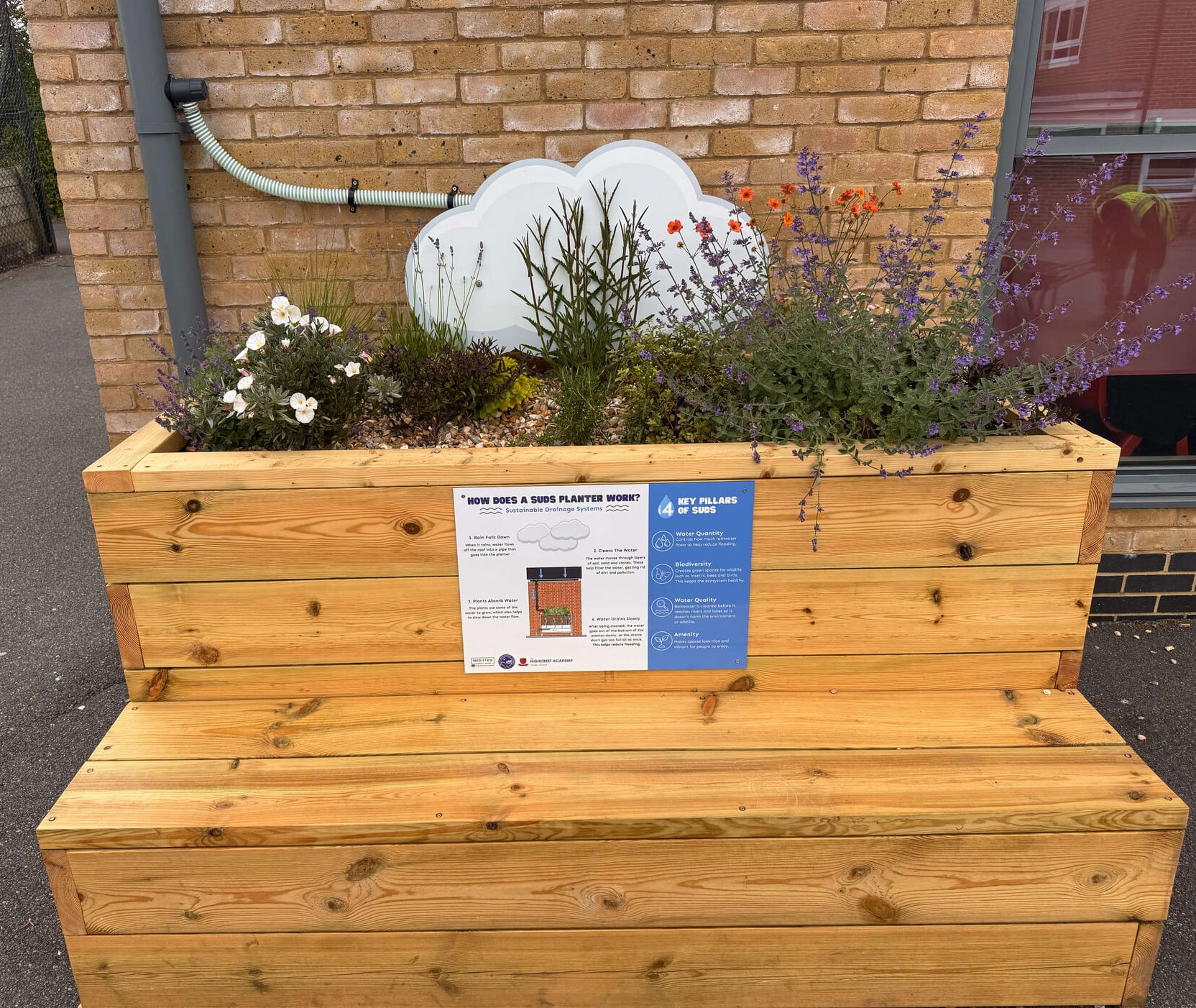
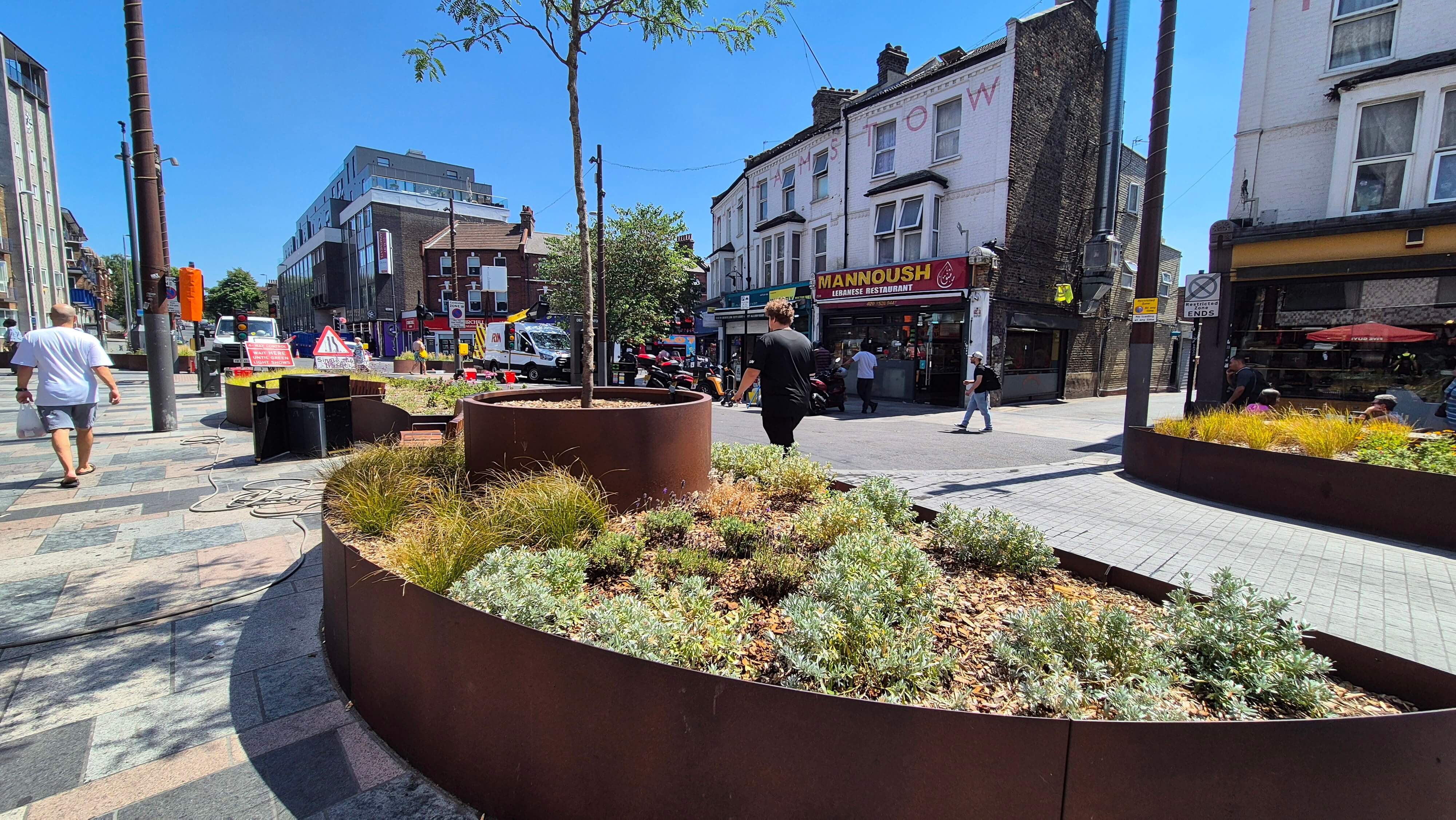
At Trinity C of E Primary in Lewisham, we integrated trees into the SuDS planters and Hybrid SuDS planters we installed around the playground. Canopy cover will take a while to fully establish so planting now is one of the most important things we can do to cool future play spaces.
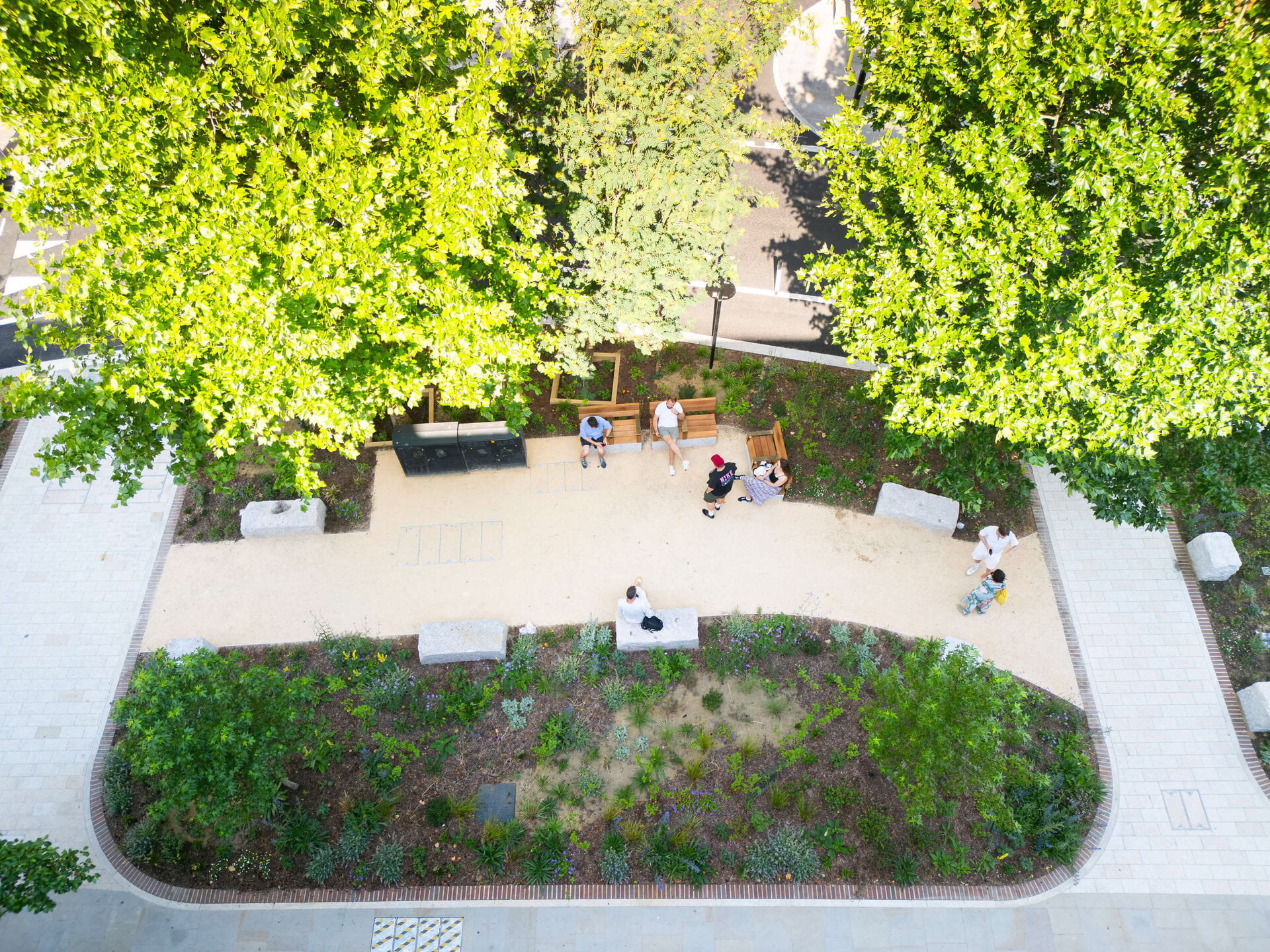
Instead of planting trees, installing children's play spaces underneath established trees will create an immediate cooling effect on the space compared to choosing a location in direct sunlight.
St Luke's nature garden in Maidenhead was selected to be installed under a large pre-existing tree. Fit with with seating and play features, the space can be enjoyed in the shade without the concern of burning or overheating.
Pergolas and shelter structures for playground heatproofing
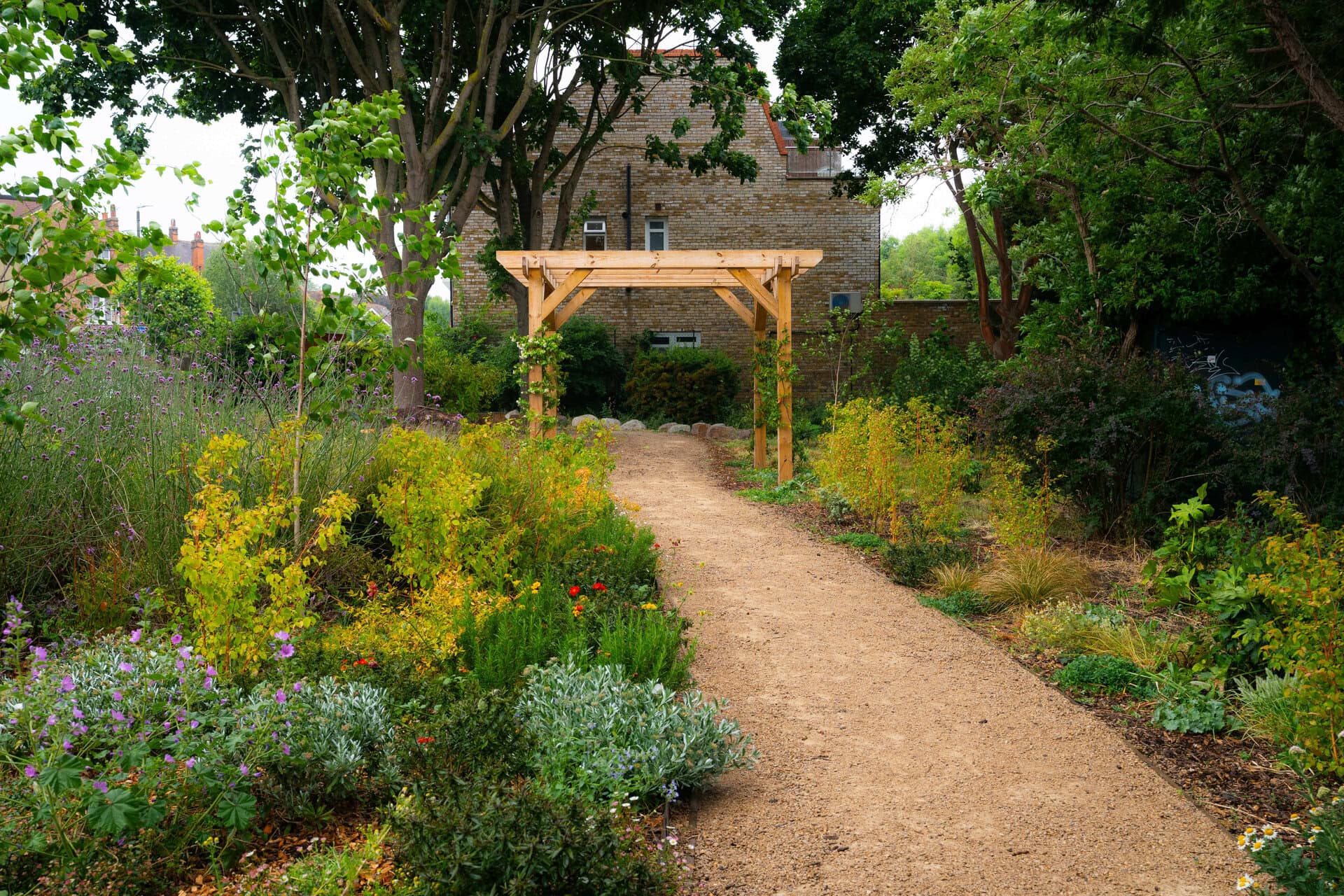
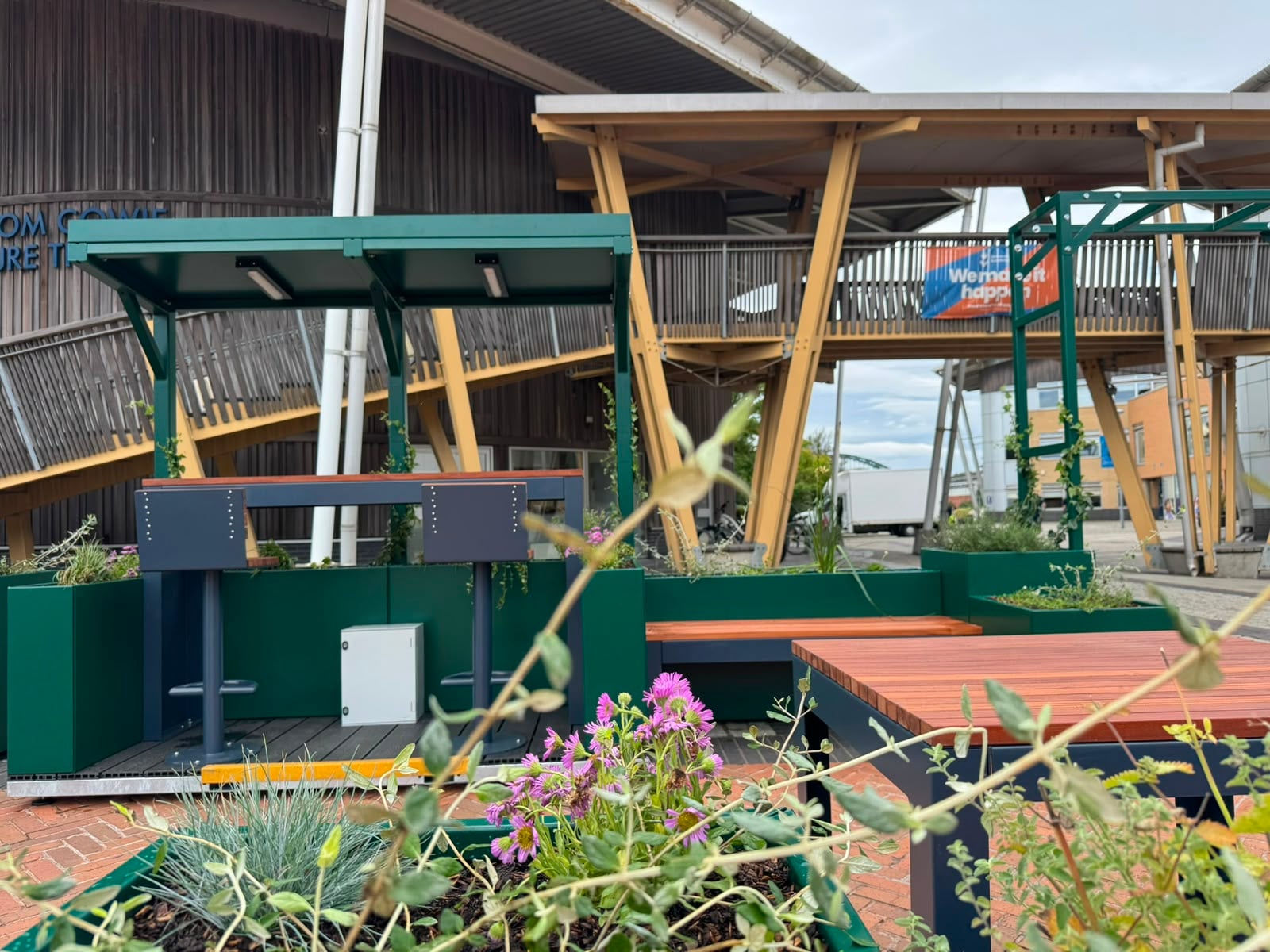
When trees are not immediately feasible or excavation for tree pits is not possible, pergolas offer effective playground heatproofing in the shorter term. At Thornton Heath in Croydon, we installed a pergola as part of a wider nature garden project, creating a shaded outdoor space that supports a green roof and adds the cooling benefits of planting alongside shade.
Playground heatproofing through material choices
Timber as a playground heatproofing material
Timber does not absorb and retain heat in the same way as rubber or metal which makes it significantly cooler to the touch on hot days. We use timber across our schemes to build SuDS infrastructure but also structural and play features.
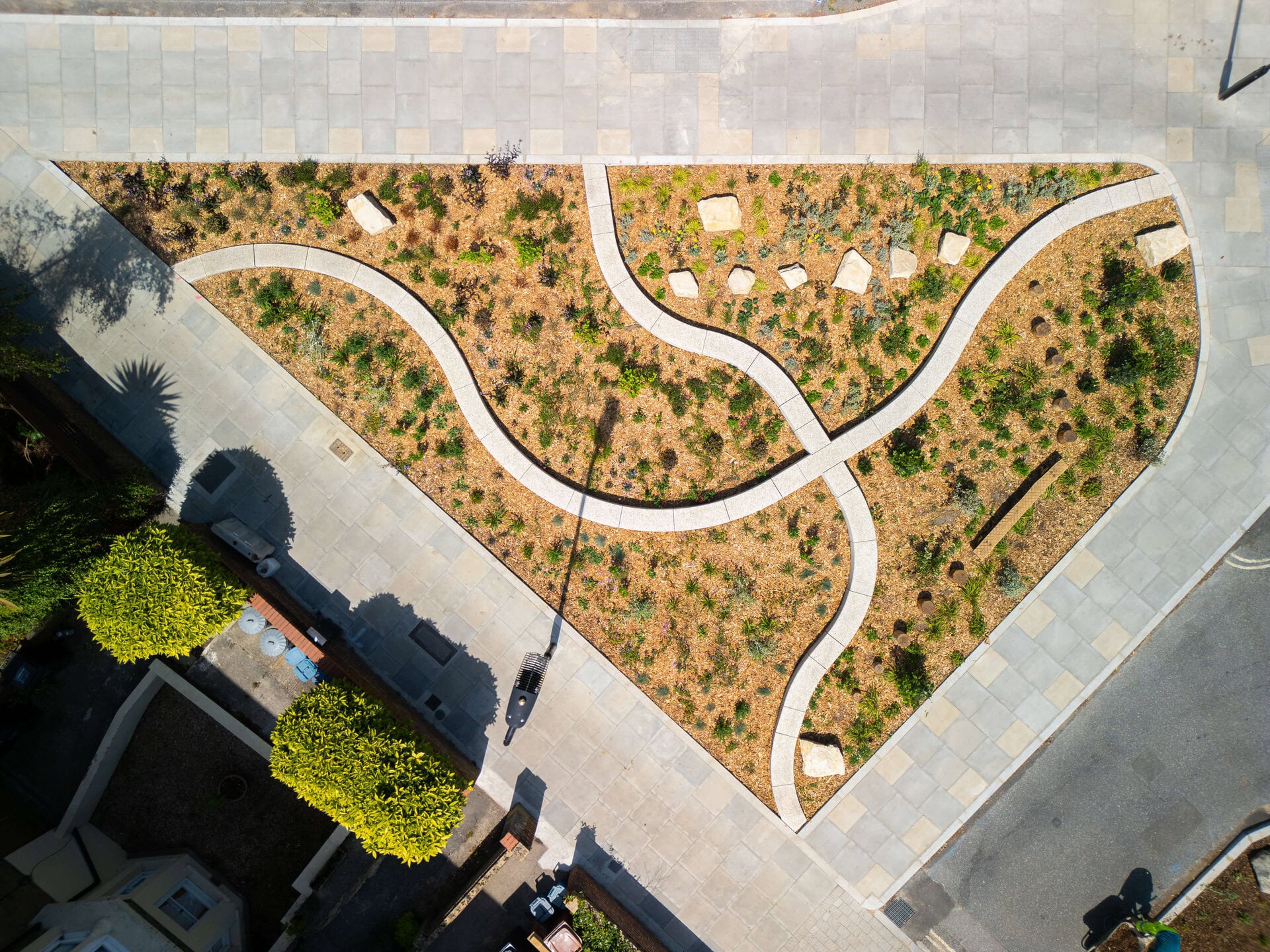
At the Brooke Road Junction rain garden, we fabricated and installed stepping logs and balance beams to create safe and interactive spaces that invite residents to use the space.
 Stepping logs
Balance beam
Stepping logs
Balance beam
Natural ground surfaces for playground heatproofing
Replacing rubber and tarmac with natural ground surfaces is one of the most impactful cooling interventions available. Across our nature garden projects, we have laid bark and sand as tactile, heat-resistant natural surfaces as an alternative to rubber. Both stay significantly cooler than synthetic surfaces and support a more natural play environment.
Playground heatproofing through planting
How plants actively cool play spaces
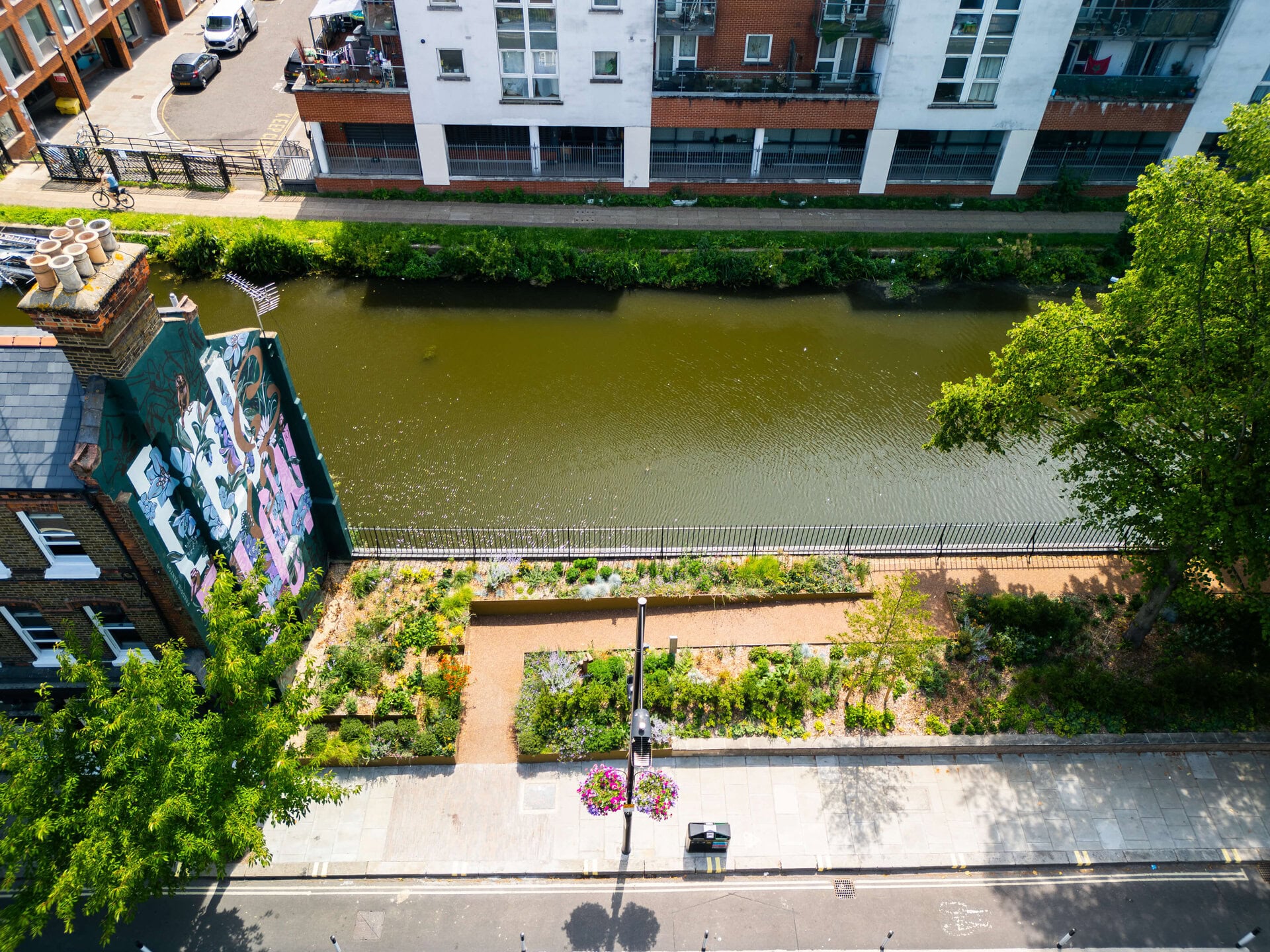
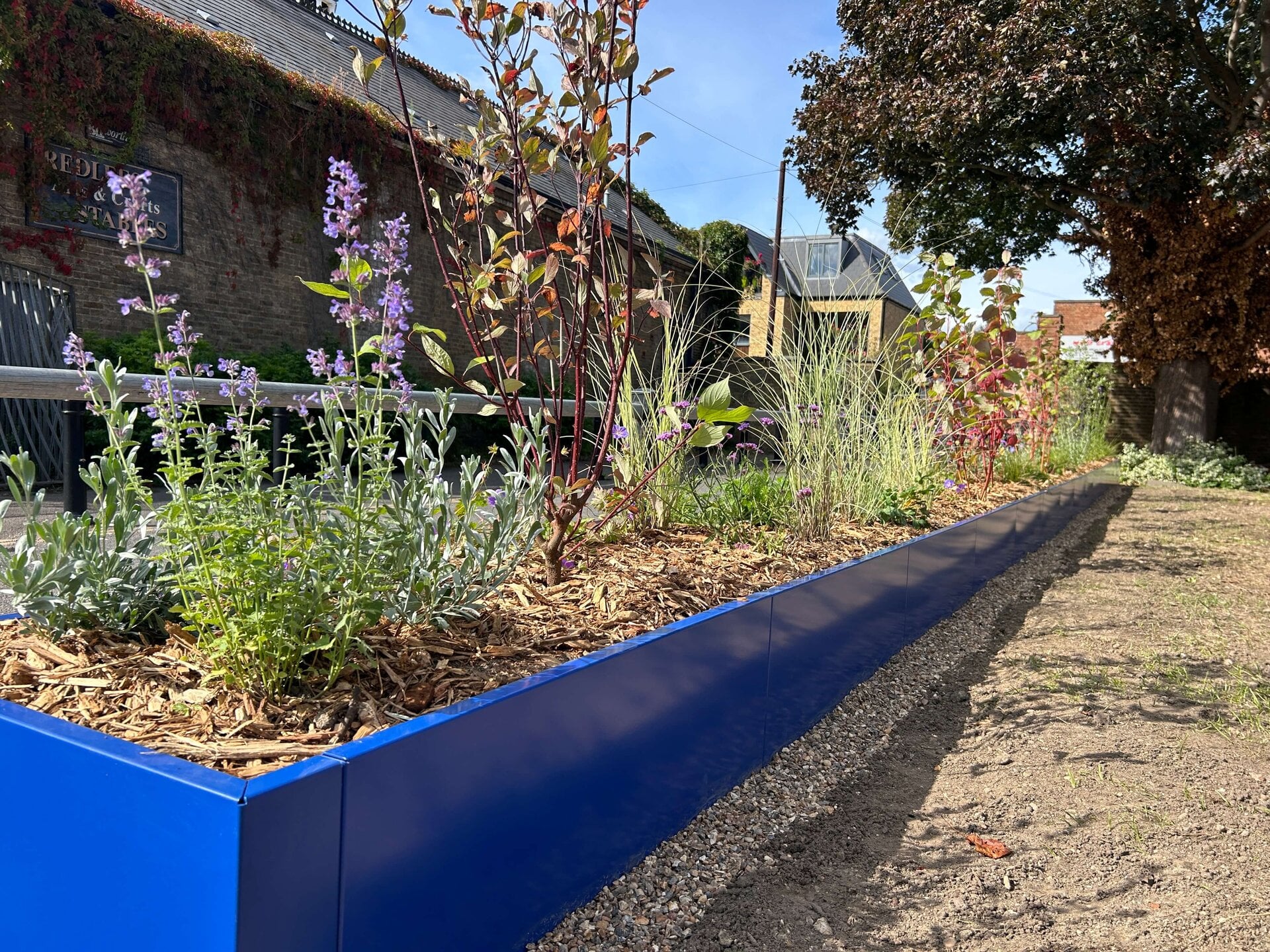
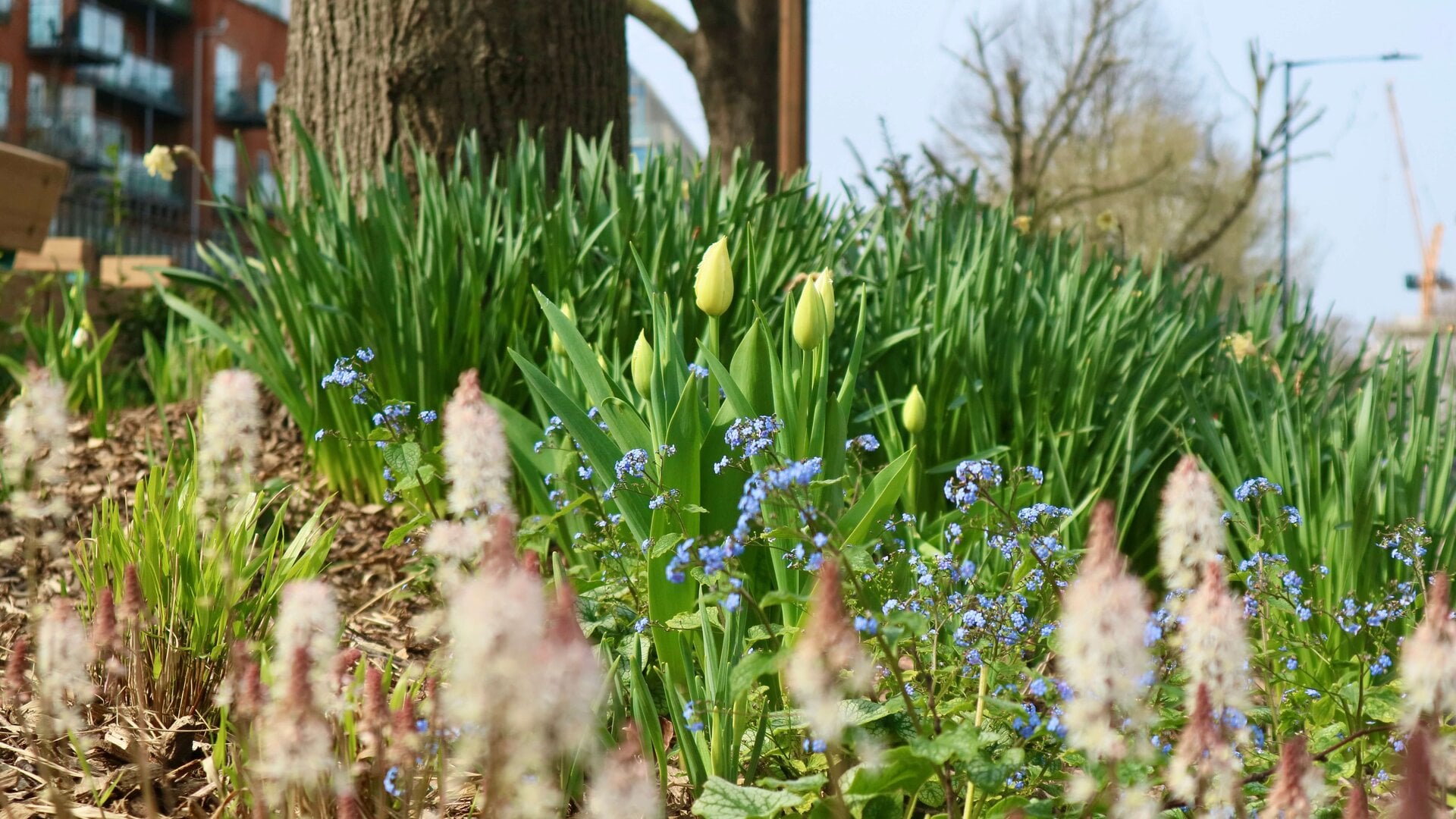
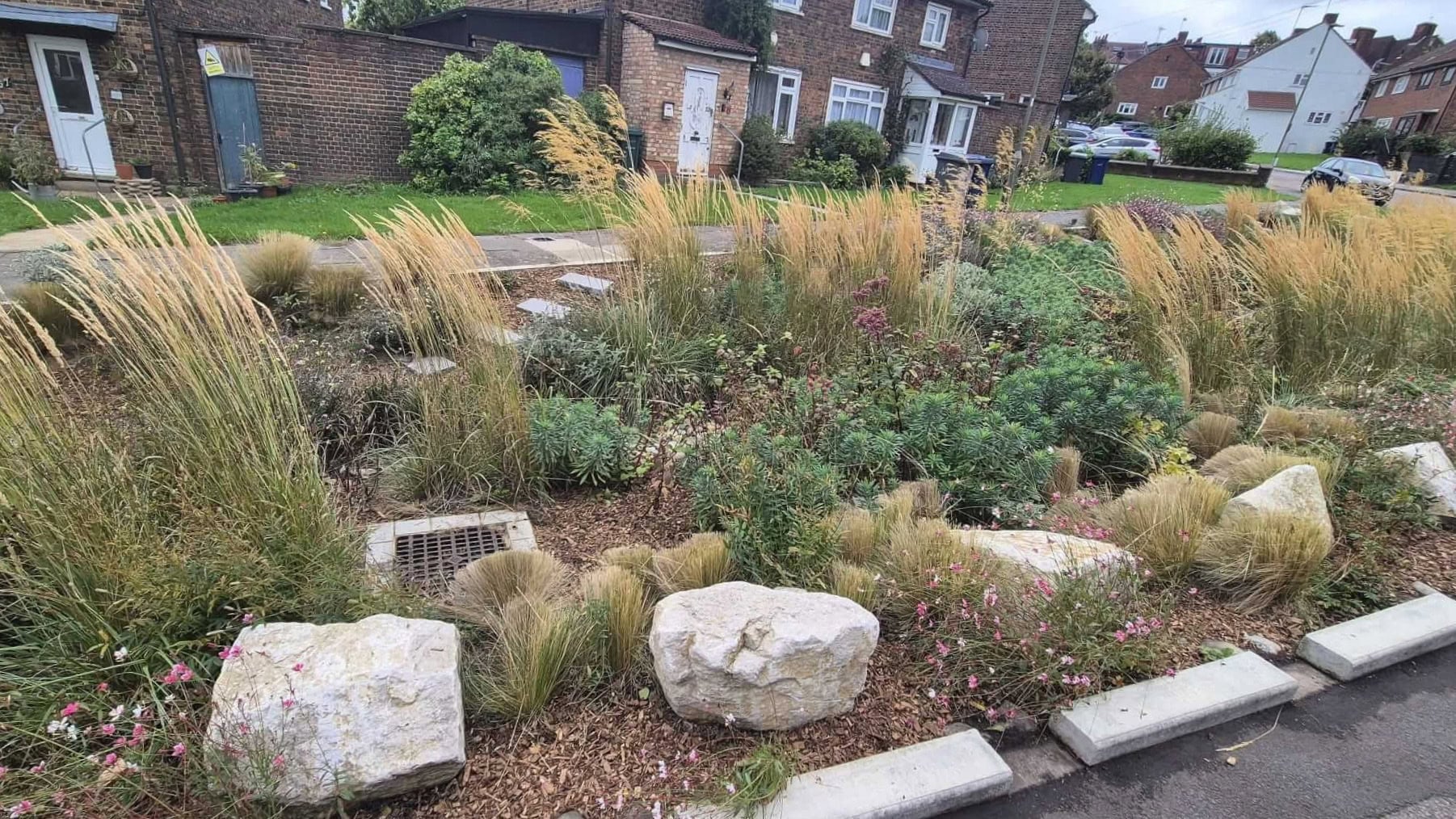
Plants actively cool the air around them through evapotranspiration by releasing water vapour back into the environment. This reduces the surrounding air temperature. Across all of our projects, we prioritise integrating diverse planting to promote ground-level cooling. Even smaller amounts of planting can make a noticeable difference to how a play space feels on a hot day.