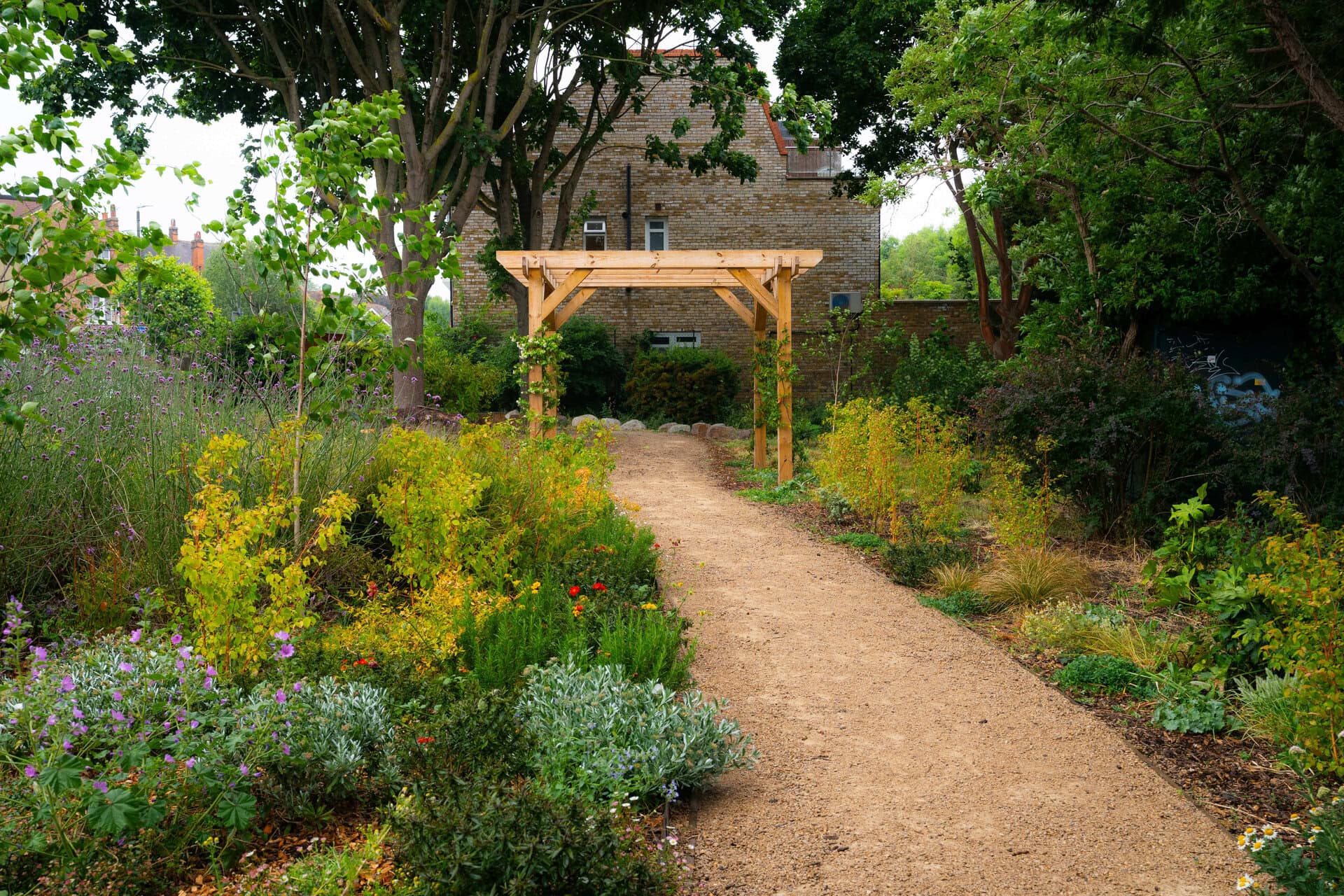
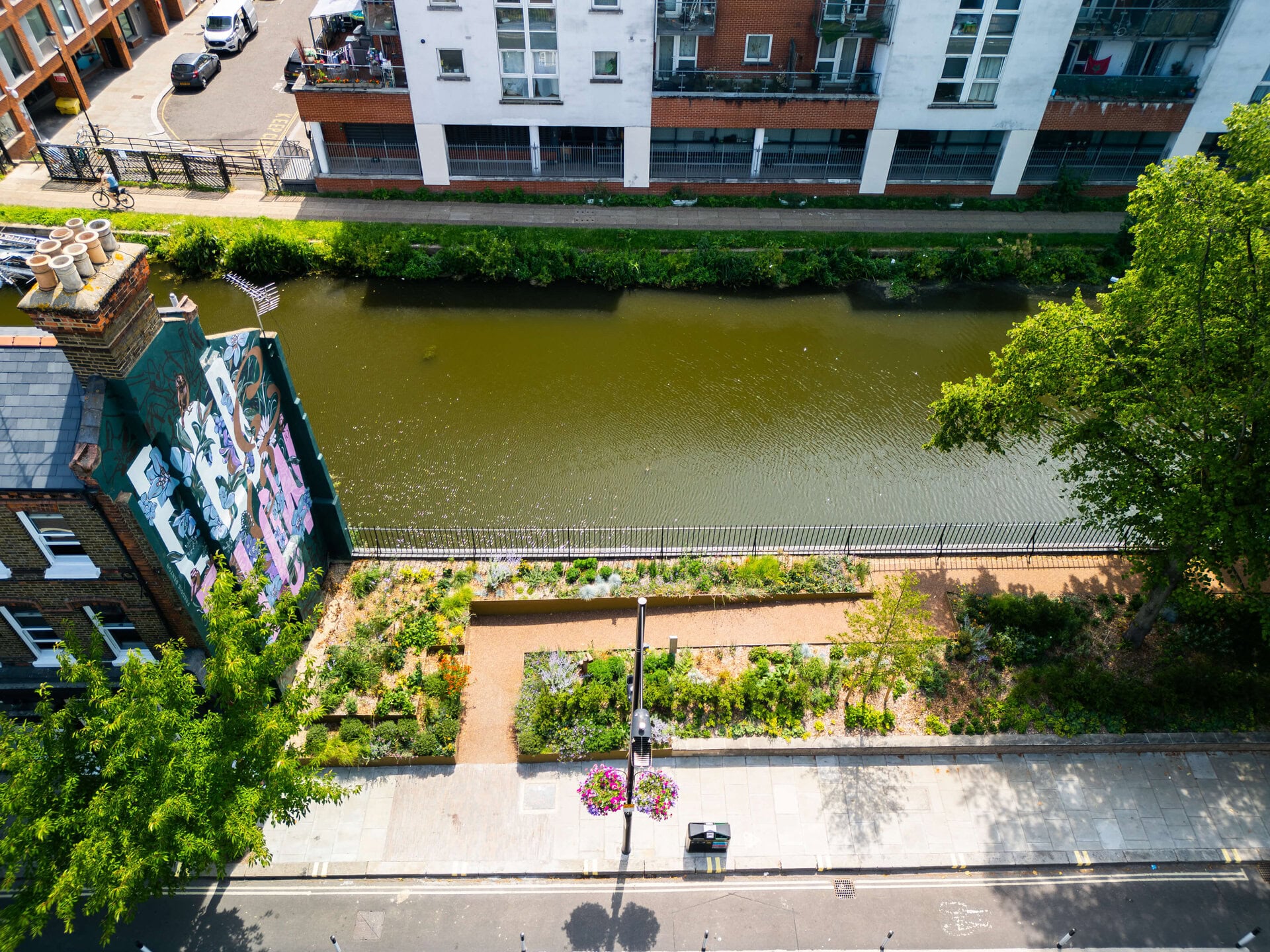
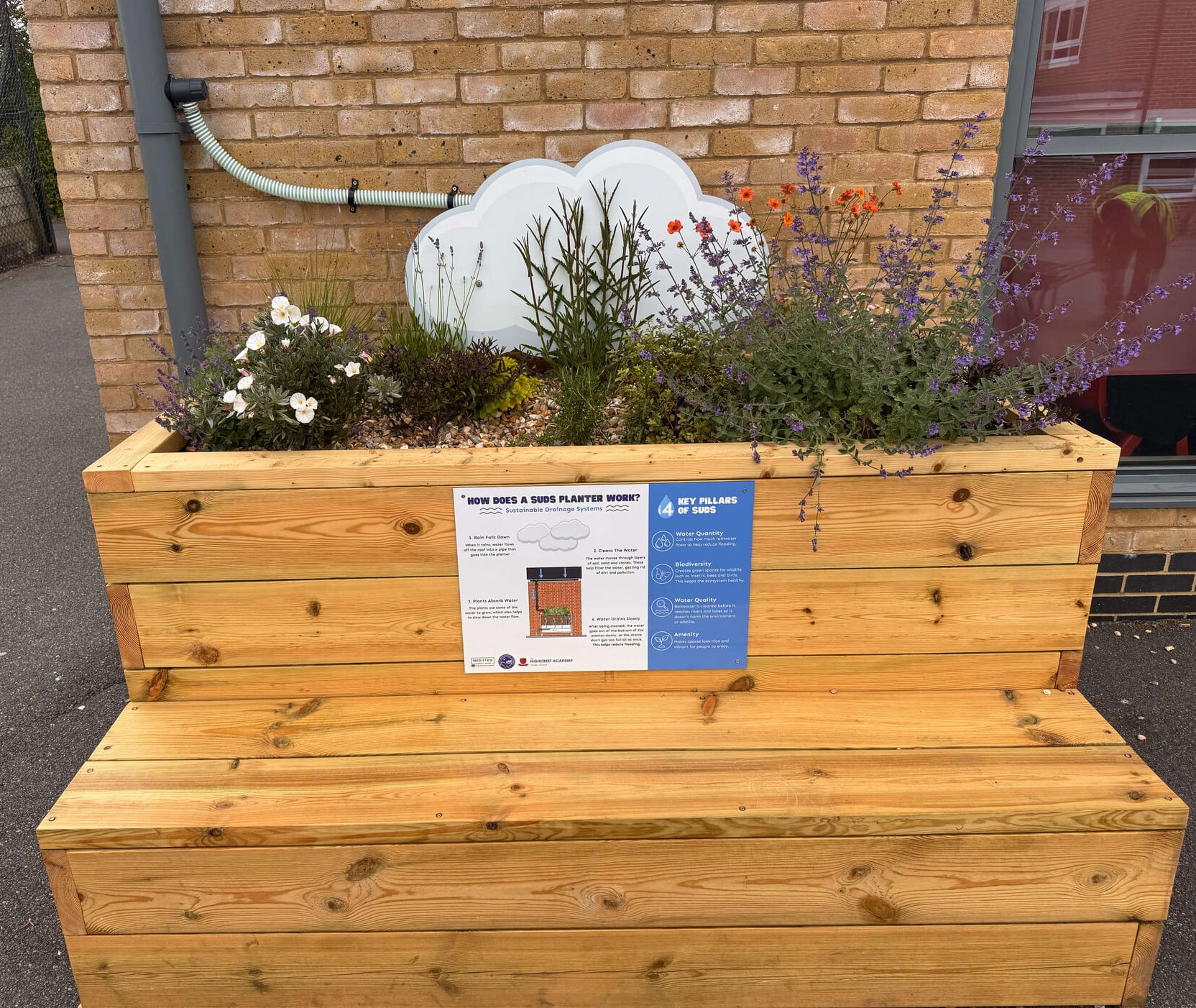
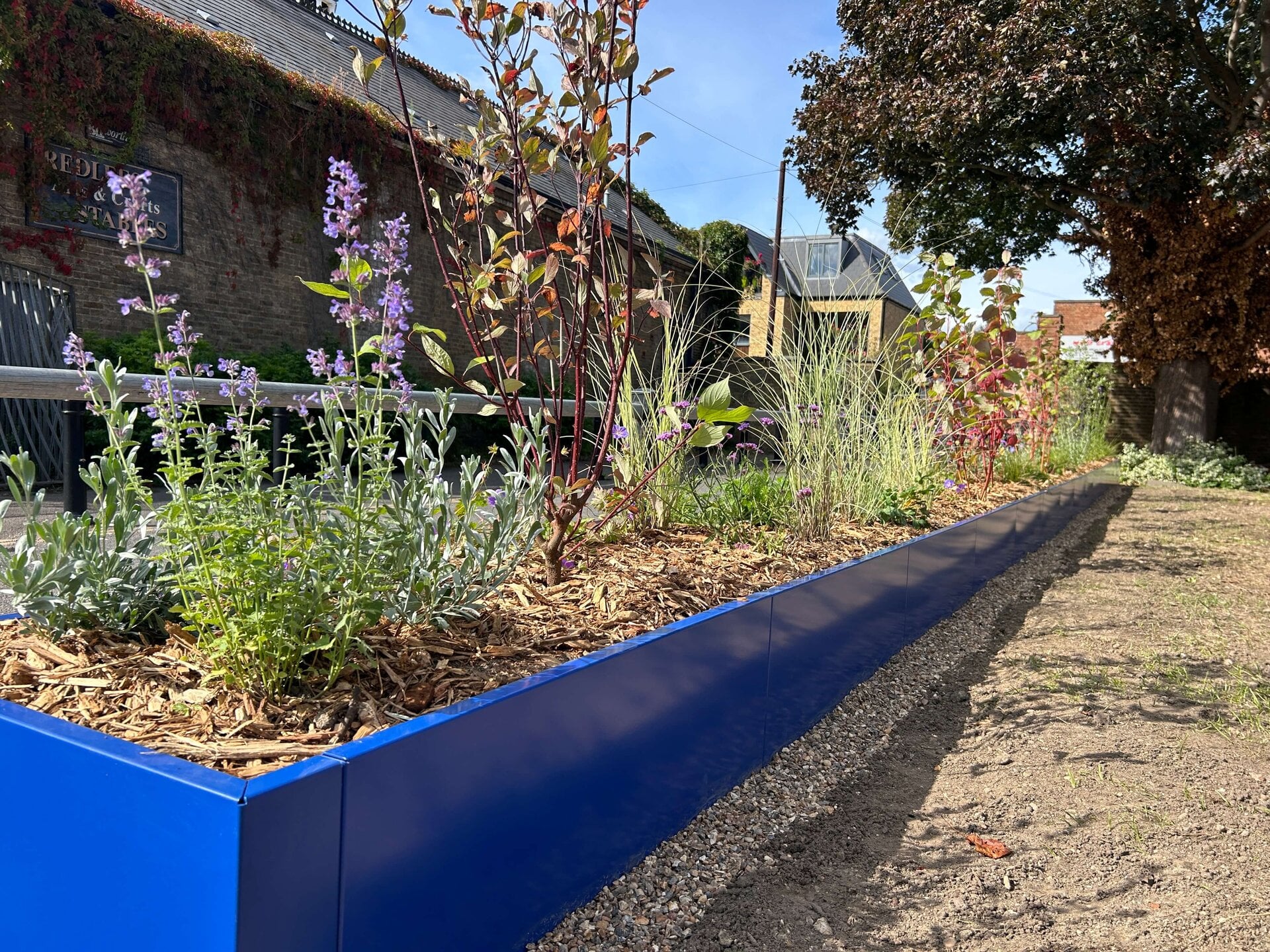
As the seasons change, rain gardens have to respond to different conditions. After helping manage periods of heat and drought through summer, autumn brings increased rainfall, falling leaves and changes to planting.
These changes can affect the look and performance of rain gardens, making autumn a useful time to check that they are functioning and give them the care they need.
How do rain gardens in autumn respond to increased rainfall?
As rainfall becomes more frequent, rain gardens begin doing what they do best - managing water entering and leaving their own system and wider drainage networks.
Increased rainfall can reveal drainage issues
Periods of heavier rainfall can make drainage and pooling issues more noticeable. Areas that experienced little to no standing water during summer may now begin to show signs of slower drainage.
Some temporary pooling is expected, but water that doesn't drain away is a cause for concern. Keep an eye on how water moves through the green space to identify potential issues and form a plan of action.
Keep an eye on how water enters rain gardens in autumn
Autumn rainfall also provides a useful opportunity to check the points where water enters the rain garden. Inlets, channels and other drainage routes should remain clear of leaves and debris so that water can flow into the planted area as intended.
Regular checks can help prevent blockages and water flow restrictions.
What happens to the planting in rain gardens in autumn?
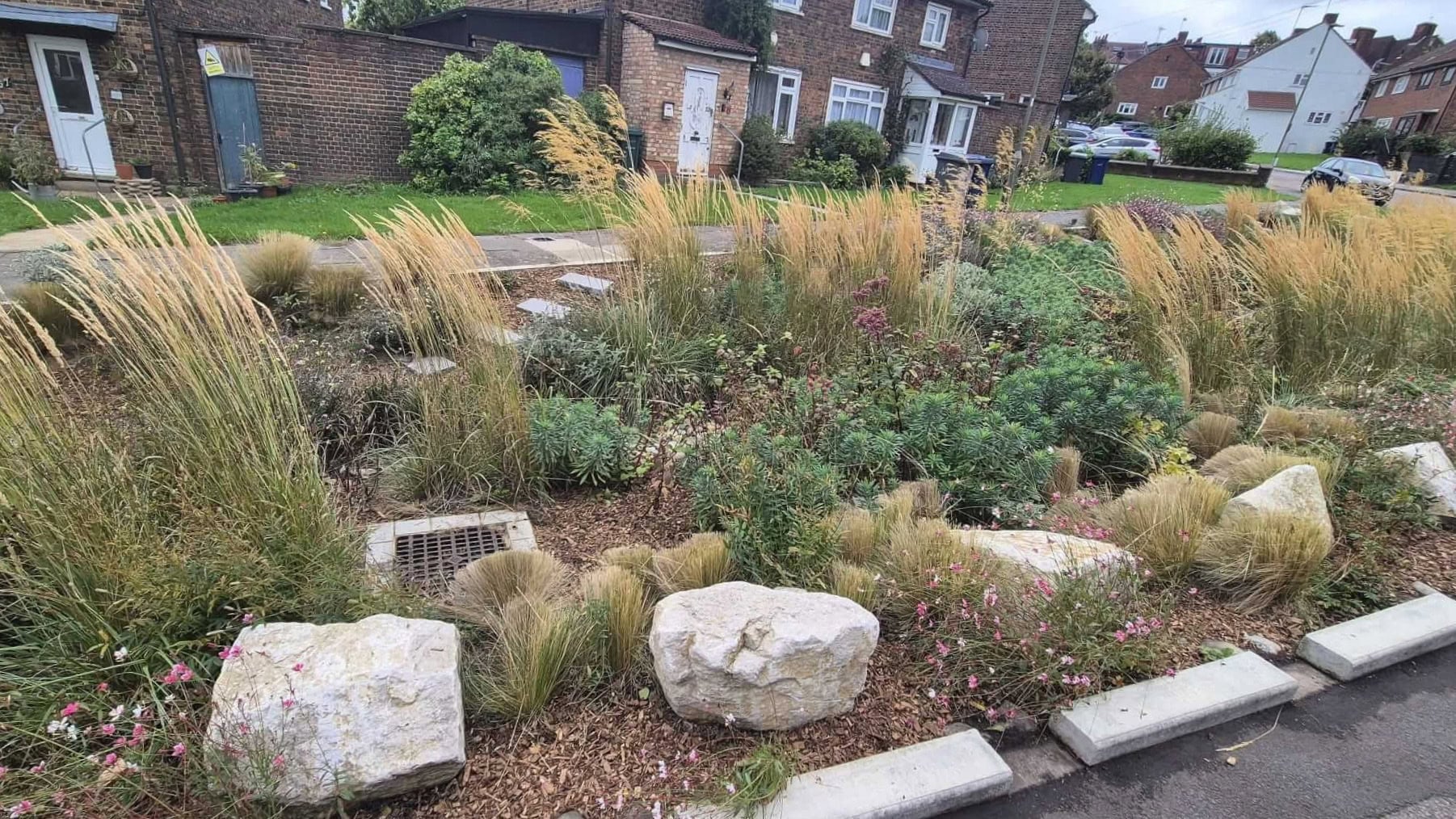
As temperatures fall, planting in a rain garden can change. Some plants will naturally die back, while others keep their structure and provide seasonal interest throughout the colder, wetter months.
Plant dieback can support the biodiversity of rain gardens in autumn
Not every plant needs to be cut back as soon as it starts to die back, they can actually boost biodiversity in the space.
Dead stems, seed heads and remaining foliage can provide habitat and shelter for insects and other small wildlife during winter. Leaving some of this structure can therefore support biodiversity while giving the rain garden a dynamic and textural appearance.
New opportunity to plant up rain gardens in autumn
Autumn can provide a good opportunity to introduce new planting or replace struggling plants.
Cooler temperatures and more reliable rainfall can help plants establish their roots before the following summer. The RHS specifically recommends early autumn as a good time to plant rain gardens.
However, species should still be selected according to factors such as how wet or dry different areas can become and how quickly the soil drains.
How can you get the most from rain gardens in autumn?
Autumn doesn't mean rain gardens need a complete change in approach. It can be a useful time to observe how they respond to changing weather and carry out simple checks to keep them functioning.
Keep drainage inlets clear
Fallen leaves can accumulate around inlets and drainage routes, potentially restricting the movement of water into and out of the rain garden. Removing leaves and debris helps keep water flowing into the rain garden and therefore prevents wider flooding.
Monitor the planting
Autumn is a good time to look at the rain gardens to understand if the plants are establishing well and if water is reaching intended areas.
Regular monitoring can help identify issues before they become bigger problems.
Rain gardens function throughout the year, but each season brings different conditions for them to respond to. Autumn is a particularly useful time to see how a rain garden is managing increased rainfall, prepare planting for winter and make sure the system is ready for the upcoming seasons.